
U.S. hydropower generation expected to increase by 6% in 2024 following last year’s lows
Data values: U.S. Regional Electricity Generation, Electric Power Sector
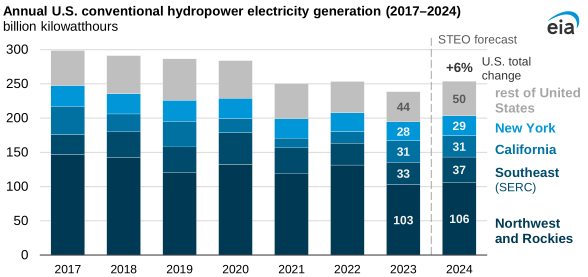
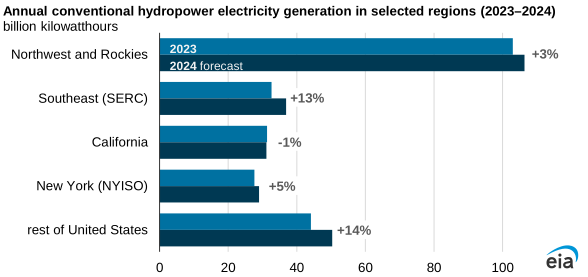
Last year, U.S. hydropower electricity generation fell to its lowest since 2001. This year, we expect hydropower to increase 6% and account for 250 billion kilowatthours of electricity generation in the power sector, based on forecasts in our Short-Term Energy Outlook (STEO). We expect hydropower to increase in nearly every part of the country, with notable increases in the Southeast and in the Northwest and Rockies. We expect other regions with significant hydropower generation to either increase slightly, such as in New York, or remain about the same, such as in California.
Data values: U.S. Regional Electricity Generation, Electric Power Sector
Northwest and Rockies
More hydropower is generated in the Northwest and Rockies region than any other region of the country: in 2023, 43% of all U.S. hydropower generation occurred in this region. However, last year’s hydropower output was the region’s lowest since at least 2010. Water supply, particularly in Washington and Oregon, was affected by a May heatwave that quickly melted the snowpack and reduced water supply for the rest of the year.
On April 4, the National Oceanic and Atmospheric Administration’s Northwest River Forecast Center (NWRFC) released its latest water supply forecast for the Pacific Northwest, which is part of the larger Northwest and Rockies region. The NWRFC forecasts normal to more-than-normal water supply in the southern part of the region, around the Snake River Basin, and normal to less-than-normal water supply in the northern part of the region by the Upper Columbia River Basin.
Because water supply and the subsequent hydropower generation can vary widely from year to year, we closely monitor these NWRFC forecasts and use them as inputs to our STEO model. We expect 106 billion kilowatthours of hydropower this year to be produced in the Northwest and Rockies region this year, or 3% more than in 2023.
Data values: U.S. Regional Electricity Generation, Electric Power Sector
Note: Calculations for regional electricity generation mix percentages exclude negative net electricity generation from other sources.
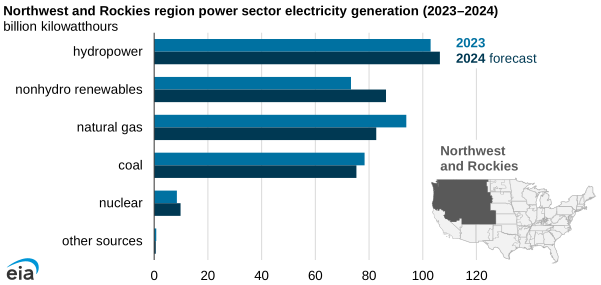
We expect hydropower to account for 29% of the Northwest and Rockies region’s electricity generation this year. We expect the increased output from hydropower resources and nonhydro renewables to reduce electricity generation from natural gas and coal.
Southeast
The largest regional increase in hydropower this year comes from the Southeast region, defined as the SERC Reliability Corporation. We expect hydropower generation in the Southeast to increase by 4 billion kilowatthours this year compared with last year. This region includes Alabama, Tennessee, and North Carolina, which combined account for about 10% of total hydropower generating capacity in the United States.
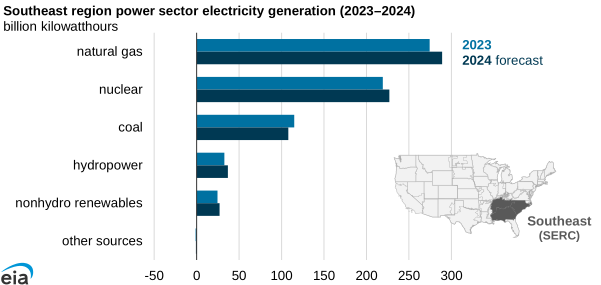
We expect hydropower to account for 5% of electricity generation in the Southeast in 2024. Natural gas and nuclear energy are the two largest sources of electricity generation in the Southeast, and we expect both to increase in 2024. In particular, nuclear electricity generation will increase after the Vogtle Unit 4 generator in Georgia starts providing power to the grid during the second quarter of 2024. We expect these increases in natural gas, nuclear, and hydropower to reduce the use of coal for electricity generation in the Southeast.
Data values: U.S. Regional Electricity Generation, Electric Power Sector
Note: Calculations for regional electricity generation mix percentages exclude negative net electricity generation from other sources.
California
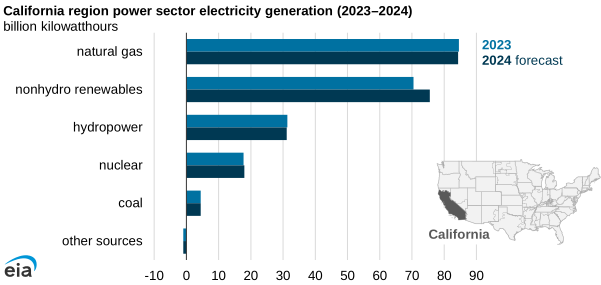
California’s water supply is susceptible to drought. After a very wet year last year, annual hydropower generation increased by more than 80%, from 17 billion kilowatthours in 2022 to 31 billion kilowatthours in 2023. We expect similar hydropower generation in California this year.
The California-Nevada River Forecast Center expects California to have a near-to-above normal water supply. Water reservoirs in California are also mostly above their historical averages for this time of year. In addition, snowstorms between the end of January and end of March increased snowpack across the Sierra Nevada mountain range.
Nonhydro renewables, mainly solar and wind, are the most significant component of change in California’s electricity generation mix. We expect California’s nonhydro renewables to increase by 5 billion kilowatthours in 2024.
Data values: U.S. Regional Electricity Generation, Electric Power Sector
Note: Calculations for regional electricity generation mix percentages exclude negative net electricity generation from other sources.
Rest of the United States
We expect hydropower to increase in nearly every region, with notable increases in New York and the Central region (Southwest Power Pool [SPP]). About 6% of U.S. hydropower generating capacity is located in New York, and we expect the state’s hydropower output to increase slightly, to 29 billion kilowatthours.
The SPP region includes many of the states just east of the Rocky Mountains. In 2023, SPP’s hydropower output fell to 11 billion kilowatthours, the least in at least a decade. We expect SPP’s hydropower will increase to 14 billion kilowatthours in 2024.
Principal contributor: Lindsay Aramayo
Data visualization: Lindsay Aramayo, Owen Comstock
Tags: generation, electricity, New York, California, states, map, Northwest, hydroelectric, Alabama, Tennessee