
U.S. Oil and Natural Gas Wells by Production Rate
Overview
Technological innovation in drilling and completions has resulted in growth in U.S. oil and natural gas production over the last 15 years. Exploring how U.S. oil and natural gas wells have changed provides deeper insight into this rapid growth. In this report, we present data on the distribution of wells by size and technology and analyze emerging trends.
In December 2023, U.S. oil production, which includes crude oil and lease condensate, averaged 13.3 million barrels per day (b/d), and U.S. natural gas production (gross withdrawals) averaged 128.0 billion cubic feet per day (Bcf/d). U.S. oil production and natural gas production both increased in 2024, with oil production averaging 13.4 million b/d and natural gas production averaging 128.8 Bcf/d in December 2024.1
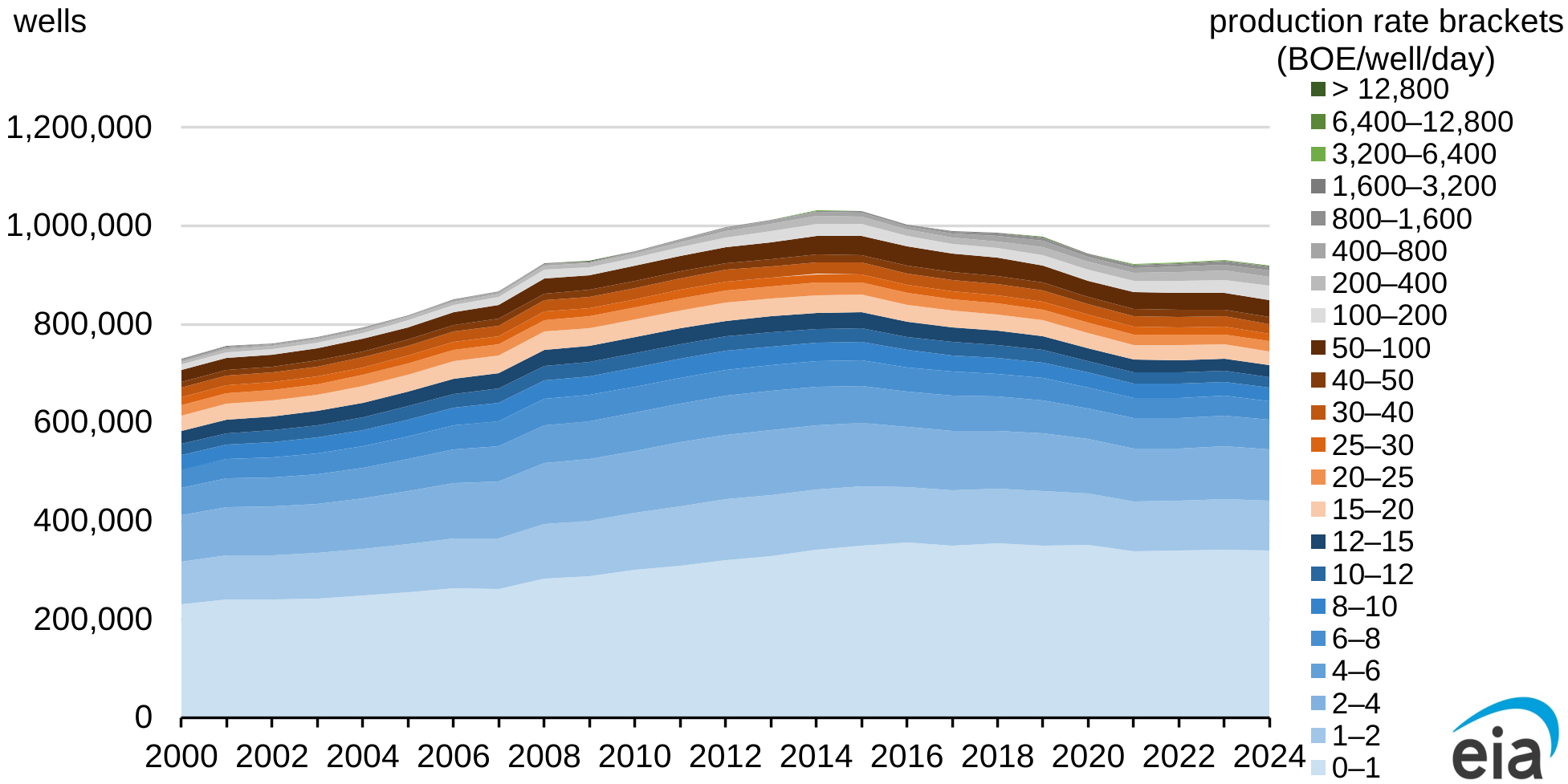
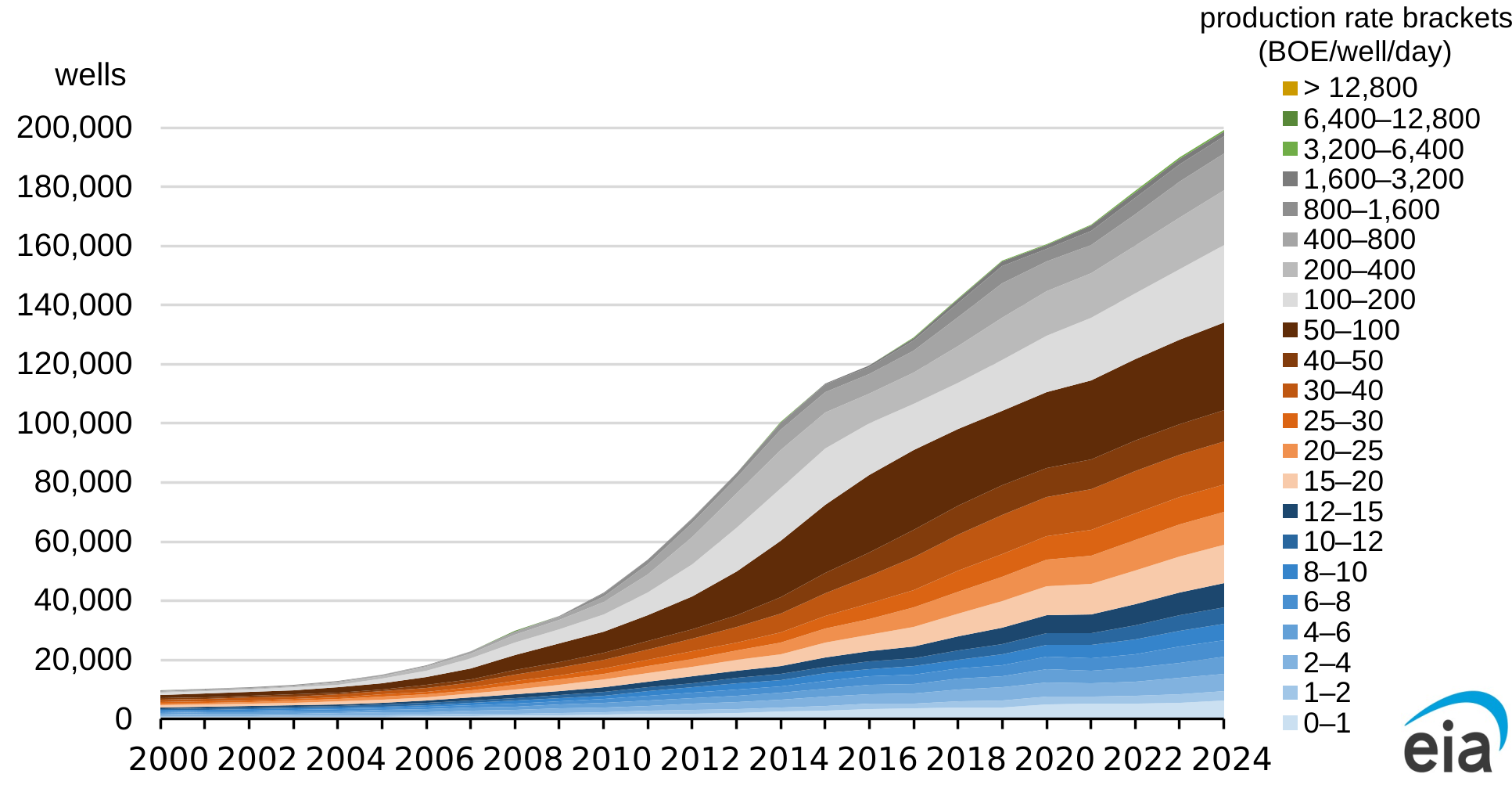
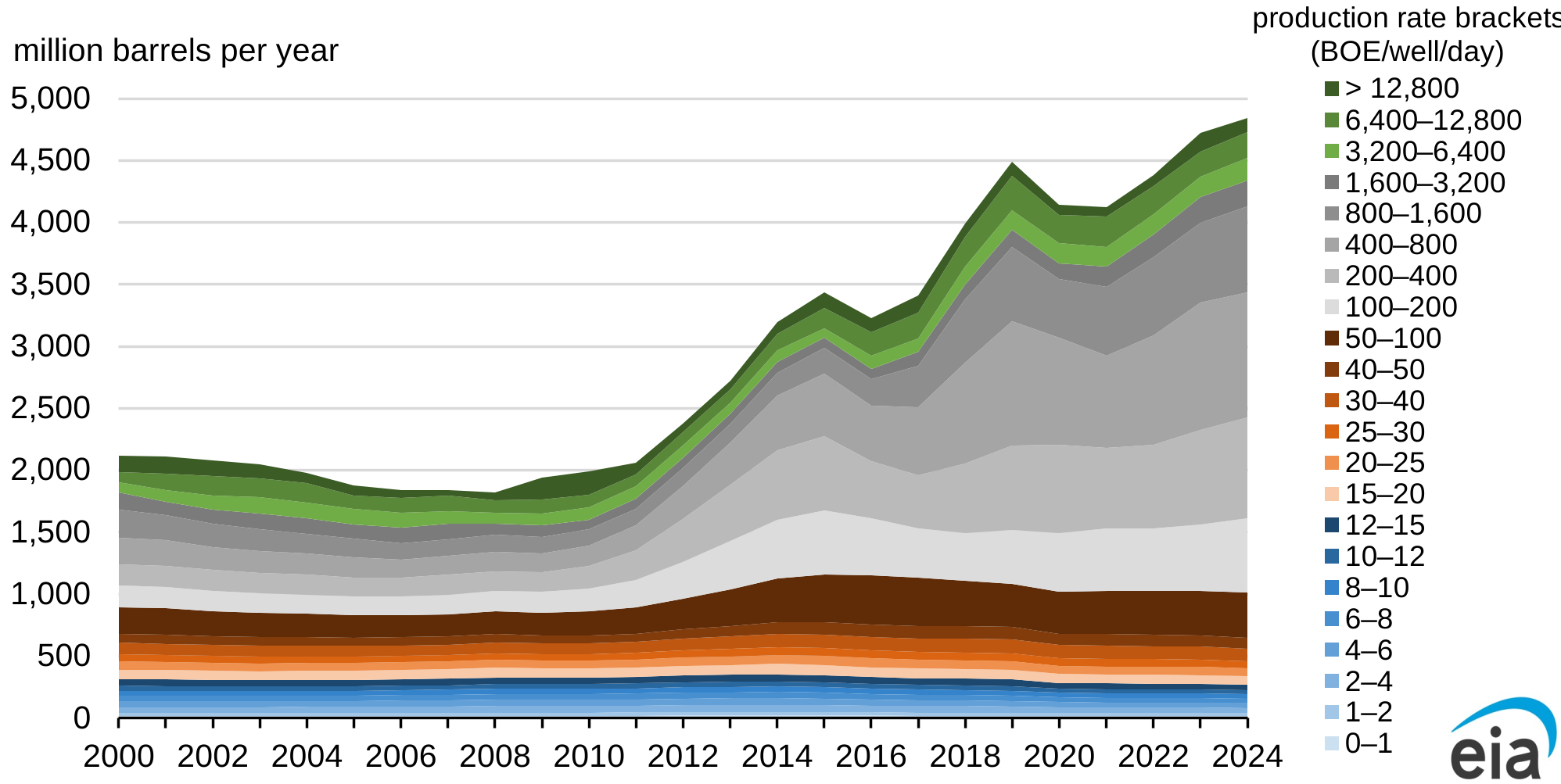
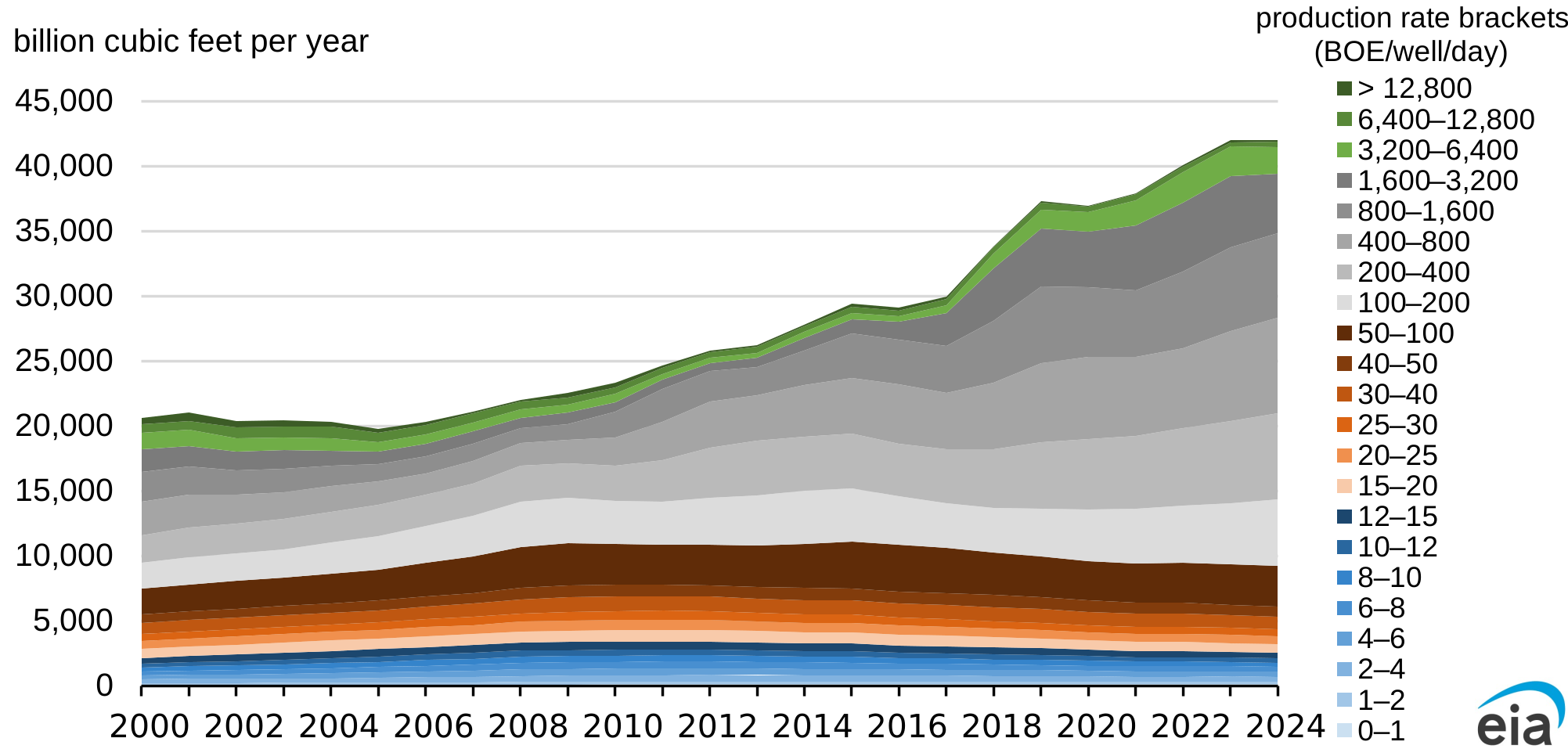
The number of producing wells in the United States reached a high of 1,031,161 wells in 2014 but declined to 930,445 wells by 2023 and continued to decline in 2024 to 918,481 wells (Figure 1). The percentage share of horizontal wells during the past decade increased from 10% in 2014 to 22% in 2024, which illustrates the impact of technological change on well type (Figure 2). Since 2018, more than two-thirds of U.S. oil and natural gas production has come from wells that produced between 100 barrels of oil equivalent per day (BOE/d) and 3,200 BOE/d (Figure 3 and Figure 4). However, most individual wells are not that productive; the share of U.S. oil and natural gas wells producing 15 BOE/d or less remained steady at about 80% from 2000 through 2022 and declined to 78% in 2023 through 2024 (Figure 1).
This report provides yearly estimates of producing oil and natural gas wells in the United States, which are grouped according to volume among 22 production volume brackets that range from less than 1 BOE/d to more than 12,800 BOE/d. We designate wells as either oil or natural gas wells based on a gas-oil ratio (GOR) of 6,000 cubic feet of natural gas to 1 barrel (cf/b) of oil for each year’s production. If the GOR is equal to or less than 6,000 cf/b, we classify the well as an oil well for that year. If the GOR is greater than 6,000 cf/b, we classify the well as a natural gas well for that year.
The distribution tables for the production rates of all U.S. oil and natural gas wells range from calendar years 2000 through 2024. Appendix B provides summary breakouts for the total United States, each state, the Federal Offshore Gulf of America, and the Federal Offshore Pacific. You can use the Appendix C spreadsheet to generate figures for all regions.
The quality and completeness of the available data we used to build the tables vary by state. The data originate from state administrative records of monthly well- or lease-level natural gas and liquid fuels production. We receive the data from the commercial source Enverus, which collects the data from various state agencies. Some state agencies do not make well-production data available until years after production occurs, and others have never made well-production data available. For the late-reporting states—Arizona, Kentucky, Maryland, Missouri, and Tennessee—we use the last year of reported data to populate recent missing years to achieve the most complete U.S. total well counts. Data are not available for Illinois and Indiana. Appendix A shows the reporting status for each state and year covered in the report and the availability of completion, well, and lease data by state.
Figure 1. Total U.S. wells by production rate bracket
Data source: U.S. Energy Information Administration and Enverus
Note: BOE=barrels of oil equivalent
Figure 2. U.S. horizontal wells by production rate bracket
Data source: U.S. Energy Information Administration and Enverus
Note: BOE=barrels of oil equivalent
Figure 3. Oil production from U.S. wells by production rate bracket
Data source: U.S. Energy Information Administration and Enverus
Note: Oil production includes crude oil and lease condensate; BOE=barrels of oil equivalent
Figure 4. Natural gas production from U.S. wells by production rate bracket
Data source: U.S. Energy Information Administration and Enverus
Note: BOE=barrels of oil equivalent
Footnote:
- U.S. Energy Information Administration, Monthly Crude Oil and Natural Gas Production, October 31, 2025.
-
Previous issues
- Distribution and Production of Oil and Gas Wells by State
-
Related Today in Energy articles
-
- U.S. associated natural gas production increased 6% in 2024, November 21, 2025
- U.S. associated natural gas production increased nearly 8% in 2023, November 13, 2024
- Associated natural gas production has tripled since 2018 in top three Permian oil plays, December 6, 2023
- Associated natural gas production declines in 2020, following three years of growth, August 23, 2021