
Alaska proved reserves increased in 2024, while nationwide proved reserves fell
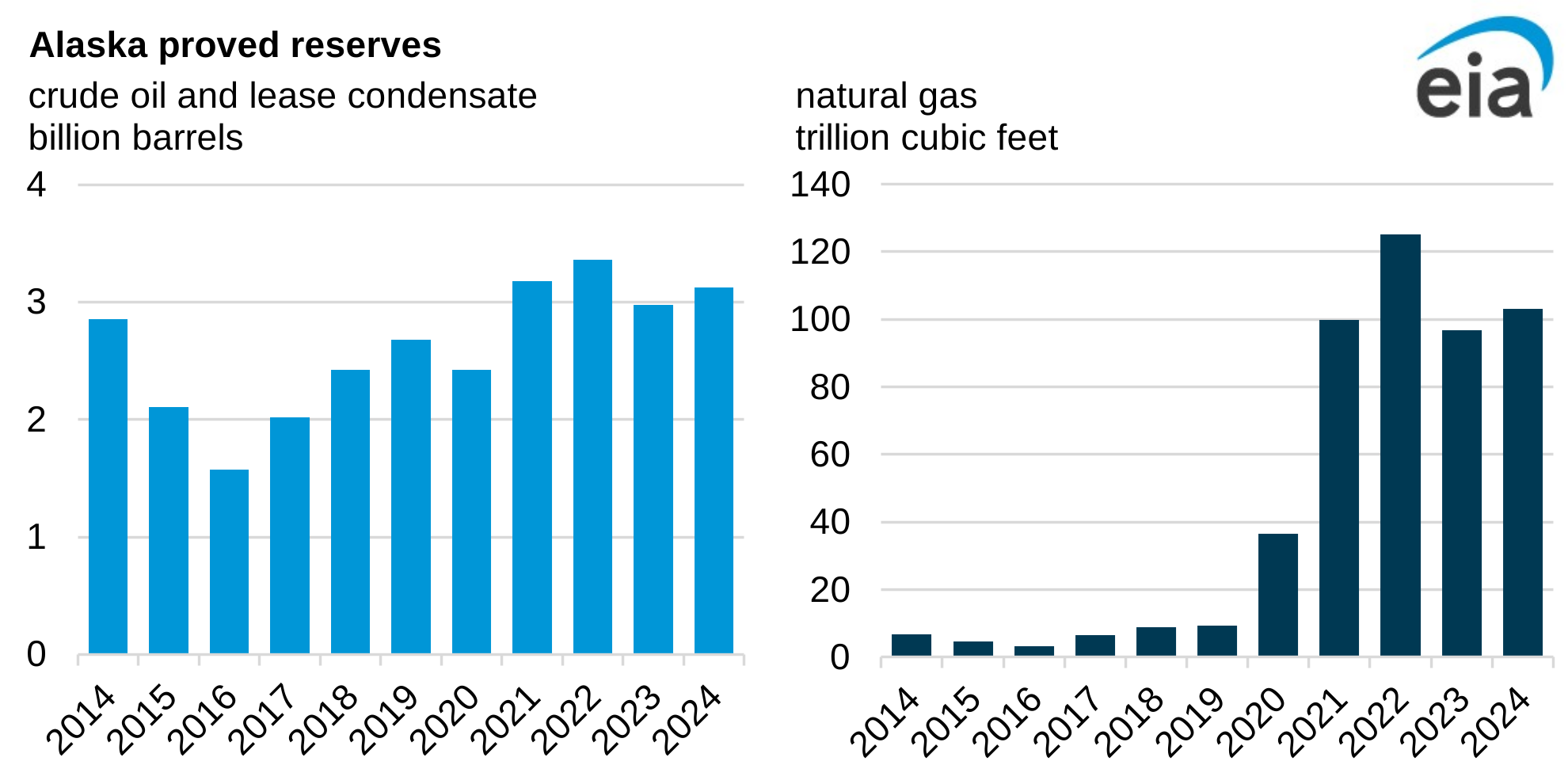
Oil and gas producers operating in Alaska reported increases in proved reserves in 2024 at a time when low prices triggered a decrease in nationwide proved reserves, according to our recently released U.S. Crude Oil and Natural Gas Proved Reserves, Year-End 2024 report. Alaska’s crude oil and lease condensate proved reserves increased 5%, and natural gas proved reserves increased nearly 7% in 2024.
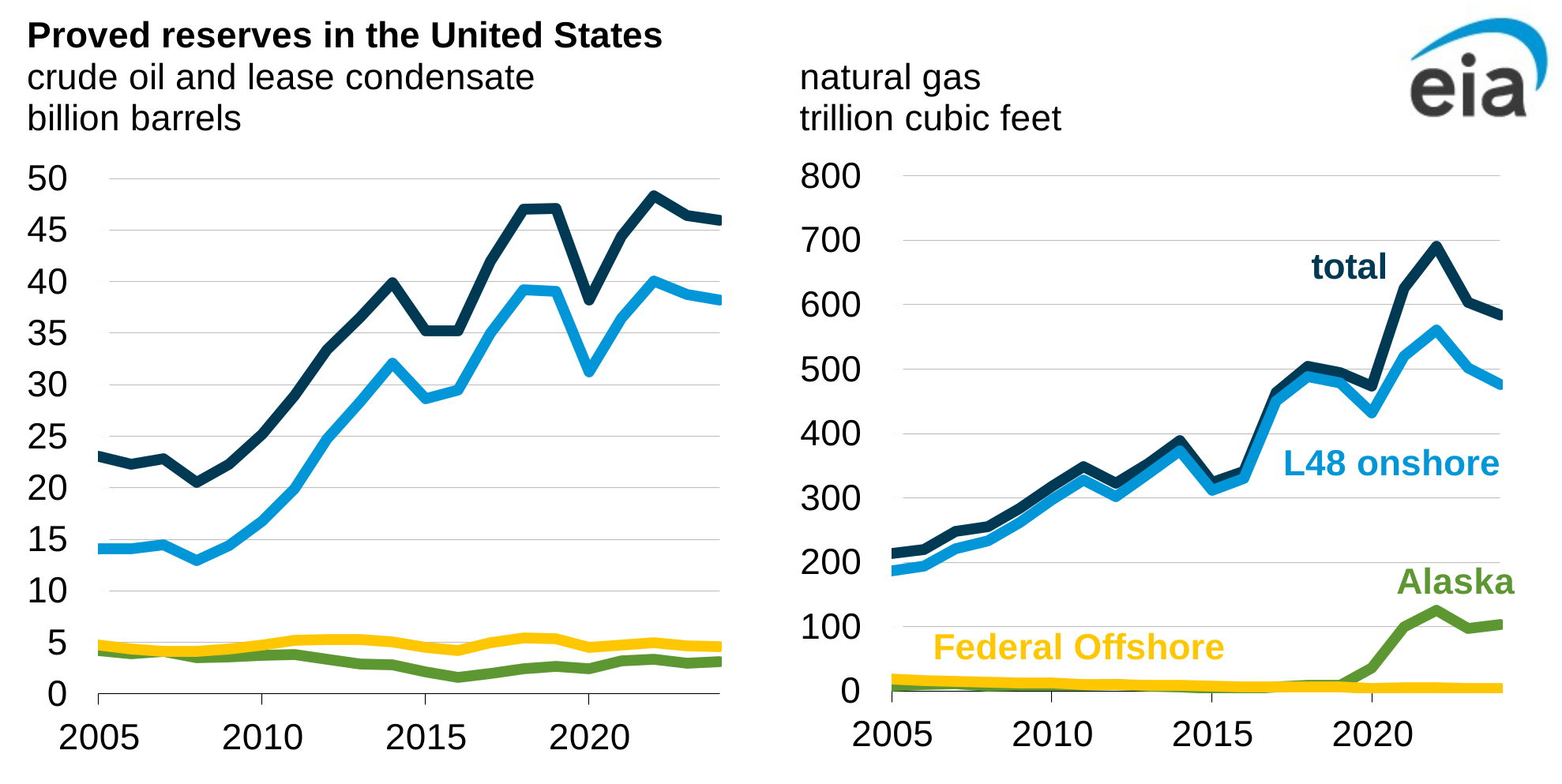
U.S. proved reserves of crude oil and lease condensate totaled about 46 billion barrels at year-end 2024, a 1% decline from 2023. U.S. proved reserves of natural gas also fell, decreasing 3% to 584 trillion cubic feet (Tcf) at year-end 2024.
Proved reserves are operator estimates of oil and natural gas volumes that geological and engineering data demonstrate with reasonable certainty are recoverable under existing economic and operating conditions.
The price of crude oil and natural gas can affect the reserve estimates, and lower prices in 2024 heavily influenced proved reserves estimates. Average spot prices for both crude oil and natural gas decreased in 2024 for the second year in a row. Average wholesale prices at the domestic benchmarks for West Texas Intermediate crude oil and Henry Hub natural gas fell by 1% and 13%, respectively, from 2023 to 2024.
Exploration and development in Alaska in 2024 increased, supporting upward revisions in reserves there despite the lower prices. Natural gas reserves increased from 97 Tcf in 2023 to 103 Tcf in 2024, and crude oil reserves increased from 3.0 billion barrels in 2023 to 3.1 billion barrels in 2024. During 2024, Conoco Phillips’ Nuna project became operational and contributed to higher oil proved reserves in Alaska. Planned projects, including new wells at Prudhoe Bay in Alaska’s North Slope and new infrastructure to bring North Slope production to market, such as the Alaska LNG Project, could contribute to increasing proved reserves in the future.
More recently, changes in federal policies are aimed at increasing Alaskan production. On January 20, 2025, President Donald J. Trump issued an Executive Order, Unleashing Alaska’s Extraordinary Resource Potential, which expedites the permitting and leasing of energy and natural resource projects in Alaska and prioritizes the development of Alaska’s liquefied natural gas (LNG) potential. The order highlights the sale and transportation of Alaska’s LNG to other regions of the United States and allied nations within the Pacific region. On March 18, 2026, the Bureau of Land Management awarded 1.3 million acres in a National Petroleum Reserve lease sale.
Note: L48=Lower 48 U.S. states
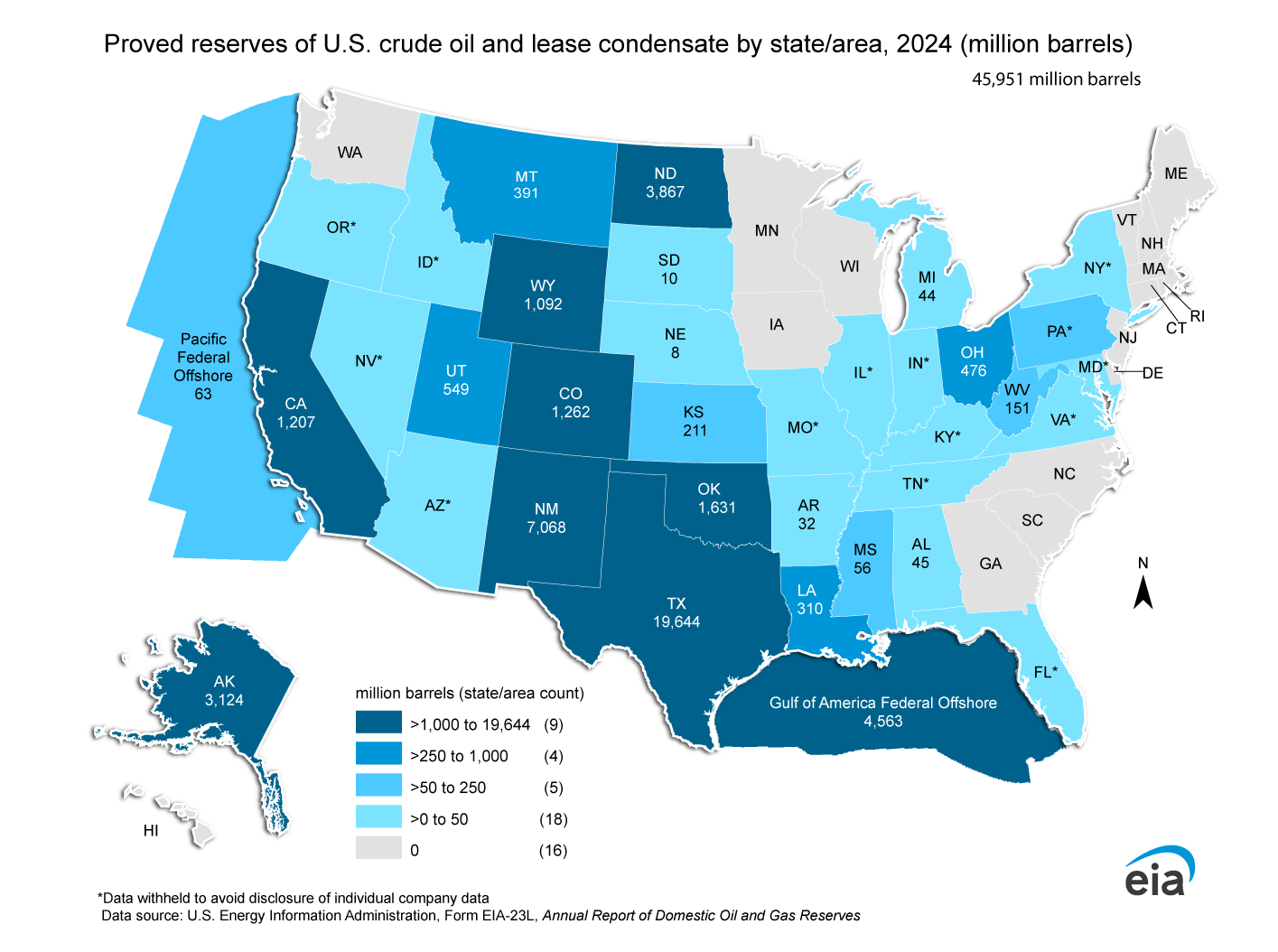
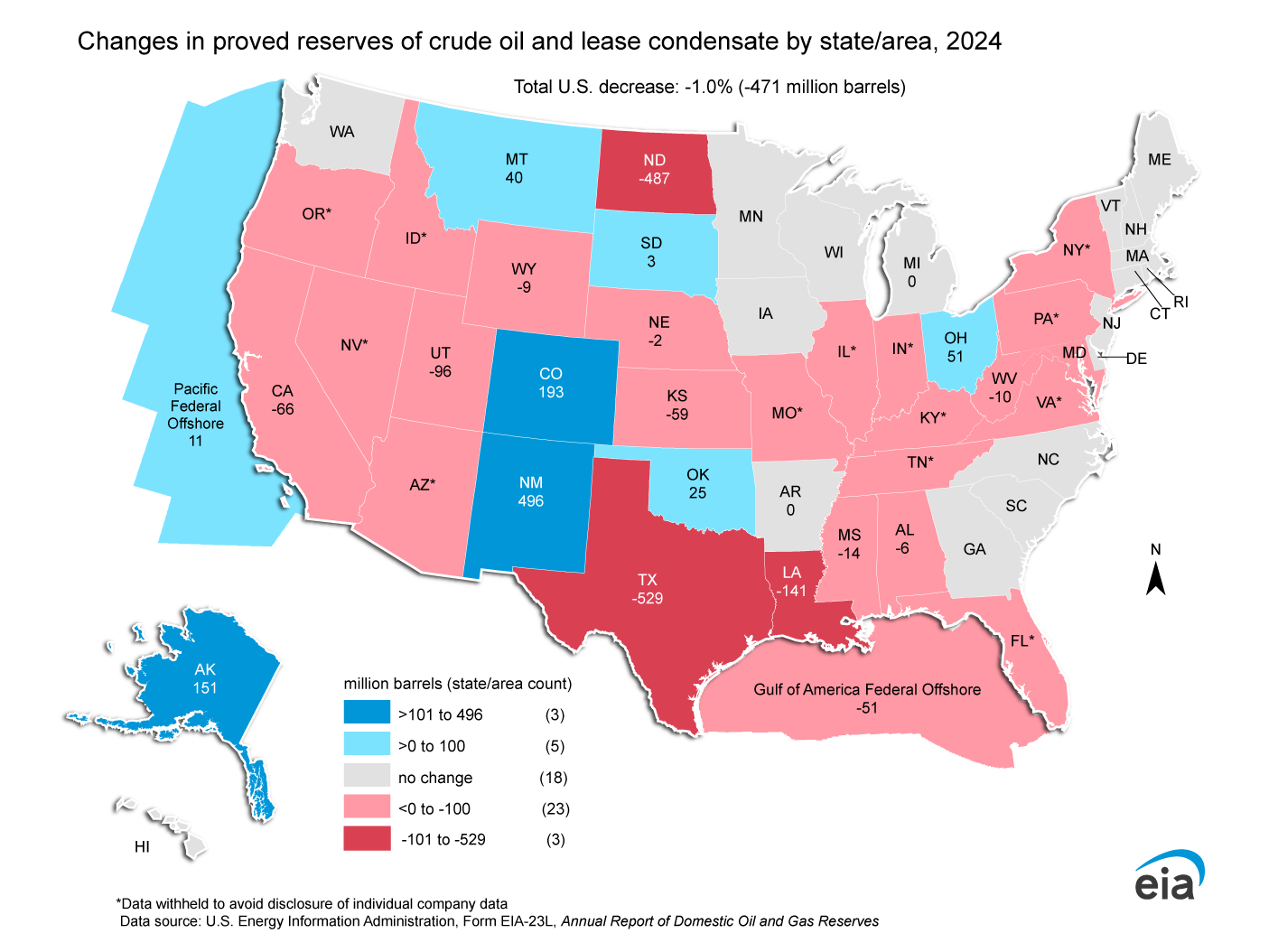
Crude oil and lease condensate proved reserves volumes decreased the most in Texas, by 529 million barrels, or 3%. Operators in North Dakota reported the second-largest decrease of proved oil reserves, down 487 million barrels, or 11%.
Source: U.S. Energy Information Administration, U.S. Crude Oil and Natural Gas Proved Reserves, Year-End 2024
Source: U.S. Energy Information Administration, U.S. Crude Oil and Natural Gas Proved Reserves, Year-End 2024
Natural gas proved reserves volumes decreased the most in Texas, by 10.2 Tcf, or 7%, followed by Louisiana, where proved natural gas reserves fell by 8.4 Tcf, or 26%, in 2024.
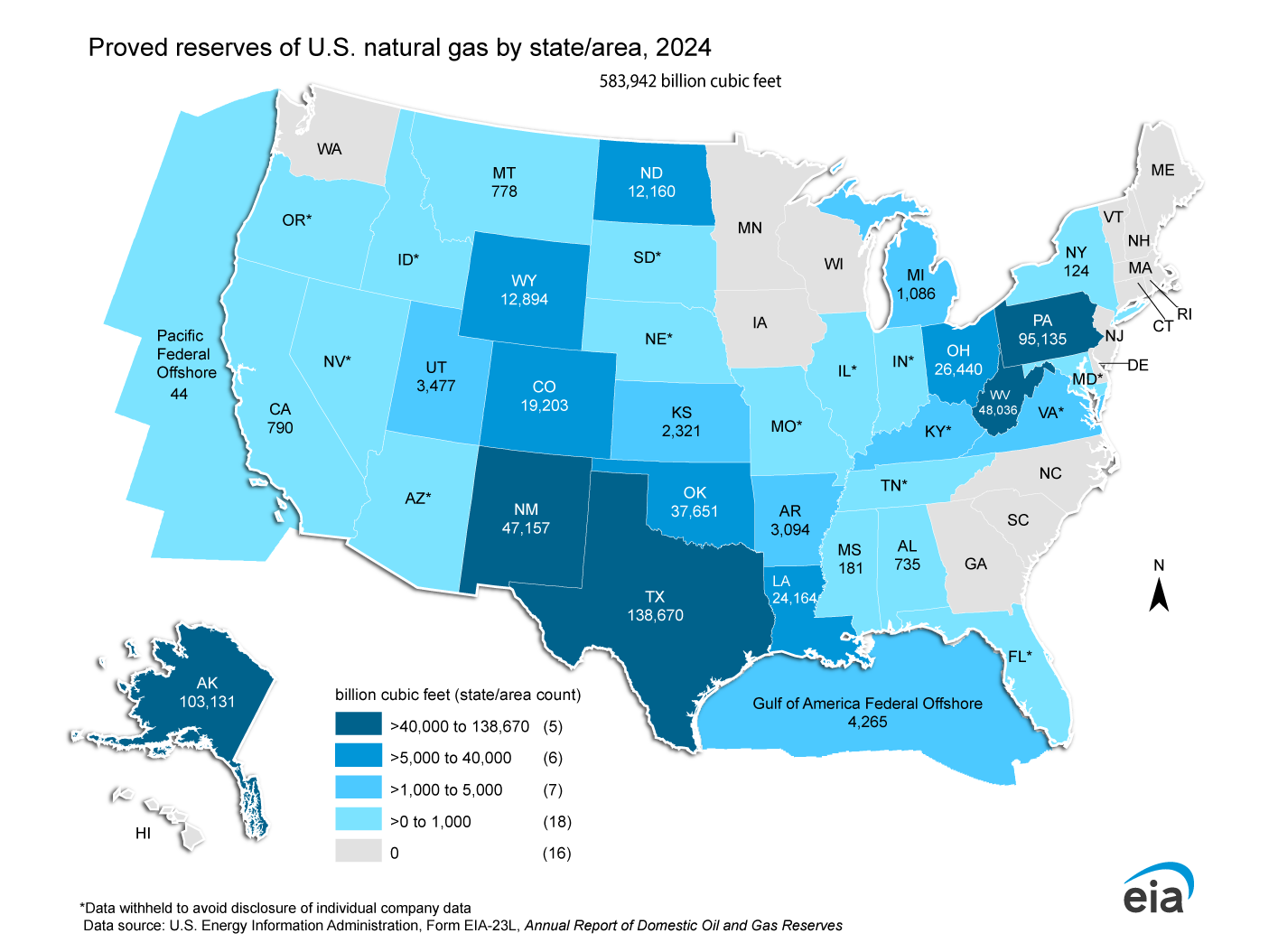
Source: U.S. Energy Information Administration, U.S. Crude Oil and Natural Gas Proved Reserves, Year-End 2024
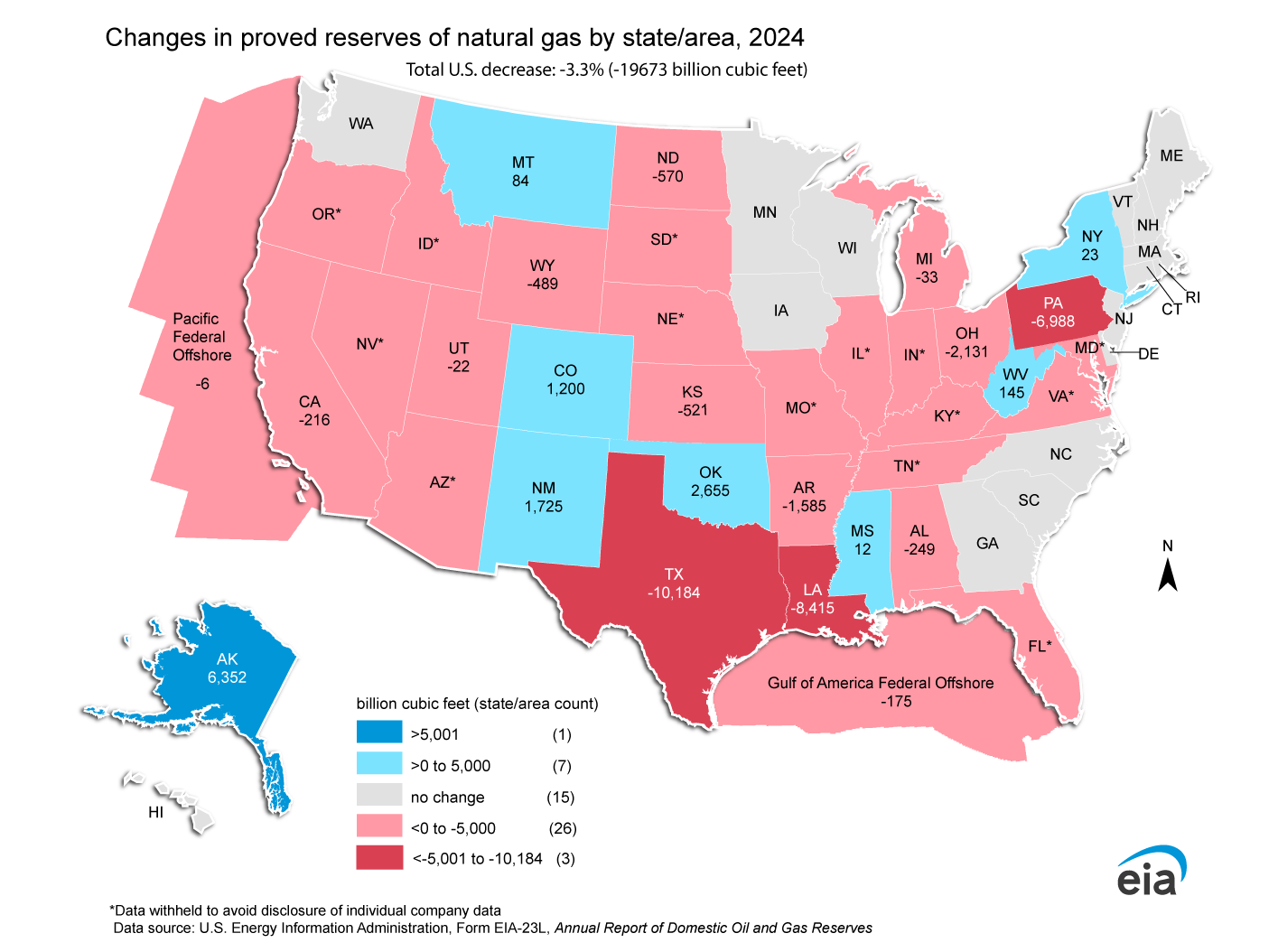
Source: U.S. Energy Information Administration, U.S. Crude Oil and Natural Gas Proved Reserves, Year-End 2024
Our U.S. Crude Oil and Natural Gas Proved Reserves, Year-End 2024 report includes additional data on proved reserves, including crude oil and lease condensate reserves from shale plays by state and area. We estimate reserves within each state individually and some state subdivisions. Areas with subdivisions are the states of California, Louisiana, New Mexico, and Texas as well as the Federal Offshore region.
Principal contributor: Steven Grape
Tags: reserves, natural gas, liquid fuels, crude oil, oil/petroleum, states, Alaska, map