
Retirement delays of U.S. electric generating capacity may continue in 2026
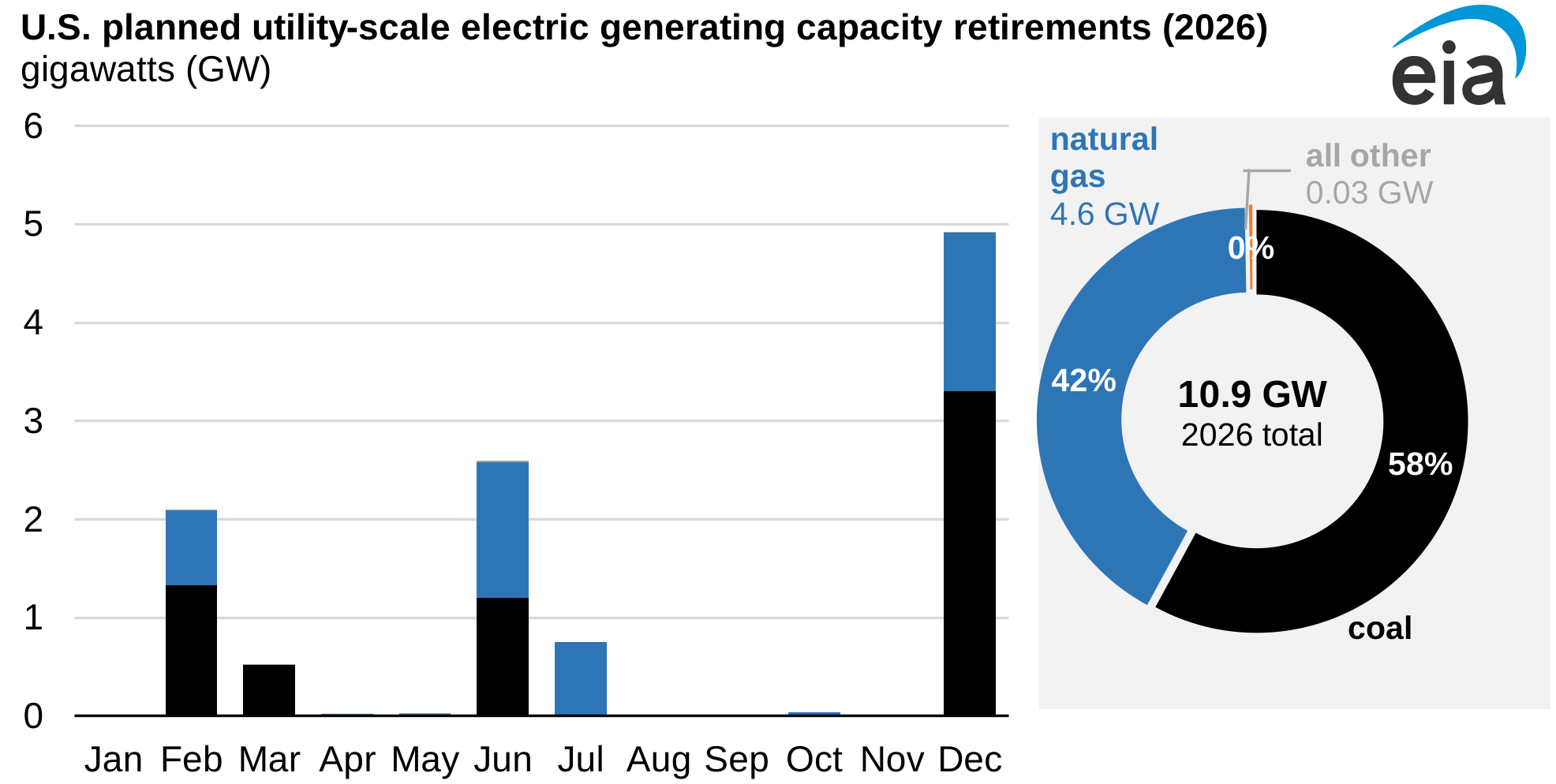
U.S. power plant owners and operators plan to retire nearly 11 gigawatts (GW) of utility-scale electric generating capacity from the U.S. power grid this year, according to data reported to us in our latest Preliminary Monthly Electric Generator Inventory. Almost all the scheduled retirements are either coal-fired power plants (58%) or steam turbines and simple-cycle natural gas (42%).
The plans may be more subject to change than usual, with policy shifts recently delaying retirements at several coal plants. Last year, owners and operators planned to retire 12.3 GW of capacity but only retired 4.6 GW, the least since 2008, following emergency orders from the U.S. Department of Energy (DOE) to extend the operations of several coal-fired plants.
Coal. In 2026, 6.4 GW of coal-fired capacity is scheduled to retire, which accounts for almost 4% of the U.S. coal fleet that was in operation as of the end of 2025. Coal retirements were expected to increase last year after they slowed down in 2024. However, only 2.6 GW out of an anticipated 8.0 GW of coal capacity were retired, as the DOE issued emergency orders that temporarily postponed the retirement of large coal plants. Any renewed or new emergency orders could affect retirements planned for this year as well.
Retirements of several coal-fired plants scheduled for last year were postponed to 2026:
- J.H. Campbell in Michigan, 1,331 megawatts (MW)
- South Oak Creek Units 7 and 8 in Wisconsin, 616 MW
- R.M. Schahfer Units 17 and 18 in Indiana, 722 MW
- Craig Station Unit 1 in Colorado, 427 MW
- Comanche Unit 2 in Colorado, 335 MW
- F.B. Culley Unit 2 in Indiana, 90 MW
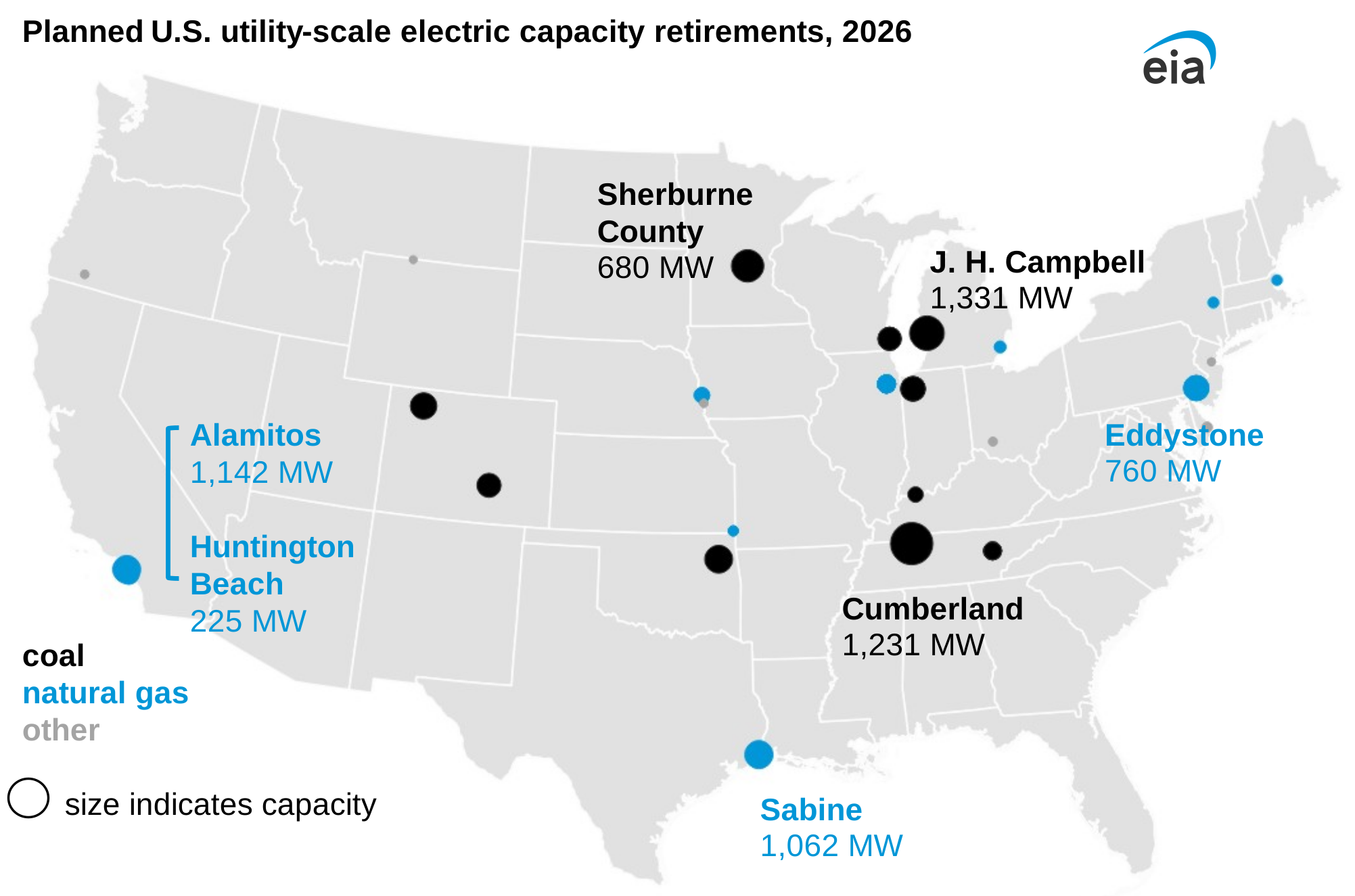
The largest coal retirements planned for this year are the 1,331-MW J.H. Campbell in Michigan and the 1,231-MW Cumberland Unit 2 in Tennessee.
Natural gas. In 2026, 4.6 GW of U.S. natural gas-fired capacity, almost 1% of the operating natural gas fleet at the end of 2025, is scheduled for retirement. Most of the retiring natural gas capacity (76%) is at older steam turbine units, which are less efficient than the newer combined-cycle units.
Two aging California plants, AES Alamitos and Huntington Beach, with a combined capacity of 1,368 MW, will mark the largest natural gas retirement in 2026. The units were initially set to retire in 2020 and later in 2023 but were kept open to support grid demand. More efficient combined-cycle plants have been developed at both sites to replace the older units. Elwood Energy Units 1–7 in Illinois and Sabine Units 1, 3, and 4 in Texas are expected to retire 1,050 MW and 1,062 MW, respectively, this year. Eddystone Units 3 and 4, with a combined total of 760 MW, were set to retire last year; however, the retirements were delayed until 2026 following an emergency order issued by DOE.
Note: MW=megawatts
Principal contributors: Office of Energy Statistics staff
Tags: retirements, electricity, generation, capacity, map