Menu
Crude oil, gasoline, heating oil, diesel, propane, and other liquids including biofuels and natural gas liquids.
Exploration and reserves, storage, imports and exports, production, prices, sales.
Sales, revenue and prices, power plants, fuel use, stocks, generation, trade, demand & emissions.
Energy use in homes, commercial buildings, manufacturing, and transportation.
Reserves, production, prices, employment and productivity, distribution, stocks, imports and exports.
Includes hydropower, solar, wind, geothermal, biomass and ethanol.
Uranium fuel, nuclear reactors, generation, spent fuel.
Comprehensive data summaries, comparisons, analysis, and projections integrated across all energy sources.
Monthly and yearly energy forecasts, analysis of energy topics, financial analysis, congressional reports.
Financial market analysis and financial data for major energy companies.
Greenhouse gas data, voluntary reporting, electric power plant emissions.
Maps, tools, and resources related to energy disruptions and infrastructure.
State energy information, including overviews, rankings, data, and analyses.
Maps by energy source and topic, includes forecast maps.
International energy information, including overviews, rankings, data, and analyses.
Regional energy information including dashboards, maps, data, and analyses.
Tools to customize searches, view specific data sets, study detailed documentation, and access time-series data.
EIA's free and open data available as API, Excel add-in, bulk files, and widgets
Come test out some of the products still in development and let us know what you think!
EIA's open source code, available on GitHub.
Forms EIA uses to collect energy data including descriptions, links to survey instructions, and additional information.
Sign up for email subscriptions to receive messages about specific EIA products
Subscribe to feeds for updates on EIA products including Today in Energy and What's New.
Short, timely articles with graphics on energy, facts, issues, and trends.
Lesson plans, science fair experiments, field trips, teacher guide, and career corner.
EIA is continuing normal publication schedules and data collection until further notice.
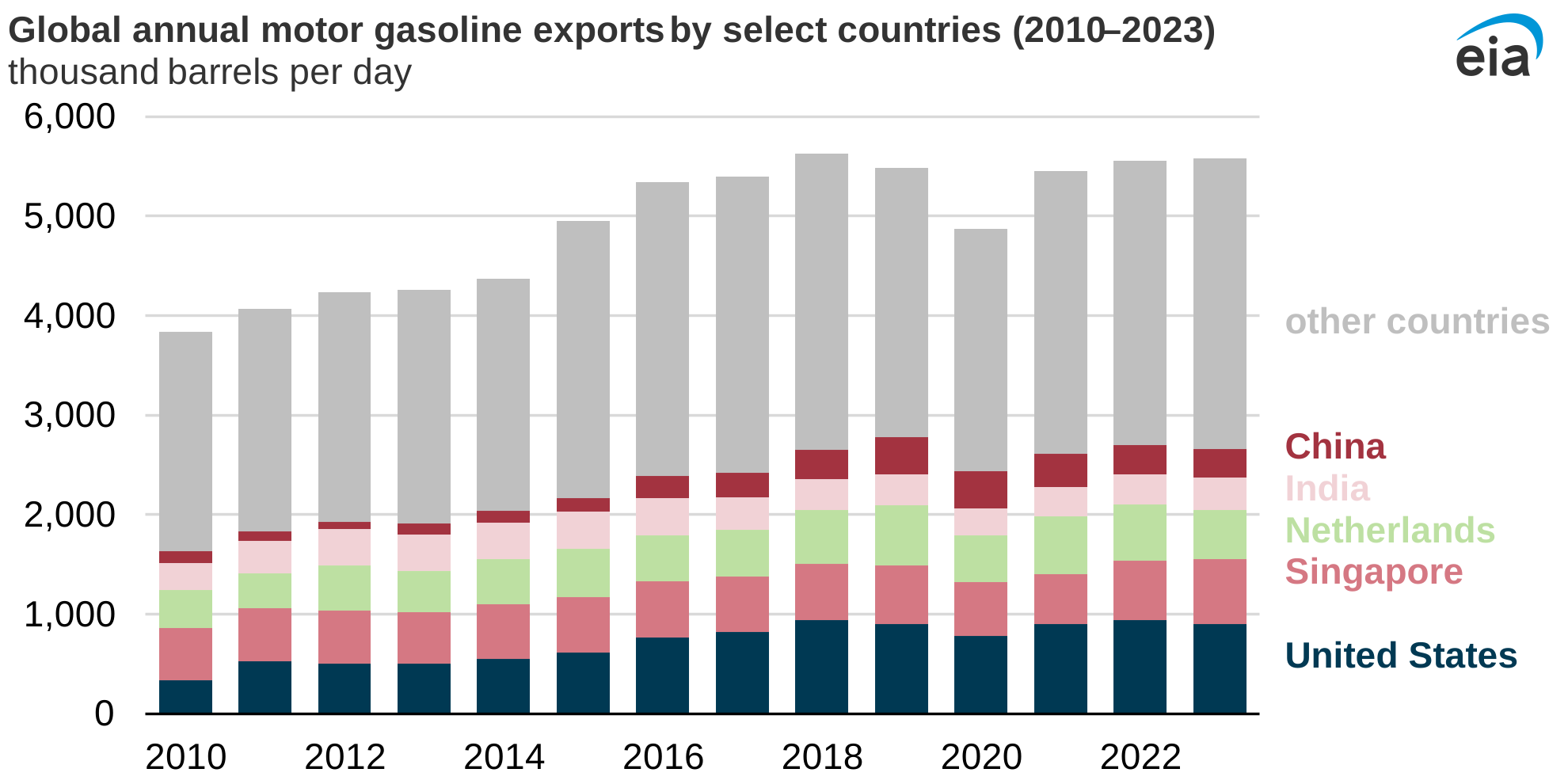
The United States is the world’s largest exporter of motor gasoline (finished gasoline plus gasoline blending components), supplying over 16% of total global exports. U.S. motor gasoline exports in 2023 averaged 900,000 barrels per day (b/d), equivalent to about 10% of domestic consumption and enough to fill up the tanks of over 1.5 million SUVs per day, assuming an average tank size of 24 gallons. Other large gasoline exporters, including Singapore and the Netherlands, have never exceeded 700,000 b/d in gasoline exports. China and India have both added significant refining capacity since 2010 and have also increased gasoline exports.
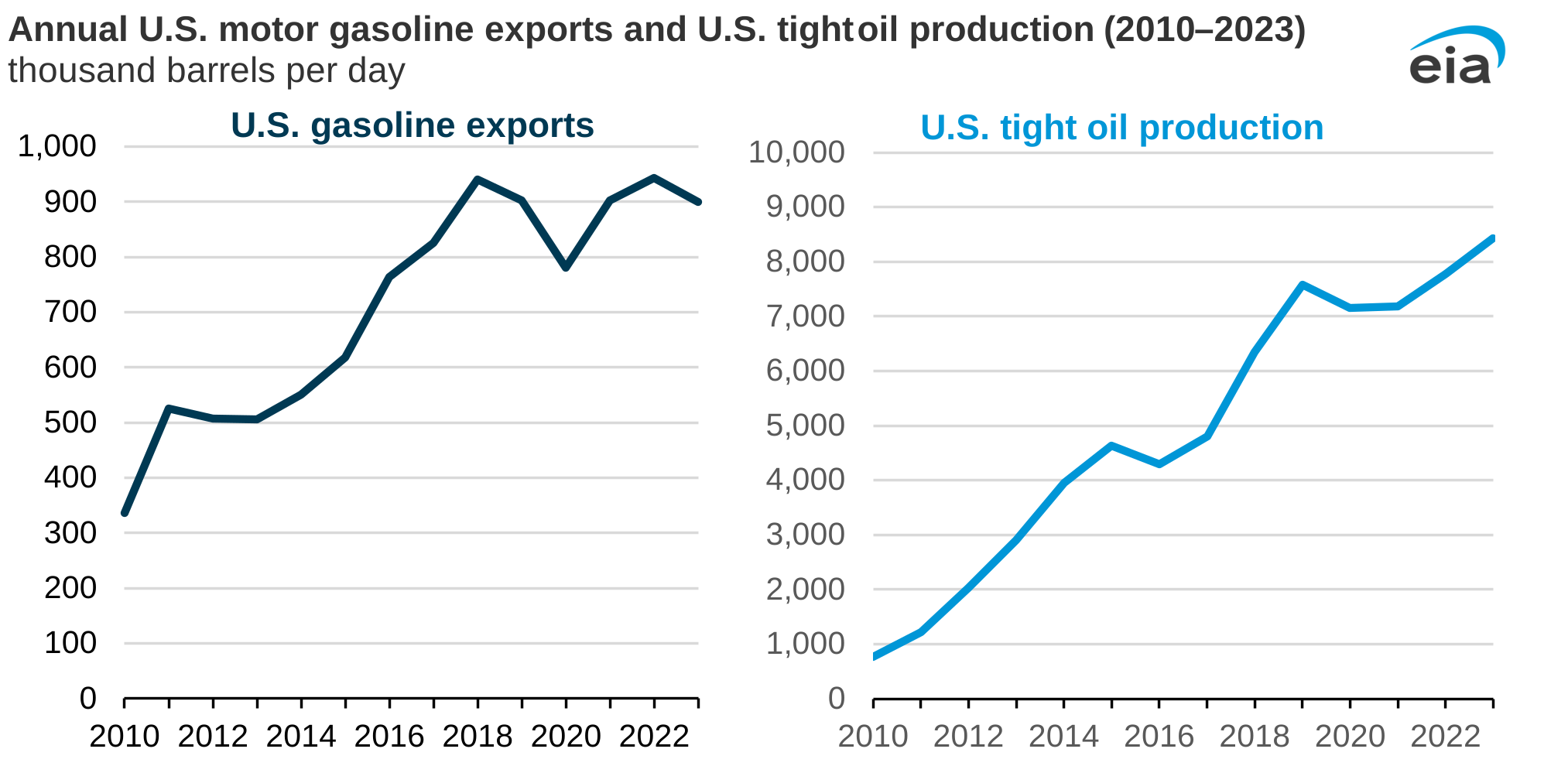
The United States was a net importer of motor gasoline for over a half century from 1961 to 2015. However, that trend changed during the past decade. The high volume of motor gasoline exports in recent years reflects longer trends in increasing U.S. exports of refined products in general, which set records in 2022 and 2023. The growth in U.S. refined product exports reflects several factors, including generally increasing refinery capacity from 2010 to 2023 and rising production from existing refineries through increased utilization. Much of the increase in refinery capacity has led to higher motor gasoline yields because of added light crude oil processing units that process increasing volumes of light tight oil produced by hydraulic fracturing, or fracking. Finally, although refinery capacity has grown, U.S. consumption of gasoline has not, making more gasoline available for export. Motor gasoline consumption in 2023 was flat compared with 2010 (and 0.4 million b/d less than its peak in 2018).
Motor gasoline accounts for the third-largest share of U.S. refined product exports, behind propane and distillate fuel oil. Unlike propane, which is primarily exported to Asia, the majority of U.S. motor gasoline exports (over 500,000 b/d) go to Mexico, with the remainder going primarily to Central American and South American countries. Over 90% of U.S. gasoline exports came from the U.S. Gulf Coast (PADD 3).
Principal contributor: Erik Kreil
Tags: international, gasoline, China, exports/imports, United States, liquid fuels, oil/petroleum, Netherlands, petroleum products, India