
Natural gas pipeline capacity from the Permian Basin is set to increase

Natural gas pipeline takeaway capacity in the Permian Basin will soon increase as the Matterhorn Express Pipeline, with a capacity of 2.5 billion cubic feet per day (Bcf/d), is expected to begin service this month, according to EnLink Midstream, one of the project’s stakeholders.
Matterhorn (a joint venture with Whitewater, EnLink Midstream, Devon Energy, and MPLX) will transport natural gas from the Permian Basin to Katy near Houston, Texas. Natural gas production from the Permian Basin—primarily associated gas from growing oil production operations—has more than doubled since 2018, reducing regional spot natural gas prices and prompting greater demand for new pipeline takeaway capacity to transport natural gas to more viable markets.
In addition to Matterhorn, three new Permian Basin pipeline projects with a combined capacity of 7.3 Bcf/d have been approved and are in various stages of development:
- Apex Pipeline, with a capacity of 2.0 Bcf/d, is designed to transport natural gas from the Permian Basin to Port Arthur, Texas. Operator Targa Resources expects the pipeline to enter service in 2026.
- Blackcomb Pipeline, with a capacity of 2.5 Bcf/d, is designed to transport natural gas from the Permian Basin to Agua Dulce in south Texas. Operator Whitewater Midstream expects the pipeline to enter service in 2026.
- Saguaro Connector Pipeline, with a capacity of 2.8 Bcf/d, is designed to transport natural gas from the Permian Basin to the U.S.-Mexico border. We expect the pipeline, which connects with the Sierra Madre pipeline on the Mexico side, to enter service by 2027–28.
Pipeline operators have also announced other projects with a total capacity of 7.0 Bcf/d designed to transport natural gas from the Permian Basin to demand centers in Mexico and along the Texas Gulf Coast. These projects, if realized, could come into service between 2025 and 2028.
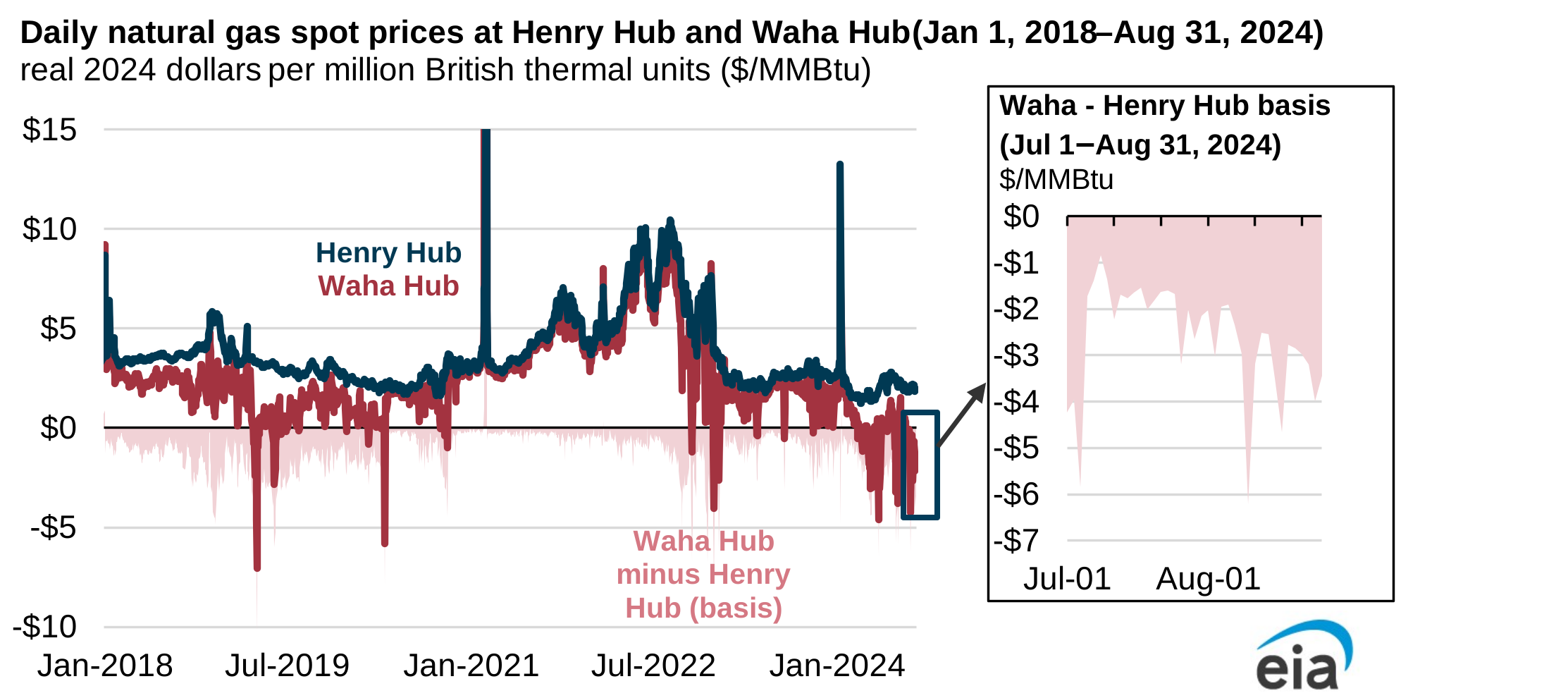
Note: Prices are adjusted for inflation based on the July 2024 Consumer Price Index.
When regional growth in natural gas production outpaces pipeline takeaway capacity additions, capacity constraints exert downward pressure on spot natural gas prices at the Waha Hub, which is near Permian Basin production. Prices at the Waha Hub have been below zero for 46% of trading days in 2024, including every day since July 26, according to data from Natural Gas Intelligence. The lowest price recorded at the Waha Hub this year was -$6.41 per million British thermal units on August 29.
The price difference (also known as the basis) between the Waha Hub and the U.S. benchmark Henry Hub widens under constrained pipeline conditions and narrows as those constraints ease. So far in 2024, the Waha Hub spot price has traded an average $2.07 below the Henry Hub price, compared with an average 42 cents below the Henry Hub price in the second half of 2021. The takeaway capacity added when the Matterhorn pipeline enters service should allow producers to increase deliveries of natural gas out of the Permian Basin and help to increase the natural gas price at the Waha Hub, making its price difference to the Henry Hub less negative or even positive.
Principal contributors: Katy Fleury, Laia Munoz-Cortijo