
In most U.S. regions, 2024 wholesale electricity prices will be similar to 2023
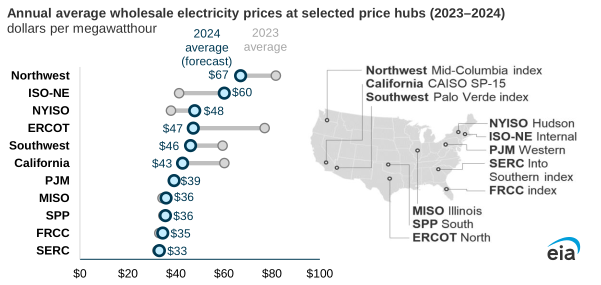
We expect average wholesale electricity prices for 2024 in most areas of the country to be close to or slightly lower than in 2023 because of relatively stable generation fuel costs. However, periods of high demand or power market supply constraints could lead to temporary spikes in wholesale prices.
Electricity prices in U.S. wholesale markets are determined by a number of factors, but the natural gas price is the most important driver because it is often the highest-cost (marginal) fuel dispatched for power generation and many U.S. wholesale electricity markets set prices at the marginal cost. Natural gas-fired generation is the largest source of U.S. electricity. We expect the natural gas price for U.S. electricity generation to average $2.91 per million British thermal units (MMBtu) in 2024 in our January Short-Term Energy Outlook. The price averaged $3.29/MMBtu in 2023. Lower natural gas prices should keep average wholesale power prices in most regions less than or close to last year.
The highest U.S. natural gas prices in 2023 were in the Pacific states of California, Oregon, and Washington where the price of natural gas charged to power generators averaged $6.96/MMBtu through October. As a consequence, the Pacific Northwest had the highest U.S. wholesale electricity prices as well, averaging $82 per megawatthour (MWh) last year. We expect fuel costs to remain somewhat elevated in the Pacific Northwest, and we forecast the region's wholesale power prices to average $67/MWh in 2024.
We expect U.S. electricity prices this year will be relatively similar to 2023 in many of the wholesale markets operating in the Eastern Interconnection, where forecast 2024 wholesale prices outside of the Northeast generally range between $30/MWh and $40/MWh. The wholesale markets in the Northeast, specifically New York and New England, generally have some of the highest wholesale prices in the nation after the Pacific Northwest. We expect the Northeast wholesale prices to increase in 2024, averaging $48/MWh in New York (up 26%) and $60/MWh in New England (up 45%).
U.S. wholesale power prices are typically calculated on an hourly or daily basis and are designed to reflect market conditions at a specific time. Market stresses, such as extremely high temperatures or temporary supply constraints, can lead to spikes in wholesale prices. For example, wholesale prices in the ERCOT market (which covers most of Texas) exceeded $2,500/MWh during a handful of hours in August 2023, which resulted in ERCOT's monthly price averaging $355/MWh. Prices also spiked temporarily in the western wholesale markets during summer 2023.
Principal contributor: Tyler Hodge