
Northeast U.S. carbon dioxide emissions prices return to last year’s highs
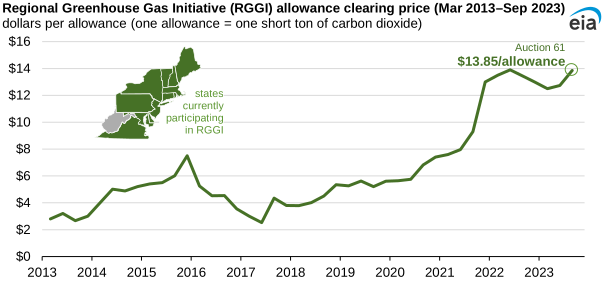
The most recent auction of carbon dioxide (CO2) emissions allowances in the major U.S. northeast regional trading hub reached near record-high prices, as the number of allowances available was reduced. The latest Regional Greenhouse Gas Initiative (RGGI) quarterly auction, held September 6, 2023, resulted in a clearing price of $13.85 per ton for CO2 emissions allowances, surpassing the previous quarter’s clearing price by 9% and nearing the record price, $13.90 per ton, set in March 2022. Allowance prices have been increasing since RGGI’s March 2023 auction as fewer allowances have been made available over time.
Launched in 2009, RGGI is a cooperative effort among 12 eastern states to reduce CO2 emissions from power plants. States involved in RGGI include Connecticut, Delaware, Maine, Maryland, Massachusetts, New Hampshire, New Jersey, New York, Pennsylvania, Rhode Island, Vermont, and Virginia, though Pennsylvania’s RGGI regulation is under a court injunction, so the state will not release any allowances until further notice.
Participating states establish a regional cap on CO2 emissions from regulated power plants. The states require that power plants purchase one CO2 allowance for each short ton of carbon they emit. RGGI offers new carbon allowances through quarterly regional CO2 allowance auctions, where a set number of allowances are sold. These auctions are sealed-bid, uniform price auctions open to all qualified participants that result in a single quarterly clearing price. RGGI reduces the number of allowances available in auctions over time in order to reduce regional emissions and adjusts the total to take into account unused allowances from earlier auctions. These changes to the cap on the number of allowances have been put upward pressure on allowance prices.
For 2023, RGGI’s adjusted regional cap on emissions to be sold in four auctions for the 12 member states totals allowances for 168.9 million short tons of CO2. After removing Pennsylvania, the adjusted cap for the remaining 11 participating states totals allowances for 93.4 million short tons of CO2.
The RGGI states decided to adjust the cap for unused allowances starting in 2012 after experiencing successive years of large surpluses, due to the assumptions at the program’s outset that natural gas prices would remain high and growth in electricity demand would continue.
In the September 2023 auction, RGGI sold allowances for 21.9 million short tons of CO2 emissions. RGGI states invest most of the auction proceeds in consumer benefit programs to improve energy efficiency, accelerate the deployment of renewable energy technologies, and support consumer electricity assistance programs. Auction proceeds totaled $303.9 million in the September auction and have totaled $6.7 billion since inception of the auctions in 2009.
In addition to purchasing allowances at auction, entities can also trade allowances on secondary markets, either directly via over-the-counter trades with third parties or through futures contracts traded on exchanges. Secondary markets give firms the ability to obtain CO2 allowances at any time during the three months between the RGGI auctions, allowing firms to protect themselves against the potential volatility of future auction clearing prices, and provide a basis to make investment decisions in markets affected by the cost of RGGI compliance.
Principal contributor: O. Nilay Manzagol
Tags: prices, Northeast, emissions, CO2 (carbon dioxide)