
Wind was second-largest source of U.S. electricity generation on March 29
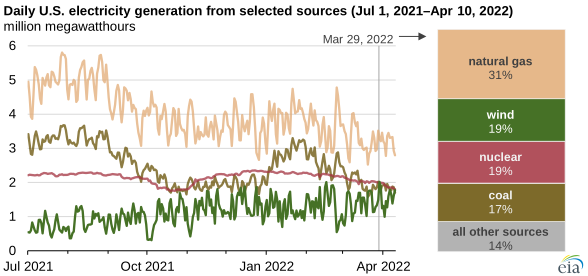
On Tuesday, March 29, wind turbines in the Lower 48 states produced 2,017 gigawatthours (GWh) of electricity, making wind the second-largest source of electric generation for the day, only behind natural gas, according to our Hourly Electric Grid Monitor. Daily wind-powered electricity had surpassed coal-fired and nuclear electricity generation separately on other days earlier this year but had not surpassed both sources on a single day.
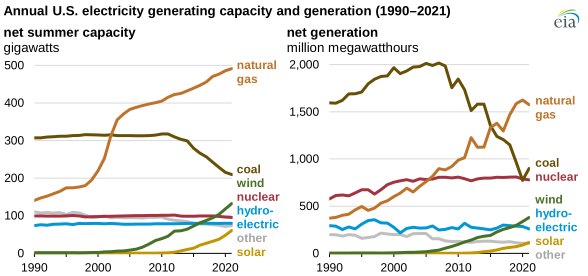
Consistent growth in the installed capacity of wind turbines in the United States has led to more wind-powered electricity generation. In September 2019, U.S. wind capacity surpassed nuclear capacity, but wind still generated less electricity than nuclear because of differences in those technologies’ utilization.
The average capacity factor of U.S. wind generators (35% in 2021) is lower than the average capacity factor of nuclear generators (93% in 2021), which are designed to run at or near full output, which they typically do. Wind turbines currently rank as the third-largest source of generating capacity in the United States, behind natural gas-fired generators and coal-fired generators.
In the United States, wind speeds, and correspondingly, wind-powered electricity generation, often peak during spring. On March 29, the Southwest Power Pool (SPP), which covers parts of Oklahoma, Kansas, Nebraska, North Dakota, South Dakota, and neighboring states, and the Electric Reliability Council of Texas (ERCOT) both reported new wind penetration records. Wind penetration represents the share of electric demand satisfied by wind generation. SPP reported wind penetration of 88.5% on March 29, and ERCOT reported wind penetration of 67.2% for the same day.
Because electricity demand tends to be lowest in the spring and fall months, some generators—including both nuclear and coal—reduce their output or scheduled maintenance during these months. Also, on days when weather patterns lead to more wind generation, competing coal-fired and natural gas-fired generators often are called upon to reduce their output so that overall electricity supply matches demand.
The natural variation of wind speeds contributes to very different amounts of wind generation, depending on the time of day or season. Wind first ranked as the second-largest source of U.S. electricity generation for an hour in late March 2021.
On a monthly basis, we have had less wind generation in the United States than natural gas-fired generation, coal-fired generation, or nuclear generation. We do not expect wind to surpass either coal-fired or nuclear generation for any month in 2022 or 2023, based on our most recent Short-Term Energy Outlook forecast.
Our Hourly Electric Grid Monitor publishes electric generation from generators that are metered within reporting balancing authorities. Typically, balancing authorities do not meter generators on the distribution system—both large-scale resources and small-scale distributed resources, such as rooftop solar photovoltaic systems. The data series in our Electric Power Monthly represent our official statistical reports and include both large-scale and small-scale resources in the generation data.
Principal contributors: Jonathan DeVilbiss, M. Tyson Brown
Tags: generation, coal, electricity, natural gas, nuclear, renewables, wind