


EIA’s top accomplishments of 2024
For the U.S. Energy Information Administration (EIA), 2024 was a year of notable accomplishments. Check out these highlights of EIA products and programs this year.
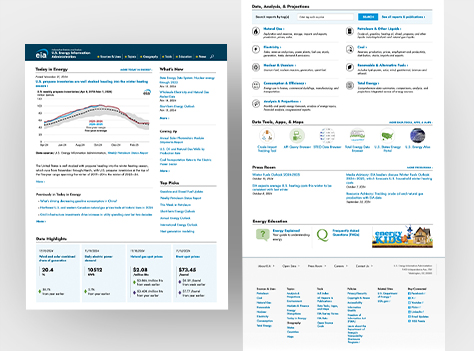
We updated our homepage to make our information more accessible, and we enhanced our Today in Energy analysis
In September, we launched the newly styled EIA.gov homepage, which offers easier navigation, more information, and a more streamlined, modern look. The new layout refines several existing features:
- We now prominently showcase multiple Today in Energy (TIE) articles on our homepage.
- We moved the Our Experts Speak section to the Press Room section to highlight EIA leadership engagement and press releases in one easy-to-find spot.
- We redesigned our second-level pages on EIA.gov to improve navigation and to make information more easily accessible.
- We reoriented an updated Data Highlights section to the middle of the page so readers can quickly scan and assess the latest data.
- We changed our font to create more white space and make the text more reader friendly.
Beginning in January, we enhanced Today in Energy to include a broader range of analysis. TIE now includes content previously published as This Week in Petroleum, the Electricity Monthly Update, and the Natural Gas Weekly Update’s In the News.
As part of our reimagined TIE, we also introduced:
- More frequent postings
- Advanced filtering by article type and topic
- Larger images and charts
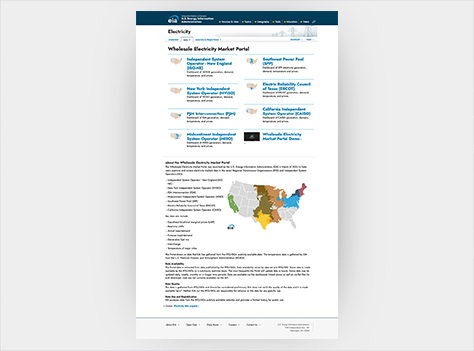
We launched the Wholesale Electricity Market Portal
Our new Wholesale Electricity Market Portal helps users examine and access electricity market data provided by the seven Regional Transmission Organizations and Independent System Operators across the United States. Key data sets include:
- Day-ahead locational marginal prices (LMP)
- Real-time LMPs
- Actual electricity load
- Forecast electricity load
- Generation by fuel mix
- Electricity interchanges (transfers)
- Temperature of major cities

Model transparency increased with open-source code
In May, we launched the EIA GitHub page, where we make open-source code available under the Apache 2.0 license. As part of this launch, we created a code repository for the National Energy Modeling System (NEMS). NEMS is a sophisticated, long-term energy model we use to produce our Annual Energy Outlook (AEO), and we want it to be more accessible to our stakeholders. In September, we added a code repository for a companion tool that allows users to visualize previous AEO projections against actual outcomes.
We strive to make our data and analytic products transparent and accessible. By making the code that underlies our products available to the public, we hope to promote trust and confidence and foster better understanding of how stakeholders can best use EIA long-term projections.
In April, we shared the latest information on model improvements for the AEO2025, the three new NEMS modules, and developments in other modules.
We released the BlueSky Prototype
We are developing our next-generation energy systems model under Project BlueSky, which addresses emerging issues and the uncertainties associated with markets, technologies, and international trade.
In October, we released the BlueSky Prototype publicly via GitHub under the Apache 2.0 open-source license. We are giving the modeling community an early opportunity to test the code and provide feedback on the overarching model framework and code implementation. We also released a working paper that describes the motivation and approach for the prototype model.
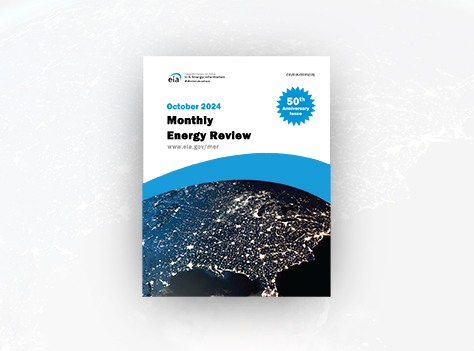
The Monthly Energy Review celebrated 50 years
The Monthly Energy Review (MER) was first published in October 1974 by the Federal Energy Administration—the predecessor of the U.S. Department of Energy. The October 1977 edition was the first to bear the name of the newly designated U.S. Energy Information Administration. The MER is our primary report on recent and historical U.S. energy statistics. The MER has grown from 22 tables and 55 graphs in its first issue to 101 tables and 182 graphs as of the October 2024 publication. Recent data additions include electric vehicle (EV) inventory and EV electricity use, electricity net summer capacity and capacity factors, and a new total energy flow diagram.
We expanded monthly crude oil, natural gas, biofuels, and propane forecasts
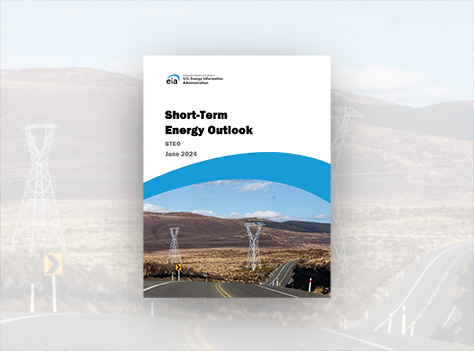
In June’s Short-Term Energy Outlook (STEO), we added new regional crude oil and marketed natural gas production forecasts for a more complete breakout of U.S. Lower 48 (L48) states' production data. The new regions are the Appalachia, Bakken, Eagle Ford, Haynesville, Permian, and rest of the L48 states. Previously, the STEO forecast was limited to the total L48 states, Alaska, and the U.S. Federal Offshore Gulf of Mexico (GOM). We also added Table 10a, which includes drilling and productivity metrics for these regions, and Table 10b, which includes production for tight oil and shale natural gas.
Later in 2024, we started publishing forecasts for several new data series that better capture how biofuels are consumed and what share of total distillate fuel oil they account for. We also began publishing monthly retail propane price forecasts by region, and we added a new model for forecasting crude oil and natural gas production in the GOM.

We added renewable diesel data to the Petroleum Supply Monthly
In our March Petroleum Supply Monthly (PSM), we added data on the interregional movement of renewable diesel by rail. These new data add to our existing tanker and barge movement coverage for renewable diesel. With the new data, we now capture most of the renewable diesel movements to the U.S. West Coast, where the most renewable diesel is consumed in the United States.
In the March PSM, we also added petroleum data about condensate and scrubber oil field production, stock (inventory) change, and ending stocks.
We launched a new renewable electricity dashboard
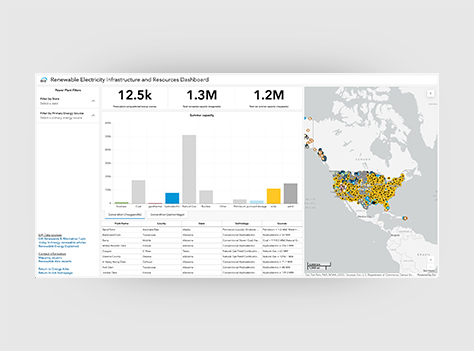
At the start of this year, we launched a new dashboard for renewable electricity in our U.S. Energy Atlas. This dashboard consolidates the previous biomass, geothermal, hydroelectric, wind, and solar maps into one new product that includes a map as well as charts and tables. With this new tool, users can select and filter by state or renewable source.
We tracked and reported energy disruptions
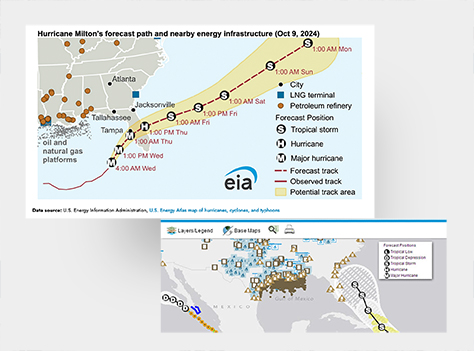
When several significant weather and other disruptive events affected large areas of the country, we published real-time and retrospective analysis of the related energy disruptions. We also directed our customers to our web tools that track the impact of disruptive events on energy infrastructure and markets:
- Before the start of the hurricane season, we analyzed AccuWeather’s forecast and explained the variables that can affect energy markets. When Hurricanes Francine, Beryl, Helene, and Milton all made landfall, we wrote about the effects on electricity demand and fossil fuel production, refining, and exports. After Hurricane Milton, we examined the effect on local gasoline prices. Our energy disruption maps provided information about energy infrastructure in the path of these hurricanes.
- We discussed the effect Yemen-based Houthi militia attacks had on shipping times and rates. Specifically, we examined how the volume of crude oil transiting an alternative route around the Cape of Good Hope increased as a result of these attacks and how this and other longer routes increased demand for bunker fuel.
- When the Francis Scott Key Bridge collapsed in Baltimore in March, it blocked the Port of Baltimore, the second-largest exporting hub for coal in the United States. We wrote about the amount of coal that typically travels through the port, and later in the year, we talked about how coal exports from Baltimore rebounded.
- Before the April 8 solar eclipse, we wrote about the effects the event could have on solar power. After the eclipse, we examined the decline in solar power, particularly in Texas, during the eclipse.

We enhanced the Winter Fuels Outlook
In October, EIA Administrator Joe DeCarolis delivered remarks and presented our Winter Fuels Outlook, which addresses price, consumption, and expenditure trends for major heating fuels for the upcoming winter.
For the first time, our Winter Fuels Outlook distinguishes space heating from other residential end uses in the consumption and expenditure forecasts. This year’s version is also the first to incorporate forecasts for retail propane prices, which were introduced in the September 2024 Short-Term Energy Outlook.
We began collecting information on battery storage applications
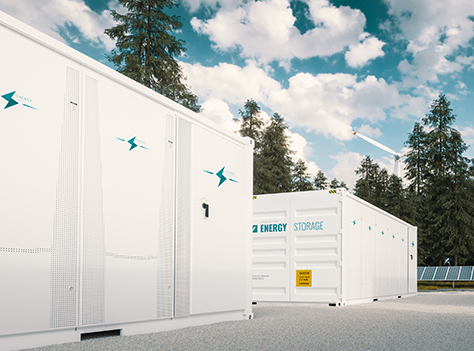
Battery storage can be used in a number of ways, and we recently began asking utilities to identify the primary purpose of their battery storage on Form EIA-860, Annual Electric Generator Report. June’s early data release was the first time we published this data element. This report provides detailed information on battery storage applications, including information on use cases, generator configuration, and other details on the energy capacity of planned batteries.