
Florida’s retail gasoline price stays stable after Hurricane Milton despite shortages
Hurricane Milton made landfall on Florida’s western coast on October 9 as a Category 3 hurricane. The hurricane and accompanying rain, winds, and flooding disrupted key gasoline supply chains to the state, leaving hundreds of retail gasoline stations without fuel. However, the average retail price of regular gasoline in Florida has remained relatively stable in the storm’s aftermath, remaining flat at $3.04 per gallon (gal) this week, as supply chains began to recover.
The Florida average price reflects an estimate for retail prices across the entire state of Florida, and prices may vary significantly across regions, particularly because of major disruptions such as Hurricane Milton.
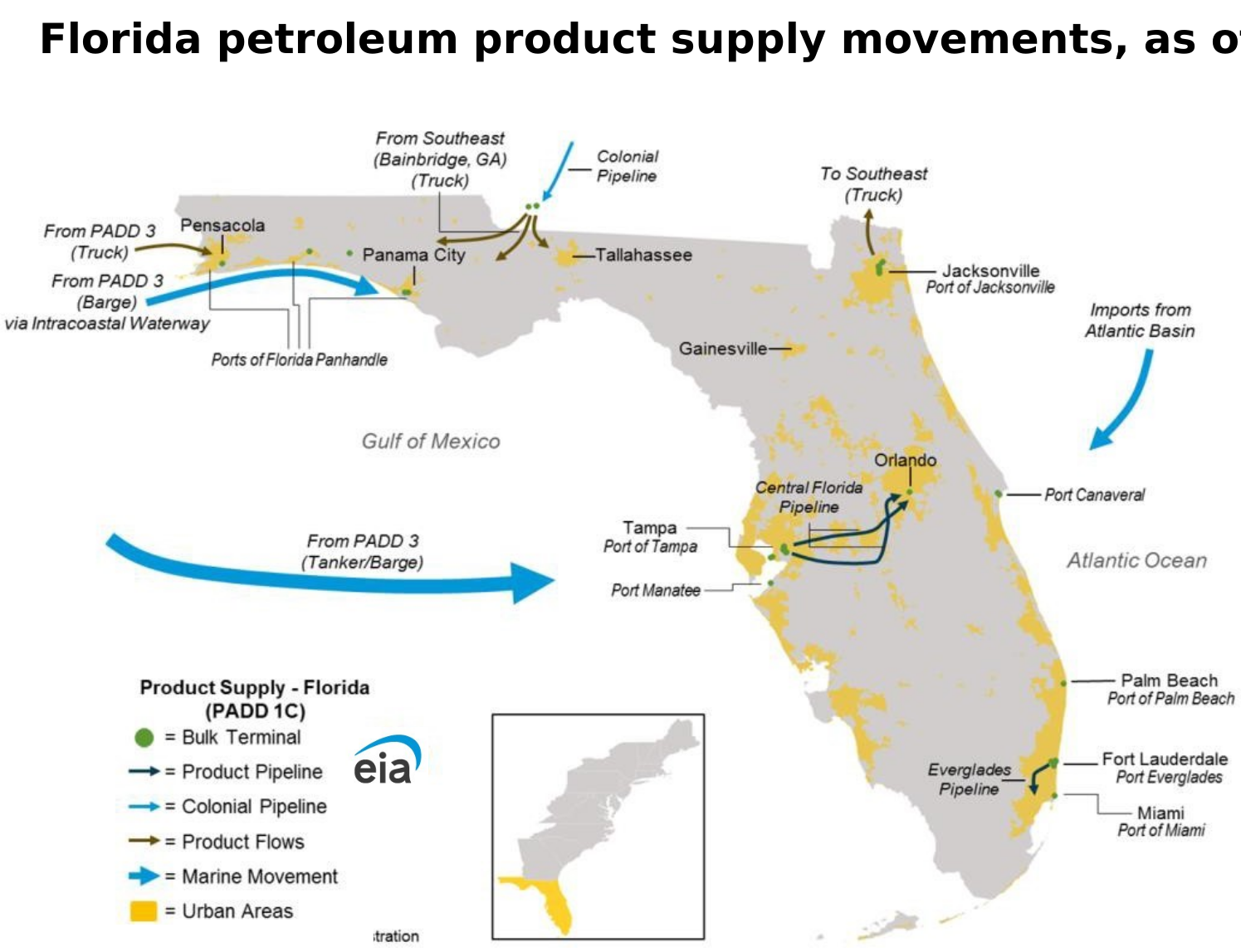
Hurricanes can limit fuel supplies in Florida because Florida doesn’t have refineries or gasoline pipelines connecting it to other states with excess supply. Instead, Florida relies on gasoline delivered by ship from domestic and international sources. Because of the storm, several ports were temporarily closed, but others remained open with restrictions. Authorities at Port Tampa Bay, where nearly half of Florida’s petroleum product supply is brought in, reported no significant damage to docks, but they noted infrastructure damage, power outages, and road closures that could disrupt supply.
Shipments from domestic refineries along the Gulf Coast, supplemented with imports from abroad, supply most of Florida. Florida’s gasoline arrives through several large ports located along its coastlines, each transporting fuel to nearby markets by truck or short-distance pipeline. The regions and their respective mode of transporting gasoline is as follows:
- Western Florida: trucked from terminals in Port Tampa Bay
- Southern Florida: trucked from terminals in Port Everglades, just north of Fort Lauderdale
- Central Florida: transported by pipelines from Tampa, but some petroleum products trucked from Port Canaveral on the Atlantic Coast
- Northeastern Florida: trucked from terminals in the Port of Jacksonville
Some gasoline shipments arrive in Florida by both pipeline and truck. At a terminal in Bainbridge, Georgia, gasoline is transferred from the Colonial Pipeline system to a long-distance tanker truck for delivery to the Florida panhandle. Trucks and barges from nearby refineries in Alabama and Mississippi supply the rest of western Florida.
The average retail gasoline price in Florida was unchanged as of October 14 compared with October 7. In the United States overall, the average retail gasoline price was $3.17/gal, a 1% increase compared with last week.
Price spikes in response to shortages at individual stations contribute to sharp increases at specific locations, which are reflected in statewide average prices. To help address these shortages, the Florida Division of Emergency Management (FDEM) procured and deployed emergency fuels. On October 15, the governor’s office reported that FDEM deployed 508,600 gallons of diesel and 686,200 gallons of gasoline and that public fuel distribution sites were open at several locations.

Note: Retail price is for regular grade gasoline, all formulations.
Principal contributors: Kevin Hack, Kimberly Peterson, Tara Bennett-Chirico