
Data center server energy use grows across the commercial building stock
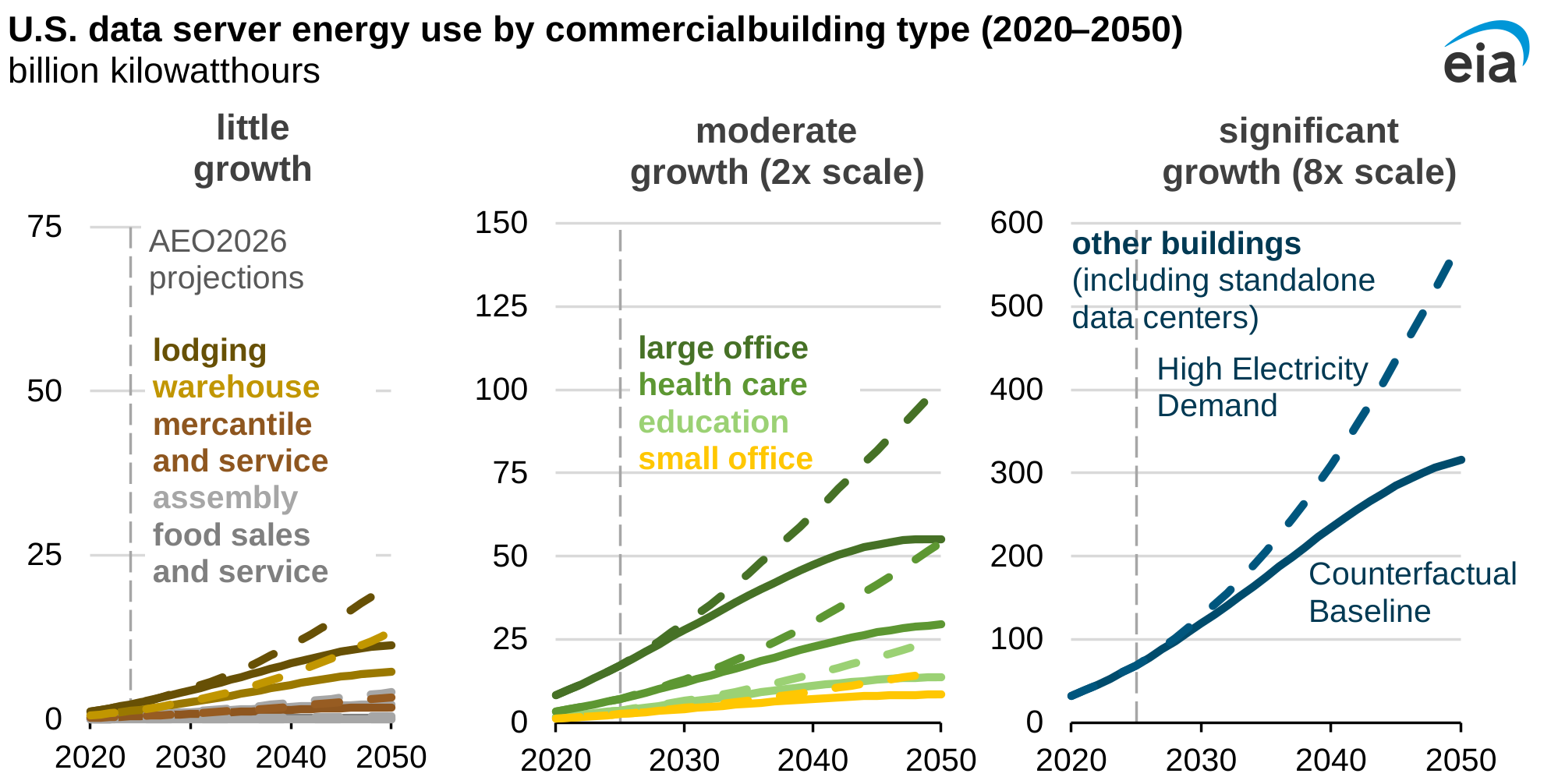
In the Annual Energy Outlook 2026 (AEO2026), our long-term outlook, we project electricity consumed by data center servers will increase across the commercial building stock, increasing more in standalone data centers than in all other data center rooms combined. By 2050, server consumption alone reaches between 446 billion kilowatthours (BkWh) and 818 billion BkWh. The highest end of the range reflects faster growth in server power draw and installed stock in our High Electricity Demand case. Standalone data centers are represented in the other buildings category, where we project servers will consume 581 BkWh of electricity in 2050 in our High Electricity Demand case. Across all cases, servers alone accounted for an estimated 7% of commercial sector electricity consumption in 2025. Data center server electricity use grows to 22%–33% of commercial building electricity use by 2050 across our cases.
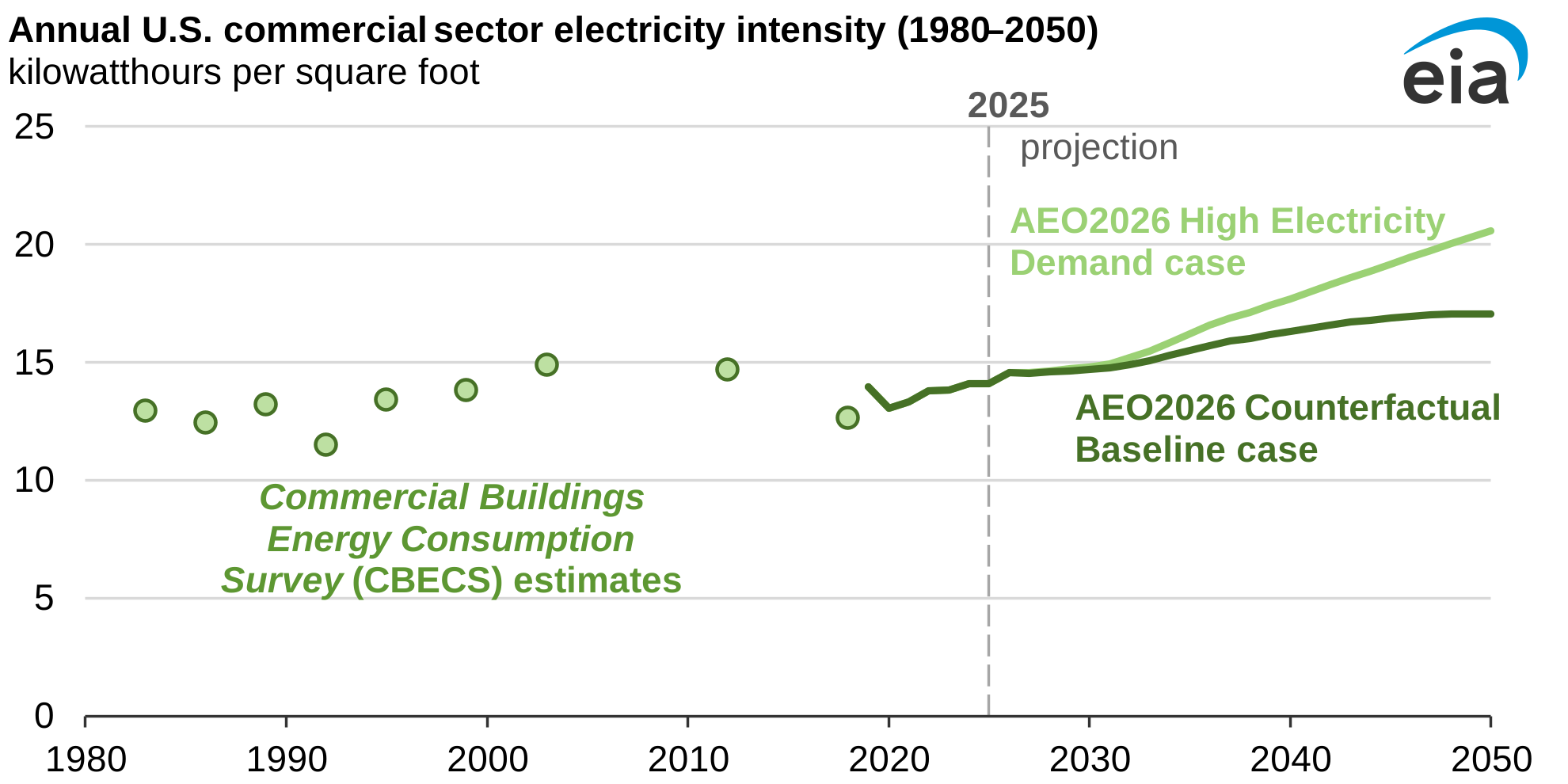
The commercial sector’s electricity intensity, measured in kilowatthours (kWh) of electricity consumed per square foot, exceeds the 2003 historical high of 14.9 kWh per square foot for the first time in 2031–2032. In the 2003 Commercial Buildings Energy Consumption Survey, electricity intensity for the newest buildings, constructed from 1990 onward, was as much as twice that of the oldest buildings, constructed prior to 1959. Data center servers and associated end uses that support server operation, including space cooling and ventilation, increase commercial energy intensity in our AEO2026 projections.
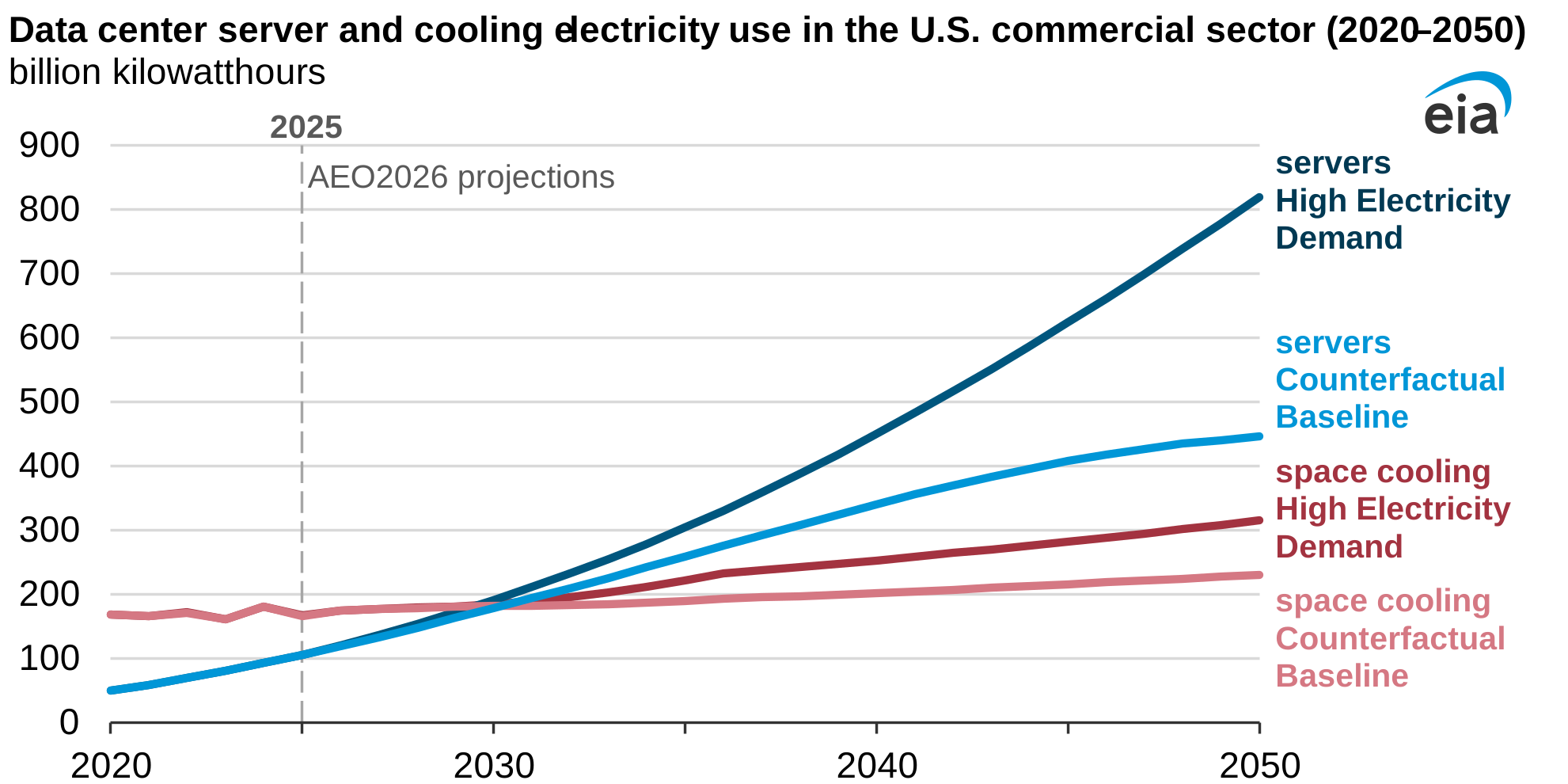
Data center servers require cooling to enable chips and related IT equipment to operate efficiently. We assume space cooling requirements in data center floorspace are as much as 2.9 times as energy intensive as non-data center floorspace, on average. Service demand for space cooling is sensitive to assumptions about population migration and the weather. Using the same population and weather assumptions, electricity consumption for space cooling in the High Electricity Demand case is 84 BkWh higher than the Counterfactual Baseline case in 2050 to support more intensive data center operations.
For AEO2026, we updated the Commercial Demand Model to report data center server electricity use separately from the broader category of commercial computing. Data center servers are assumed to have an end-use load shape that is essentially flat, meaning, in effect, that demand for electricity to power servers is consistent across all hours in a day.
In our Counterfactual Baseline case, we assume that after 2040, servers will become increasingly efficient, resulting in a 10% reduction in average annual operational power draw every three years, above and beyond historical efficiency trends. However, continued growth in server installations drives overall consumption growth. We make no such assumption about efficiency improvement in the High Electricity Demand case, where we also assume that AI servers will account for a larger share of the installed stock of servers over time, relative to the Counterfactual Baseline case.
Our AEO2026 was released April 8, 2026, and in most cases, only considers laws and regulations as of December 2025. Any legislation, regulations, executive actions, and court rulings after that date are not included.
Principal contributor: Courtney Sourmehi