
Brent crude oil spot prices surge past futures price in April
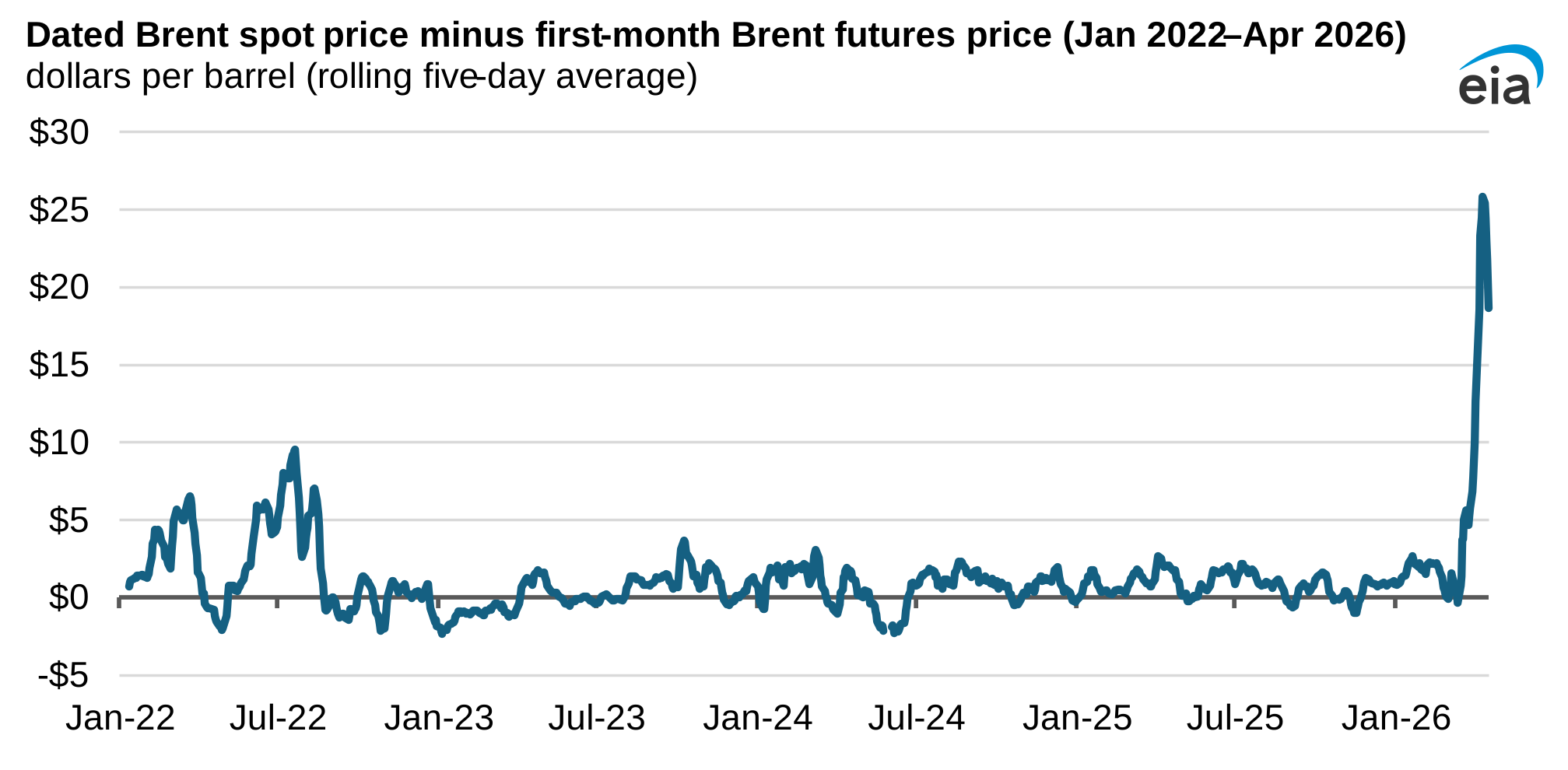
The Dated Brent spot price increased to a premium of more than $25 per barrel (b) compared with the front-month Brent futures contract in early April. Brent crude oil price benchmarks are widely used by commodities traders, financial market participants, economists, and others to assess changes in global petroleum prices more broadly.
High Brent backwardation along the lines of what we’ve seen in recent weeks likely reflects extreme market tightness in the very short term since the closure of the Strait of Hormuz. The scramble by buyers to secure volumes to replace obstructed shipments that would have come through the strait is better represented in spot market prices than in futures contracts, which are pricing crude for later delivery.
Brent crude oil prices primarily refer to a basket of North Sea crude oil grades, including Brent, Forties, Oseberg, Ekofisk, and Troll (BFOET). Slow declines in production of these crude oil grades led most Brent price assessments to devise methods to incorporate West Texas Intermediate (WTI), priced at Midland in the United States, into the basket of Brent crude oil grades in 2023.
The front-month futures contract for Brent crude oil, traded on the Intercontinental Exchange is the most widely used measure of the Brent price because it is so widely traded by physical and financial market participants. Futures contracts are exchange-traded agreements to buy and sell commodities at an agreed-upon date in the future. The front-month refers to the earliest delivery month available for which purchasers can buy Brent crude oil with a futures contract.
All trading of the Brent futures contract ceases on the last business day of the second month preceding the target contract month. The front-month futures contract that is being actively traded in the month of April is for volumes of crude oil that will be delivered in June. When the contract rolls over after the last business day in April, then the contract for July delivery will become the front-month contract that is traded in May.
The front-month futures contract is different from the spot market. Spot market prices for commodities are for immediate or near-immediate delivery. Dated Brent typically refers to the Brent crude oil spot market and reflects trading and pricing for a given cargo of crude oil as it is loaded from a handful of North Sea terminals (or a WTI cargo delivered on a CIF basis at Rotterdam) on a specific date. As they are purchased, these crude oil volumes are then shipped by the buyer to a port facility where they can be transported to a crude oil refinery for processing into finished products. A handful of firms produce price assessments of the Dated Brent price, including S&P Platts, Argus, and Reuters.
Under normal market conditions, the spread between the Dated Brent spot price and the front-month Brent futures price is narrow and tends to be positive—a market condition called backwardation—which reflects that a barrel of crude oil now is more valuable than a barrel in two months. Typically, both prices move together on similar news and market developments.
Principal contributor: Kevin Hack
Tags: spot prices, Brent, liquid fuels, crude oil, oil/petroleum