
U.S. imports of major transportation fuels decreased in 2024
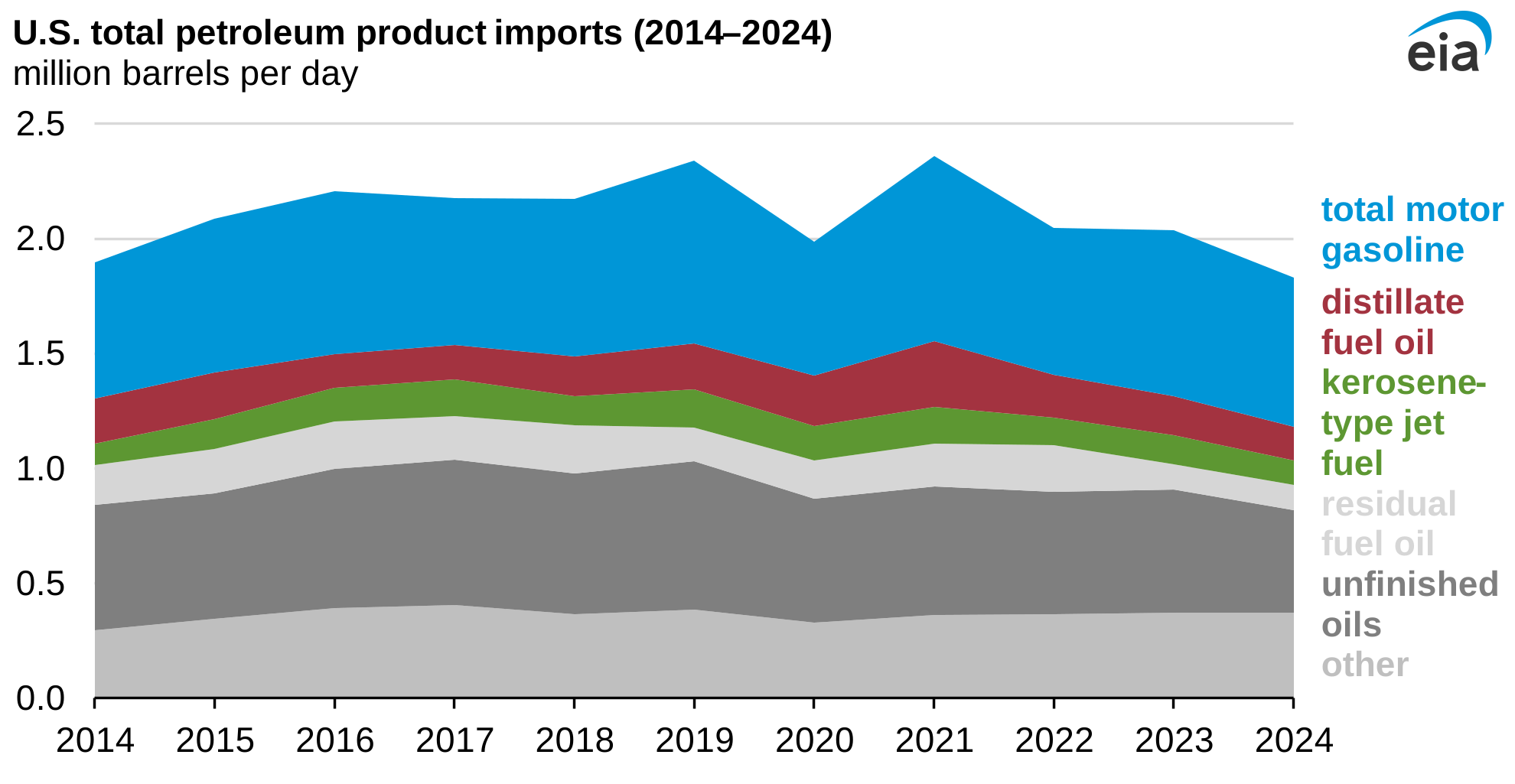
U.S. imports of petroleum products decreased by 210,000 barrels per day (b/d) in 2024 to average 1.8 million b/d. Imports of all major transportation fuels, such as motor gasoline, diesel, and jet fuel, as well as other products, such as unfinished oils, decreased.
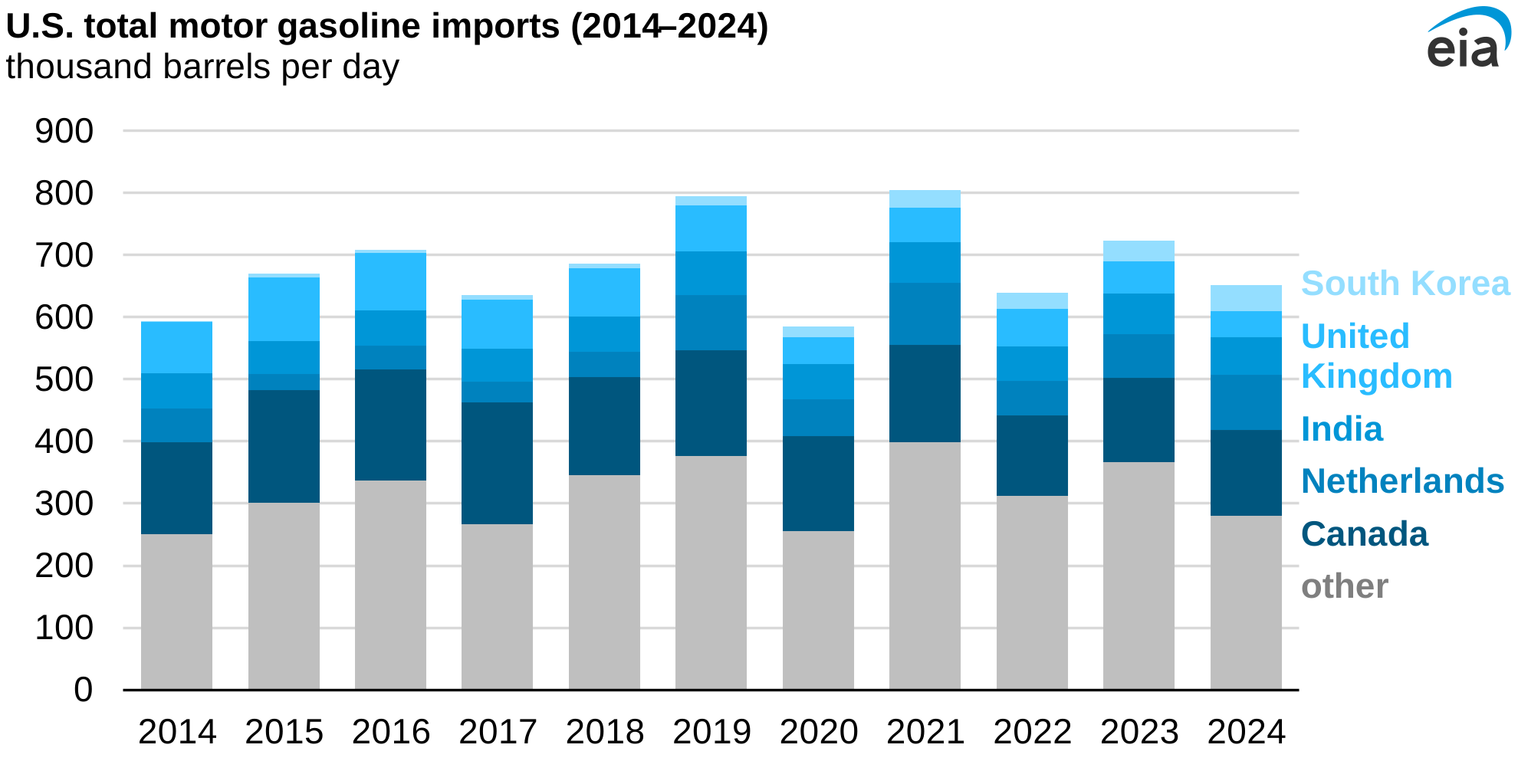
Motor gasoline makes up the largest share of U.S. petroleum product imports because it is the most widely consumed petroleum fuel in the United States. In 2024, the United States imported 651,000 b/d of motor gasoline, about 36% of all petroleum product imports and 75,000 b/d less than in 2023. U.S. gasoline consumption in 2024 was largely unchanged from 2023; inventories fell in 2024 after they had increased in 2023, reflecting the decrease in imports.
Although the United States imports more gasoline than any other petroleum product, the United States exported 226,000 b/d more gasoline than it imported in 2024. The United States has been a net exporter of gasoline every year since 2016.
U.S. petroleum product exports primarily originate from the Gulf Coast due to the region’s concentrated refining capacity and proximity to major ports. U.S. Gulf Coast refinery production exceeds regional market demand, resulting in exports by waterborne tankers. Although Gulf Coast refineries have a wide distribution network, infrastructure constraints limit their ability to supply fuels to all parts of the country. Consequently, certain regions rely on imported petroleum products instead of transporting them from the Gulf Coast.
U.S. gasoline imports came from a variety of countries, but the largest five suppliers were Canada, the Netherlands, India, the United Kingdom, and South Korea. All these countries except Korea are among the top five sources for U.S. gasoline imports over the last 10 years (2014–23). Imports from Canada are the primary source of gasoline for several northeastern states and make up a small share in other markets throughout the country.
Canada is also the largest source of distillate imports into the United States. The United States imported 144,000 b/d of distillate fuel oil in 2024, 95% of which came from Canada. U.S. imports of distillate primarily come into the East Coast (112,000 b/d, or 78%). In addition to use as a transportation fuel, distillate imports are also the primary source of home heating oil for the U.S. Northeast.
Jet fuel imports in 2024 totaled 109,000 b/d, down from 127,000 b/d in 2023. Jet fuel imports flowed primarily to the West Coast. South Korea supplied 77,000 b/d, or 71%, of U.S. jet fuel imports last year. The next-largest suppliers were Canada, China, India, and Kuwait.
Imports of petroleum products other than gasoline, distillate fuel oil, and jet fuel primarily consisted of residual fuel oil for use as a marine bunker fuel and unfinished oils used as feedstock for U.S. refineries to produce other finished products.
Principal contributor: Kevin Hack