
China’s solar capacity installations grew rapidly in 2024
Note: NEA considers utility-scale solar to include projects of at least six megawatts of installed alternating current capacity.
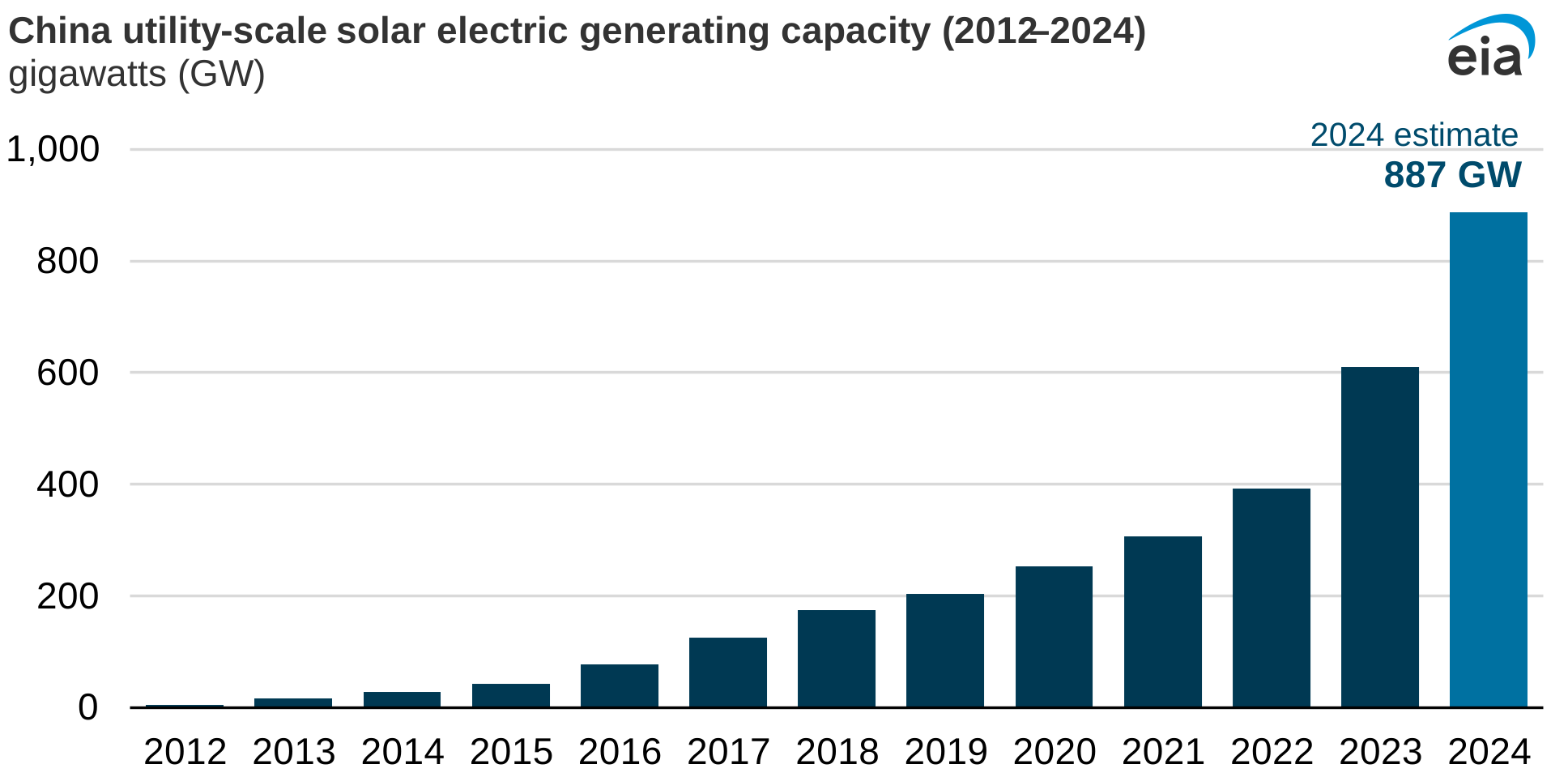
Utility-scale solar power capacity in China reached more than 880 gigawatts (GW) in 2024, according to China’s National Energy Administration. China has more utility-scale solar than any other country. The 277 GW of utility-scale solar capacity installed in China in 2024 alone is more than twice as much as the 121 GW of utility-scale solar capacity installed in the United States at the end of 2024.
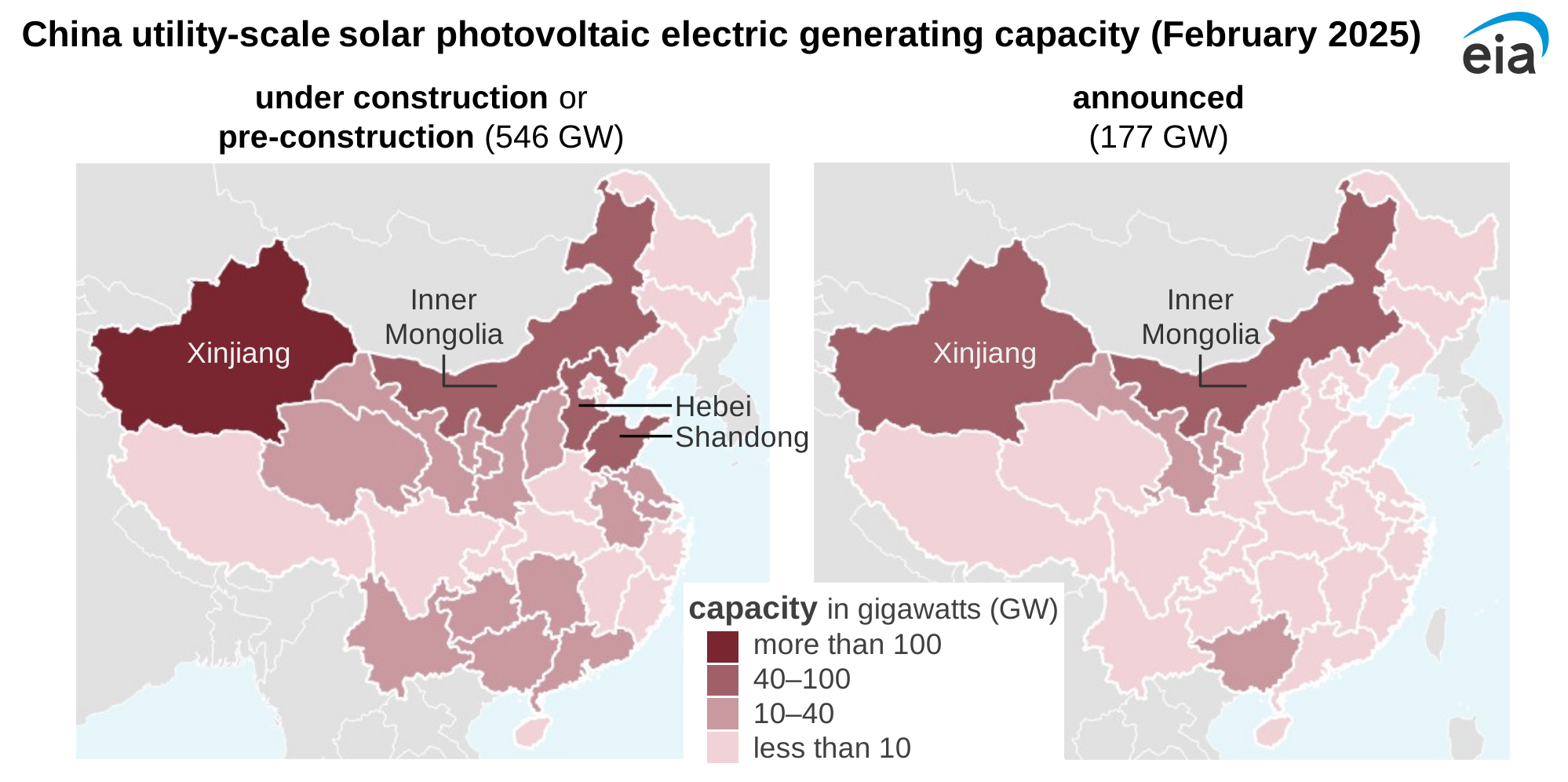
Planned solar capacity projects will likely lead to continued growth in China’s solar capacity. More than 720 GW of solar capacity are in development: about 250 GW under construction, nearly 300 GW in pre-construction phases, and 177 GW of announced projects, according to the Global Solar Power Tracker compiled by Global Energy Monitor.
Some of the largest projects under development are in the Inner Mongolia region in northern China. The Kubuqi Desert in Inner Mongolia is the planned site of the largest collection of solar projects called the Great Solar Wall.
Plans for the Great Solar Wall, which is scheduled to be completed by 2030, provide for around 100 GW of installed capacity covering an area more than 250 miles long and 3 miles wide across Inner Mongolia and neighboring regions. Two components of the Great Solar Wall, the Inner Mongolia Kubuqi Desert North and South Megabase, are in pre-construction stages with planned installed capacities of 7 GW and 6 GW, respectively.
More projects are announced but not yet in pre-construction phases, such as Ordos Desert Control solar farm and the Xinjiang-Sichuan Power Export solar farms, which register the largest planned capacity among the announced developments. Each of those projects has an intended capacity of 8.5 GW.
Note: The GEM data include projects of at least 1 megawatt of installed capacity.
Principal contributor: Katherine Antonio
Tags: generation, electricity, China, solar, capacity, map