
Small volumes of renewable diesel are now consumed on the U.S. East Coast
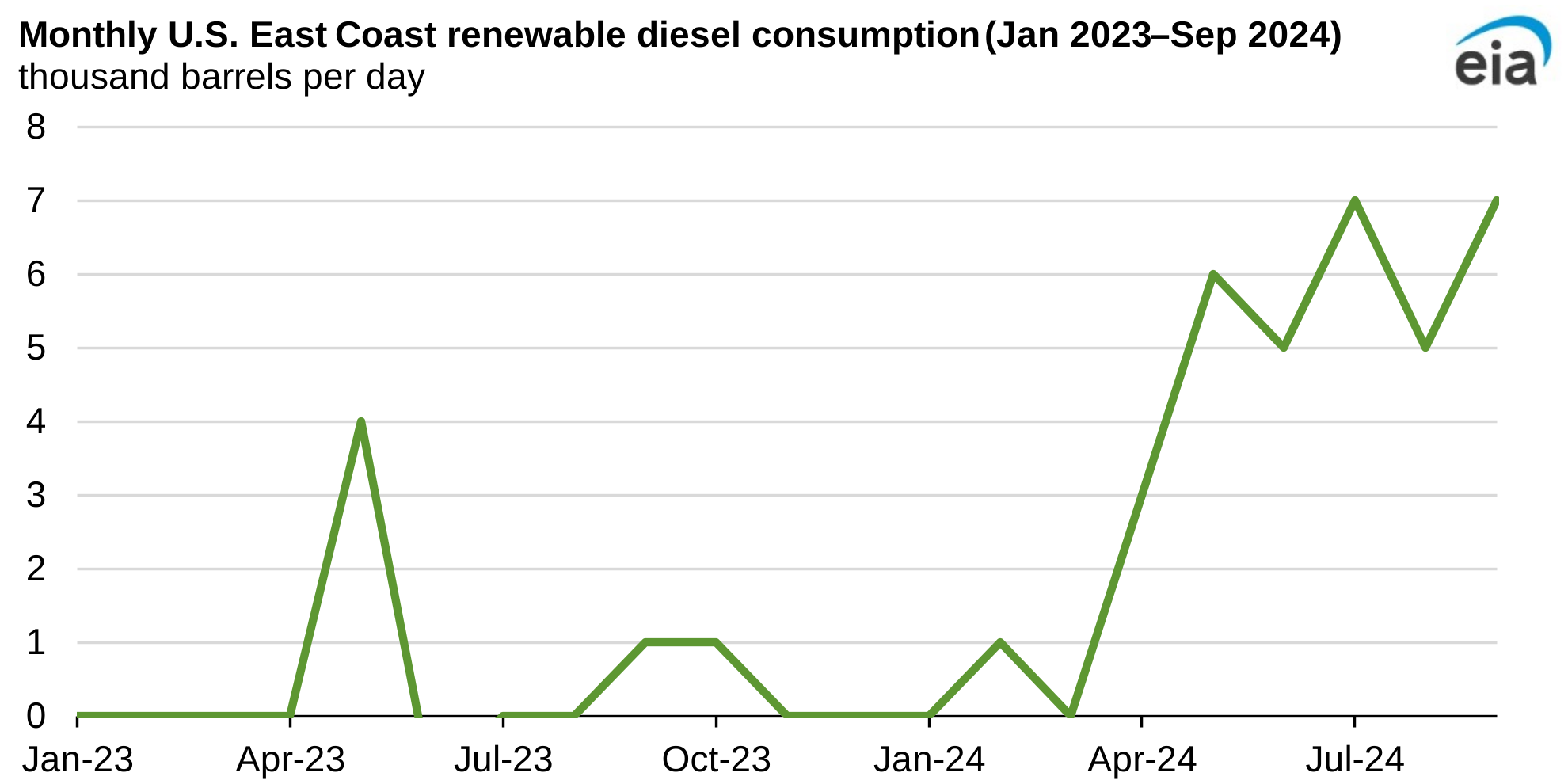
Note: Consumption is defined as product supplied plus refinery and blender net inputs.
In 2024, the U.S. East Coast became a consistent destination for small volumes of renewable diesel as a few suppliers and local governments began offering or consuming the fuel. Because no renewable diesel is produced on the East Coast, suppliers and local governments are procuring their supply from a combination of imports and interregional U.S. shipments.
Renewable diesel is a transportation and heating fuel that is chemically equivalent to petroleum-based distillate and is produced using fats, oils, or greases rather than petroleum. The fuel is primarily consumed on the West Coast because California, Oregon, and Washington are the only states with active clean fuel programs that incentivize its consumption. However, small but increasing volumes of renewable diesel are now being consumed in other U.S. regions, notably the East Coast.
In each of the five most recent months for which we have historical data (May–September), consumption of renewable diesel on the East Coast has been above the previous record high, ranging from 5,000 barrels per day (b/d) to 7,000 b/d.
The increase in renewable diesel consumption on the East Coast is attributable to decisions by a few suppliers and local governments:
- Sprague, an energy supplier in the Northeast, opened the first East Coast retail station offering renewable diesel in January 2024. It also opened renewable diesel terminals in the Bronx in New York City in June 2023 and in upstate New York in June 2024.
- Neste, the world’s largest producer of renewable diesel, partnered with fuel deliverers Diesel Direct and K.W. Rastall Oil to supply renewable diesel to New Jersey Natural Gas and the Township of North Brunswick in New Jersey.
- In August 2024, the energy supplier Global Partners began offering renewable diesel at its terminal in East Haven, Connecticut.
A little more than half of the renewable diesel supplied to the East Coast in 2024 has come from imports from Neste’s plants in Singapore, Finland, and the Netherlands. Through September 2024, Neste delivered renewable diesel to the East Coast each month except for April and May, shipping an average of 3,000 b/d during the first nine months of the year.
Of the renewable diesel imported into the East Coast, about two-thirds have been destined for New Jersey, with the remainder for Georgia, according to company-level data. These trade dynamics could change in 2025 with implementation of the Section 45Z Clean Fuel Production Credit, a provision in the Inflation Reduction Act of 2022 that would make biofuel imports ineligible for tax credits.
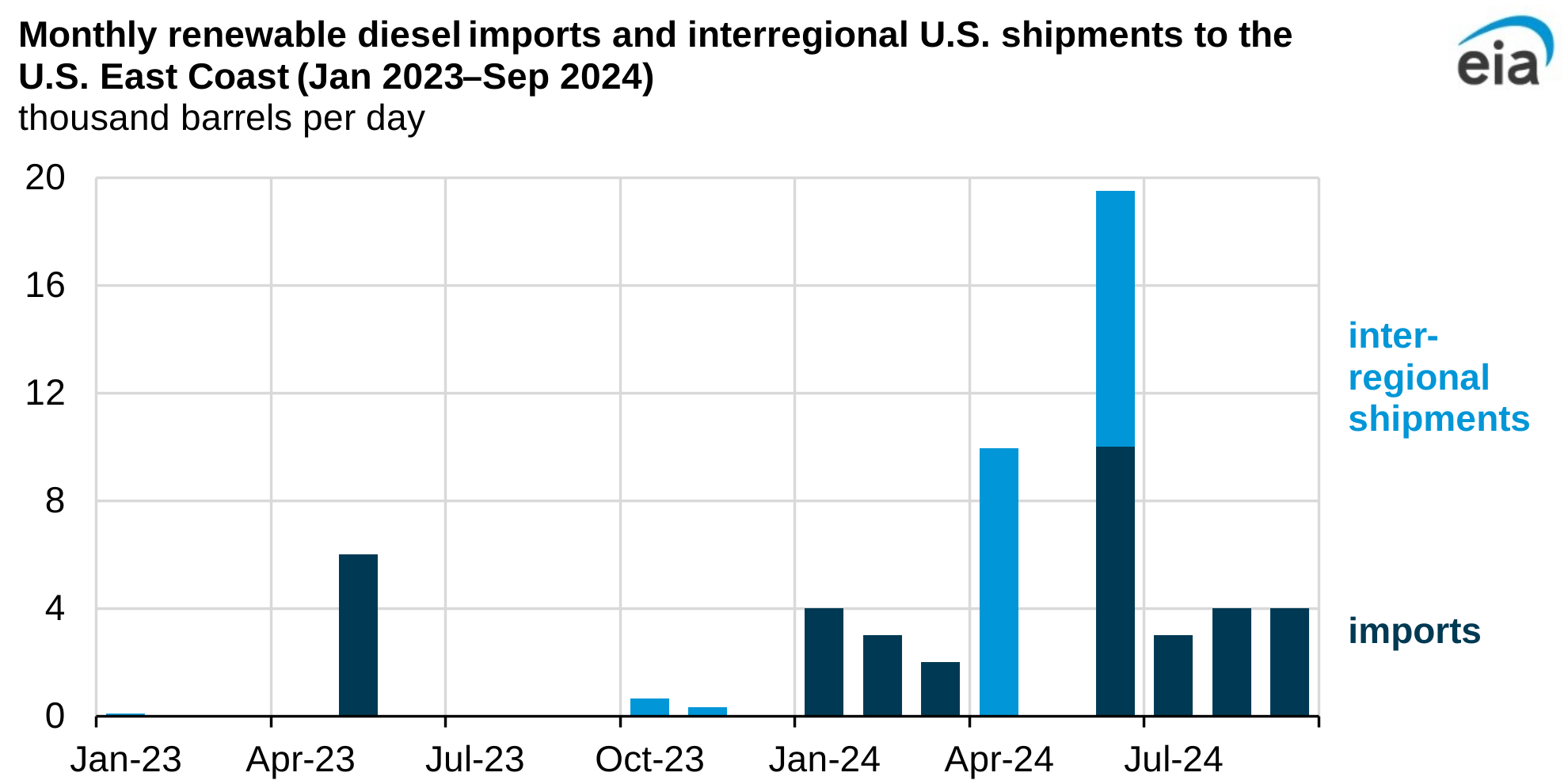
The remaining renewable diesel supplied to the East Coast in 2024 has come from tankers or barges coming from the U.S. Gulf Coast. Shipments to the East Coast arrived in only April and June, but the deliveries supplied the East Coast with enough renewable diesel to satisfy the region’s demand for about two months.
The effects of East Coast renewable diesel consumption on the national and international renewable diesel markets have been modest but not inconsequential. The East Coast now holds almost 10% of renewable diesel inventories in the United States and attracts almost 10% of U.S. imports. In addition, interregional U.S. shipments can take up cargo space on the limited number of ships that comply with the Merchant Marine Act of 1920, also called the Jones Act, which regulates the shipping of goods between U.S. ports and in U.S. coastal waters.
Despite recent growth in East Coast renewable diesel consumption, renewable diesel has yet to exceed 1% of the region’s distillate fuel oil pool. Without any clean fuel programs in East Coast states, renewable diesel is unlikely to significantly displace distillate fuel oil in the region. However, several states in the Northeast have proposed legislation to introduce clean fuel programs that would potentially boost renewable diesel consumption in the region.
Principal contributor: Jimmy Troderman