
Weather events have reduced our forecast of U.S. hydropower generation by 6% this year
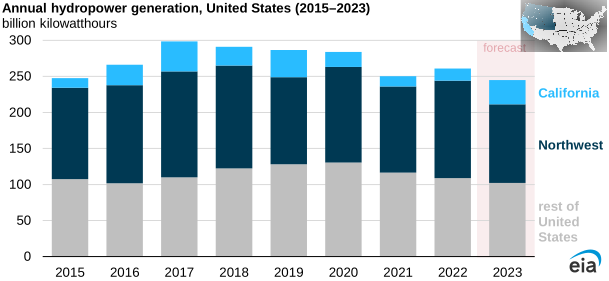
Weather events in the U.S. Northwest this past spring and summer led to lower water supply, prompting us to reduce our forecast of U.S. hydropower generation by 6% this year compared with last year.
About one-half of the country’s hydropower is generated in the Northwest. Precipitation that accumulated in the Northwest over last fall and winter provided the region with a plentiful water supply outlook for the summer months, with near- to above-average levels by the beginning of April. However, above-normal temperatures in May in the Northwest melted snow rapidly, resulting in a significant loss of water supply, measured as Snow Water Equivalent in higher elevations. With less water available, the region generated 24% less hydropower in the first half of this year than during the same period in 2022. This year, we expect 19% less hydropower generation in the Northwest than in 2022.
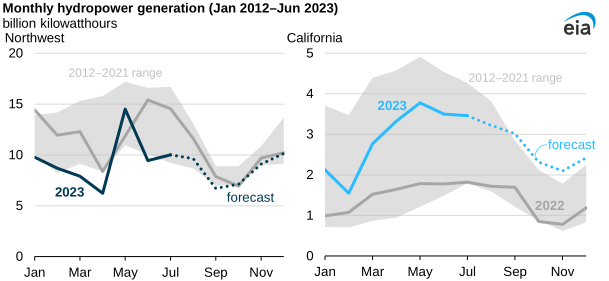
The impact of decreased hydropower generation in the Northwest is offset by higher-than-expected generation in California, where record-breaking winter precipitation filled reservoirs and left a deep snowpack across the state’s Sierra Nevada mountains. California had 94% more hydropower generation in the first six months of this year compared with the first half of last year. We forecast 99% more hydropower generation in California this year compared with 2022.
Drought, which includes below-normal precipitation and snowpack accumulation, very dry soil, and higher-than-normal temperatures, directly affects water supply. In most western regions, particularly California, drought conditions have significantly improved compared with a year ago, according to data from Drought Monitor. However, parts of the Northwest, particularly around the Columbia River Basin, have had increasingly severe drought conditions since June 2023. These conditions will limit water supply, which could limit hydropower generation in the future.
The National Oceanic and Atmospheric Administration’s Climate Prediction Center issued an El Niño advisory in June 2023. The El Niño conditions are present and expected to gradually strengthen into the winter. El Niño is associated with wetter-than-average conditions in the Southwest United States, including parts of California, and warmer-than-average temperatures in the Northwest. Water supply for the new water year, which starts on October 1, will be influenced by the El Niño conditions, which are likely to affect hydropower generation for the remainder of 2023.
Principal contributor: Lindsay Aramayo