
Number of drilled but uncompleted U.S. wells continues to decline from record in 2020
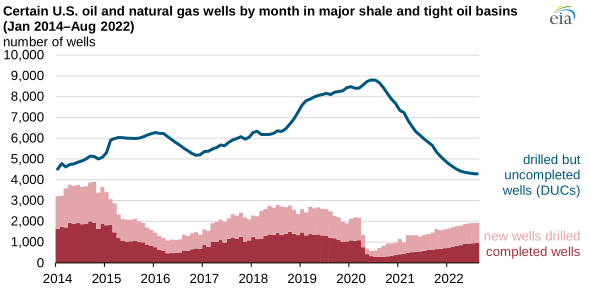
Based on our latest Drilling Productivity Report (DPR), drilled but uncompleted wells (DUCs) in all U.S. DPR regions totaled an estimated 4,283 wells in August 2022, the least in any month since we started estimating DUCs in October 2013. The decline in DUCs in most major U.S. onshore oil- and natural gas-producing regions indicates that more wells are being completed and fewer new wells are being drilled.
In the second quarter of 2020, COVID-19 mitigation efforts resulted in less worldwide demand for petroleum products. Crude oil and natural gas producers shut in existing production and halted completions of new wells in the United States. Based on our current estimates, DUCs reached a record of more than 8,800 wells in second-quarter 2020.
Due to continued market uncertainty and limited access to new investment capital, oil and natural gas producers have focused their spending on existing operations. Since June 2020, the overall number of DUC wells has steadily declined by an average of 227 DUCs per month during 2021 and by 82 DUCs per month during 2022. For August 2022 (the most recent month available), DUCs totaled 4,283 wells in all DPR regions.
The number of completed wells has increased from a low of 253 in June 2020 to 969 in August 2022 because producers have been accelerating the completion of DUCs.
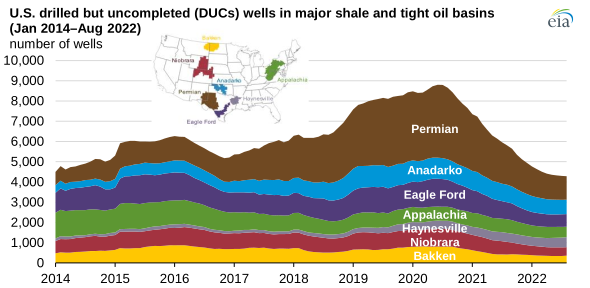
Since the second quarter of 2020, DUCs have declined the most in the Permian region. Oil makes up most Permian production, but significant volumes of natural gas are also produced in the Permian region in the form of associated natural gas. DUCs have also declined in the Appalachia region, the largest natural gas-producing region in the United States. Only the Haynesville region has seen a slight increase, by 100 DUCs, because of growth in natural gas demand from newly added liquefied natural gas (LNG) export capacity on the Gulf Coast.
In 2022, drilling for both oil- and natural gas-directed wells has increased in the United States, according to weekly data collected by Baker Hughes. Natural gas-directed rigs total 160 as of September 30, an increase of 53 so far this year. Oil-directed rigs total 602, an increase of 481 so far this year. Although the total number of U.S. DUC wells has declined overall throughout 2022, this increase in drilling activity has slowed the monthly decline. In August, the number of DUC wells grew by 16, the smallest monthly addition since July 2020.
Principal contributor: Jozef Lieskovsky
Tags: natural gas, wells, crude oil, oil/petroleum, drilling