
Hydrocarbon gas liquids spot prices are generally bound by crude oil and natural gas
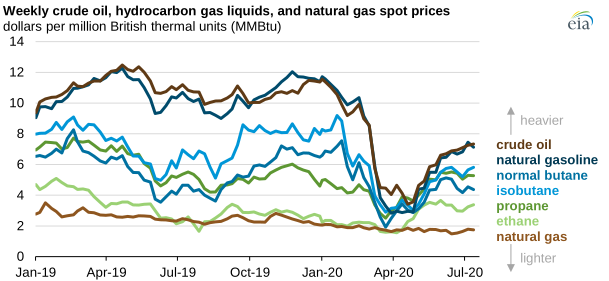
The combination of rapidly declining crude oil prices in March 2020 and relatively flat (and historically low) natural gas prices compressed hydrocarbon gas liquids (HGL) spot prices into a narrow price band from mid-March through the end of April 2020. This relatively narrow band has since widened as crude oil prices have increased and natural gas prices have remained low. Generally, HGL prices are based on their heat content and are bracketed by the prices of natural gas (the lower bound) and crude oil (the upper bound).
The heat content of a fuel reflects the amount of heat energy released by the combustion of a physical measure of energy, such as a barrel or cubic foot. The U.S. Energy Information Administration’s (EIA) Monthly Energy Review provides information on the heat content of various fuels, including all HGLs. For example, ethane, the lightest HGL, has an approximate heat content of 2.8 million British thermal units (Btu) per barrel.
Ethane generally costs about as much as natural gas on a heat-content equivalent basis. Ethane has two carbon atoms, which is one more carbon atom than methane—the primary constituent of natural gas. The supply of ethane has grown more rapidly than the petrochemical industry's ability to consume it as a feedstock. The remaining supply is left in the natural gas stream (a process referred to as ethane rejection), which tends to slightly increase the heat content of a cubic foot of natural gas.
Propane, the second-lightest HGL, which has three carbon atoms, has trended closer to other petroleum products because it can easily be substituted for other fuels for such uses as space heating, transportation, or petrochemical feedstock. A surplus of U.S. propane and high transportation costs to reach export markets have discounted U.S. propane compared with other petroleum products and international propane markets.
Heavier HGLs typically are priced closer to crude oil. Normal butane and isobutane are widely used in motor gasoline blending in the winter and to produce high-octane gasoline blending components. Natural gasoline, the heaviest HGL, has at least five carbon atoms and can be blended into motor gasoline throughout the year or blended with ethanol as a denaturant (which makes the ethanol unfit for human consumption). Because natural gasoline is a liquid at ambient temperature and pressure, it can more easily be shipped overseas. Natural gasoline is often priced close to crude oil on a heat content basis.
Principal contributors: Joshua Eiermann, Warren Wilczewski