
Refineries have shifted production away from gasoline to middle distillates
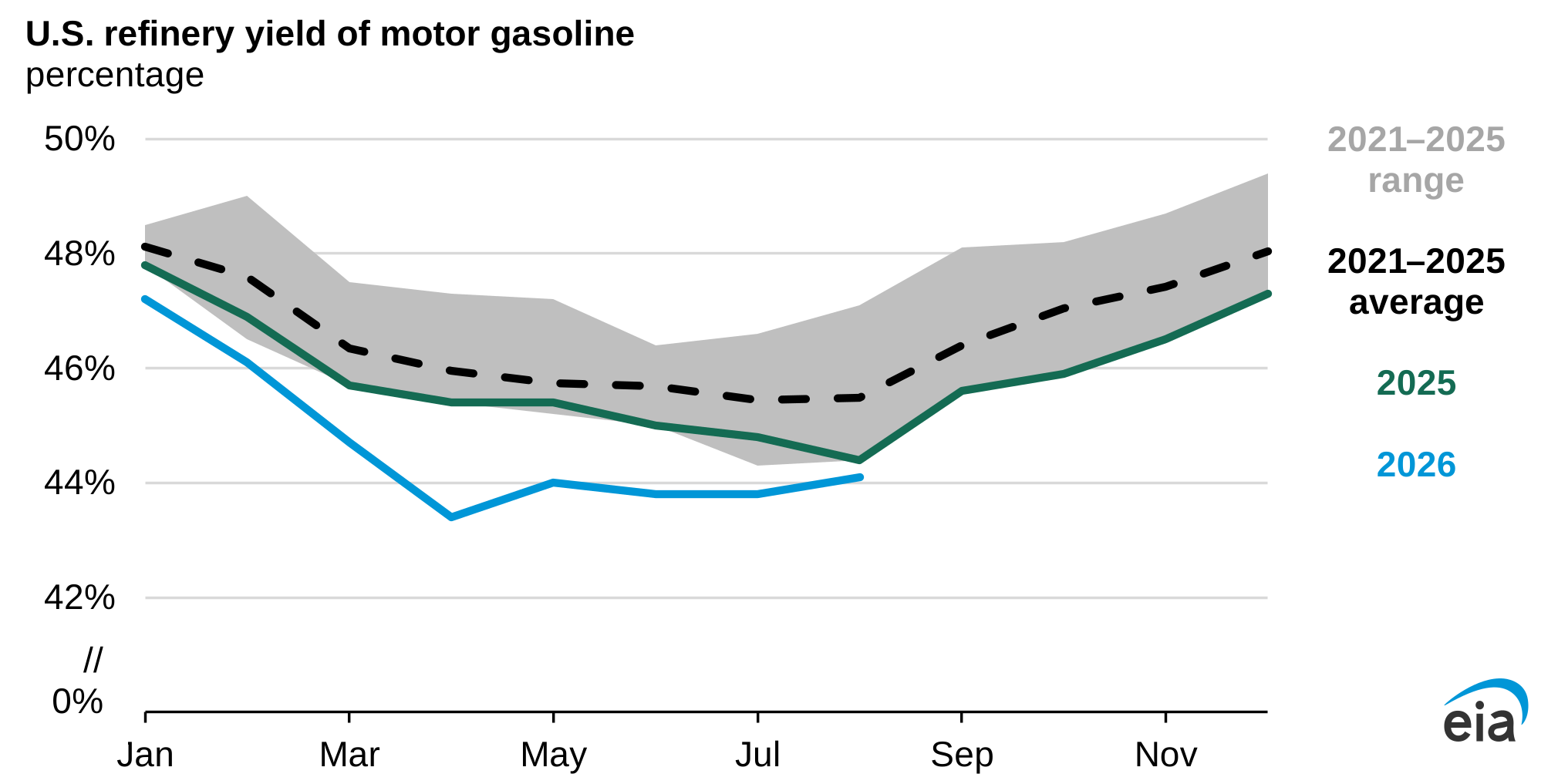
Particularly high refinery margins for distillate fuel oil and jet fuel have contributed to shifts in the refinery yields of major products in 2026. Data from our latest Petroleum Supply Monthly—which includes data through August 2026—indicate refinery yields of gasoline have decreased significantly this year to support increased production of distillate fuel oil and jet fuel, sometimes referred to as middle distillates due to their relative cut points in the oil refining process.
Petroleum refinery yields represent the share of a specific fuel that is produced from each barrel of crude oil a given refinery (or group of refineries) processes. The U.S. refining fleet tends to have a strong refinery yield of gasoline—typically between 45%–50%. In general terms, for every 100 barrels of crude oil U.S. refiners process, they produce about 45–50 barrels of gasoline. Typically, the most important refinery yields in the United States are the refinery yields of motor gasoline, distillate fuel oil (often sold as diesel fuel), and kerosene-type jet fuel. The combined yield of motor gasoline, distillate fuel oil, and jet fuel typically accounts for between 85%–90% of the petroleum products produced by the U.S. refining fleet.
Despite high gasoline prices, refinery yields of motor gasoline have trended below the five-year (2021–2025) low throughout 2026. This decline largely reflects refinery efforts to shift as much of their yields as possible into the production of distillate fuel oil and jet fuel, where margins are significantly higher because of constrained global supplies for these fuels. From January through August 2026, refinery yields of gasoline have averaged less than 45% and have been well below the five-year low in every month.
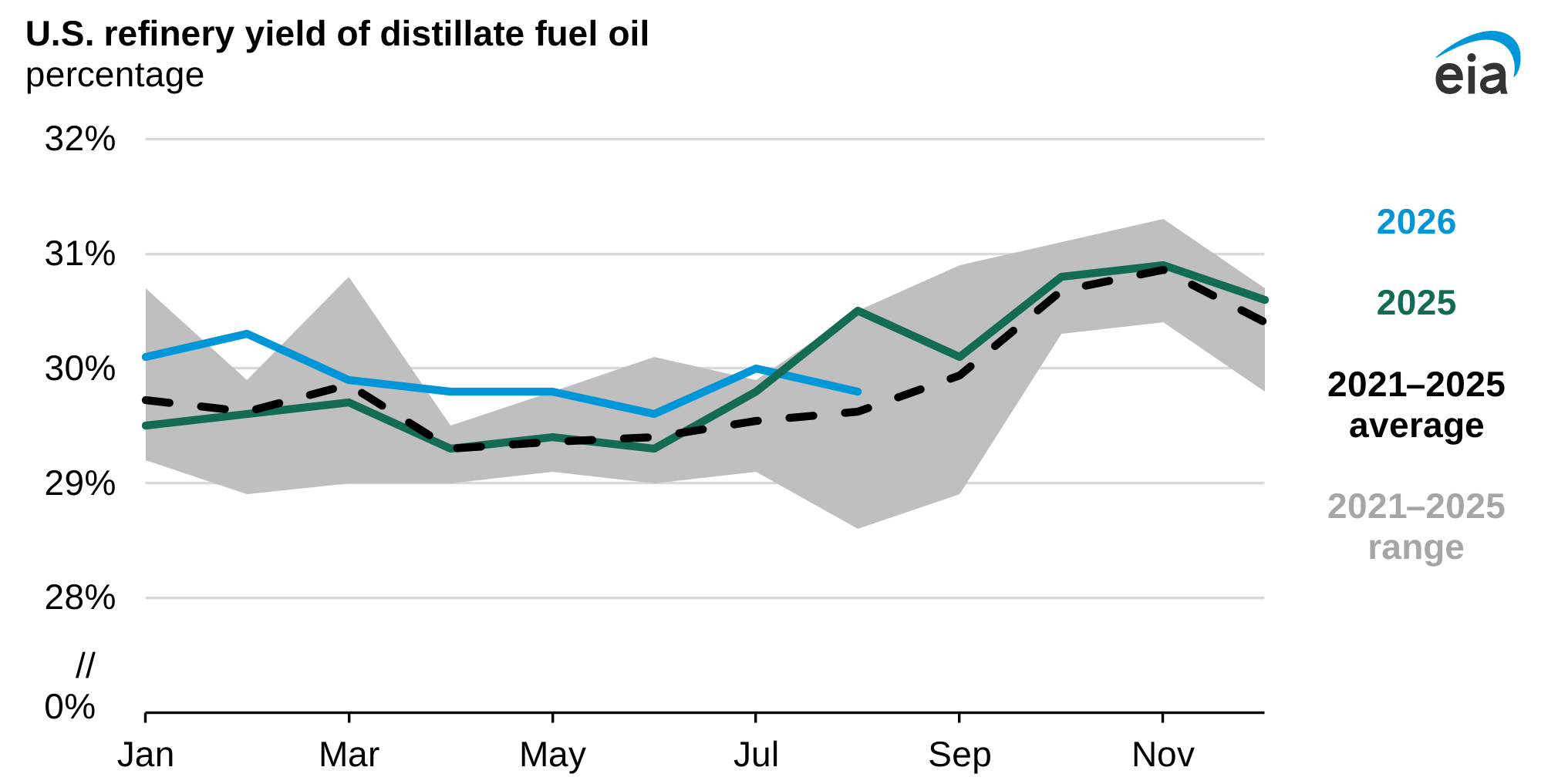
Conversely, yields of distillate fuel oil have generally been higher than last year and have been above the five-year average in every month. Even more than for gasoline, crack spreads and refinery margins for distillate fuel have been elevated for most of this year in response to limits on global supplies of the fuel.
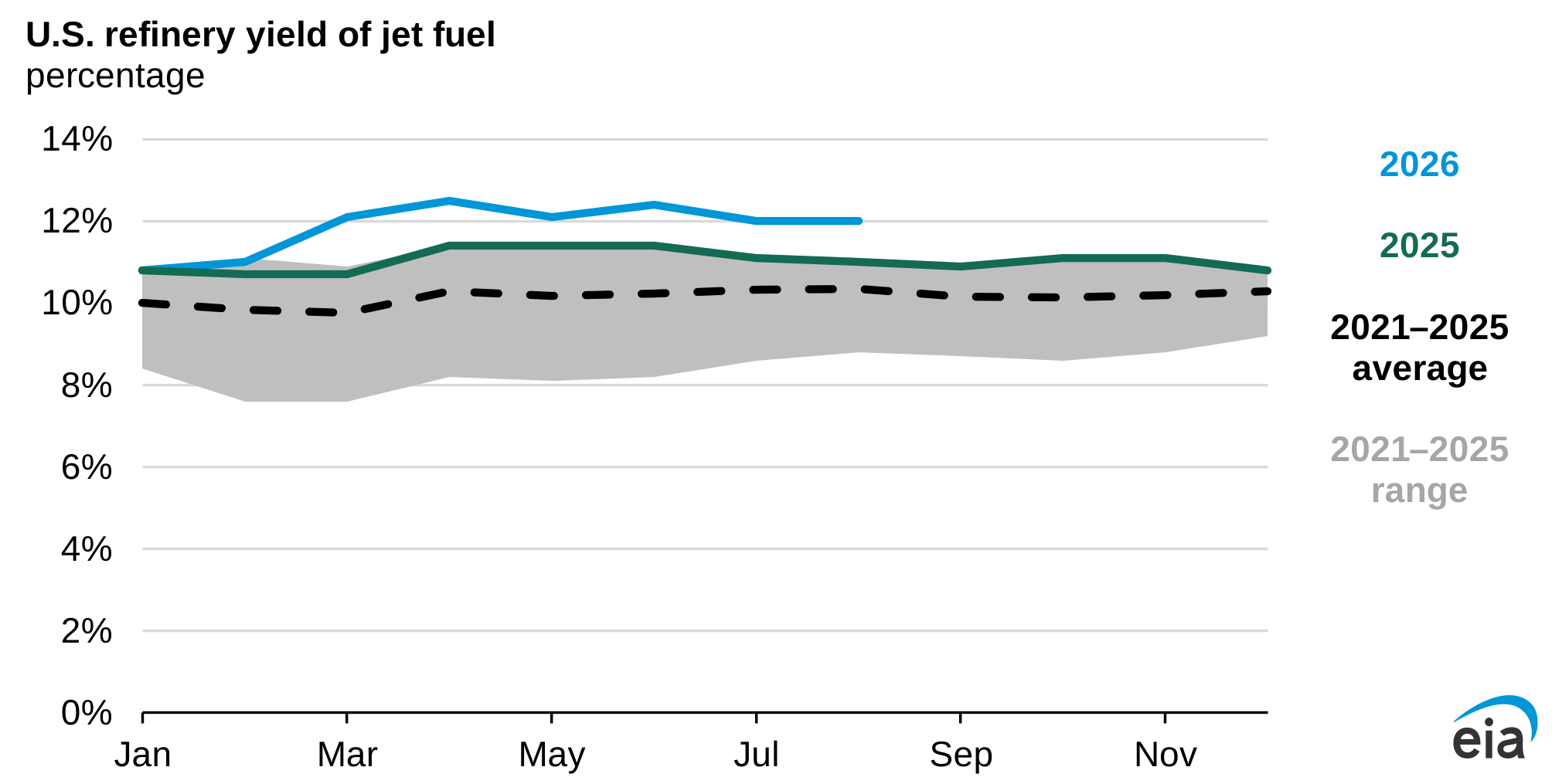
Refinery yields of jet fuel have also been relatively high this year. The U.S. refinery fleet exceeded an average jet fuel yield of 12% for the first time in March 2026, according to EIA data. Since then, the fleetwide average jet fuel yield has remained at or above 12% through the latest Petroleum Supply Monthly data for August 2026. Jet fuel yields were already setting the five-year high for most of 2025; elevated jet fuel margins in 2026 have provided a persistent incentive for refiners to continue maximizing jet fuel production.
Principal contributors: Kevin Hack, Michelle Bowman
Tags: refineries, distillate fuel, oil/petroleum