
The share of solar generation with co-located battery storage is increasing
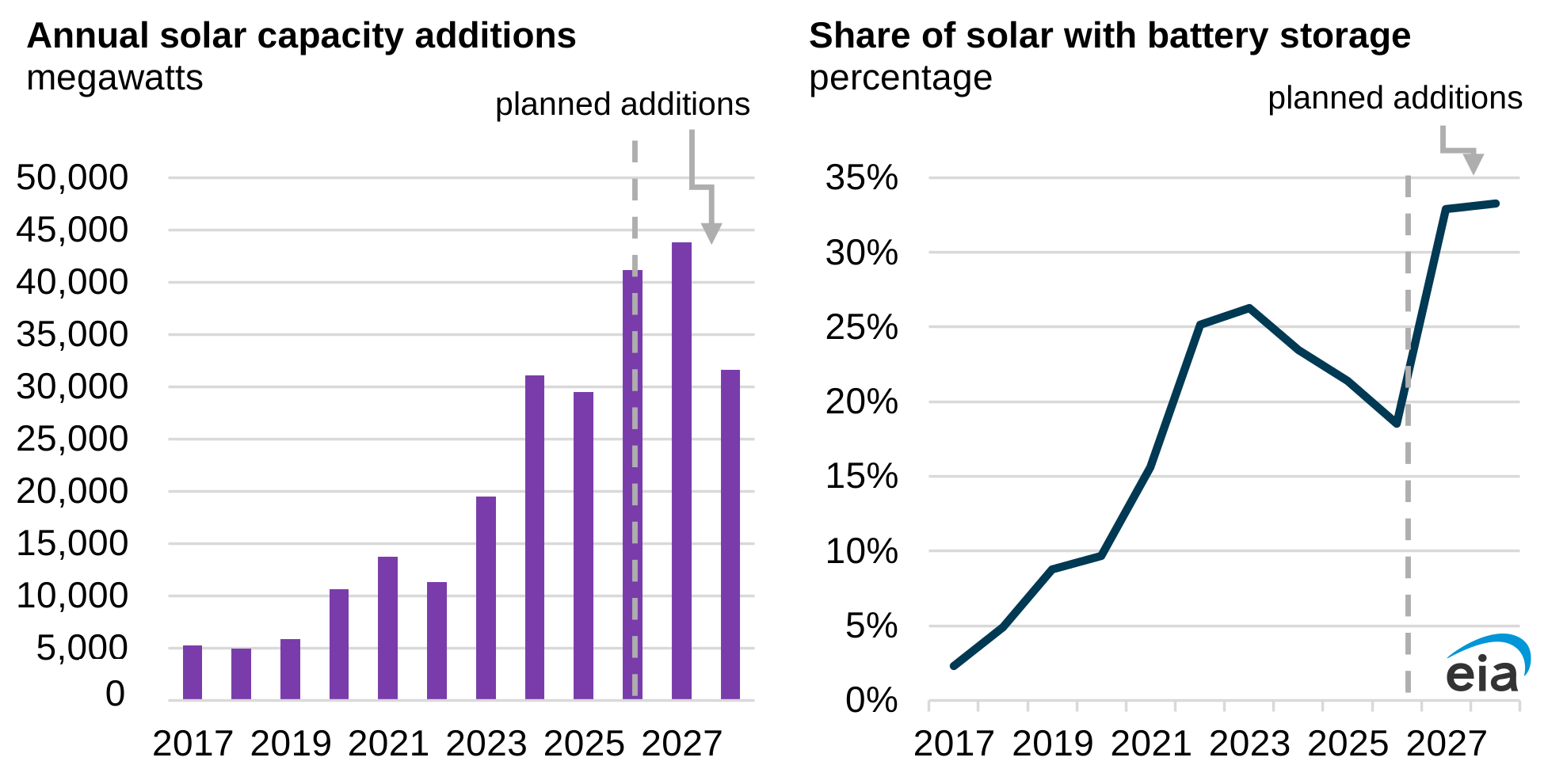
Utility-scale solar developers are increasingly co-locating battery storage with new solar photovoltaic capacity. As of September 2026, over 16% of new utility-scale solar capacity added this year is co-located with operable battery storage, compared with 2% in 2017, according to data reported to EIA by operators.
Reported plans for solar additions scheduled to come online in the last three months of this year show that the share with co-located battery storage could increase to 19% this year. Longer-term plans indicate that this trend will continue, with the portion increasing to more than 30% in plans submitted for 2027 and 2028.
When operators co-locate battery storage with solar, they can direct solar electricity output to the grid or to the battery, depending on the wholesale prices. Wholesale prices in regions with large solar participation tend to fall when solar contributions are high and rise as they decrease. Plants with both solar and battery storage can manage the combined output of their generating resources to maximize their value in a changing wholesale price environment.
We publish unit-level generator inventory data based on our annual and monthly data collections, including information on design attributes for all utility-scale plants. Although battery storage and solar units at the same plant often enter commercial service at different times, the EIA-860 and EIA-860M data collection program tracks these developments and provides a monthly summary that can be used to identify co-located technologies.
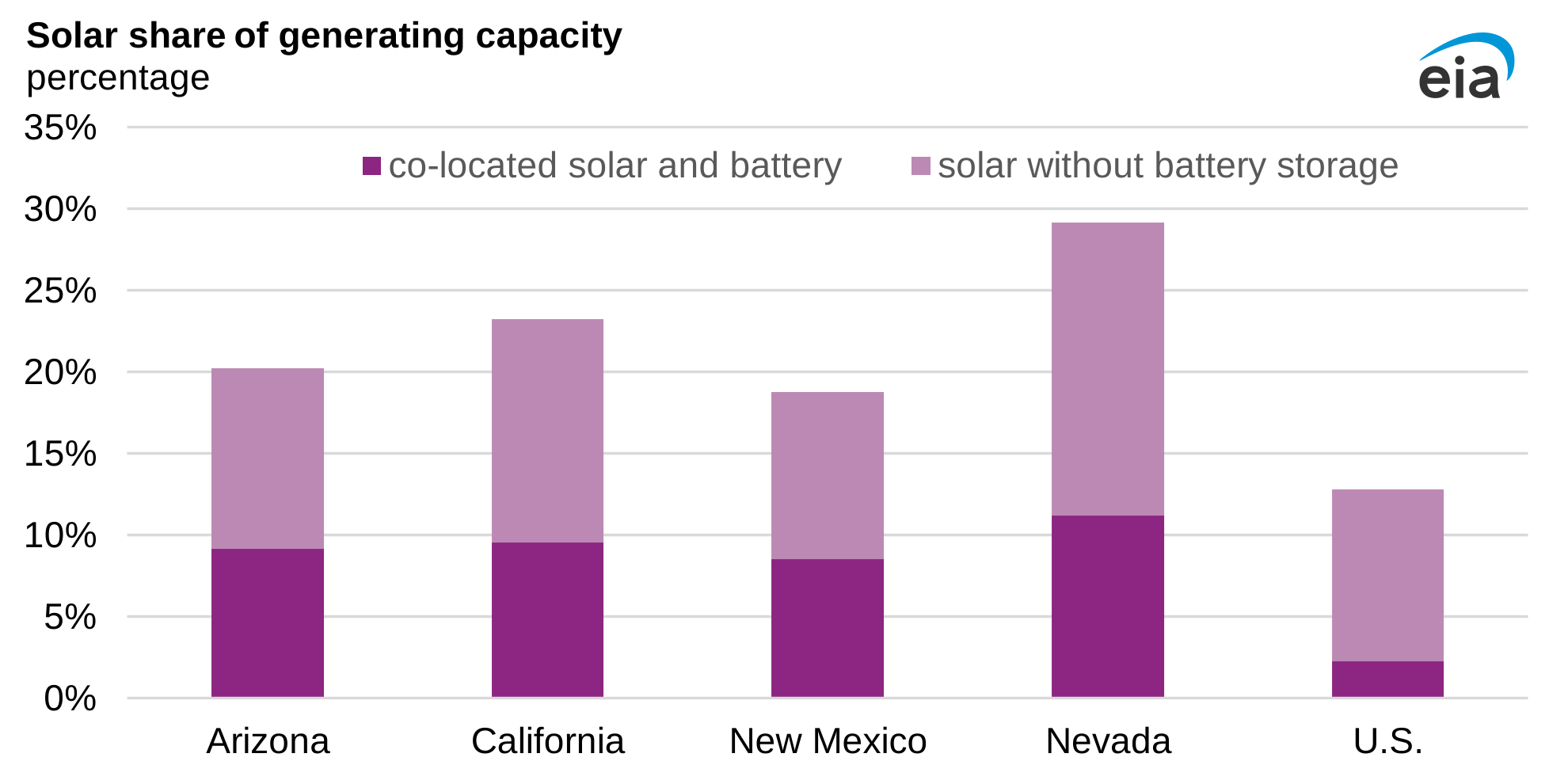
Southwest states have higher-than-average solar capacity shares relative to their total generating capacity and also have higher levels of co-located utility-scale solar and battery capacity. As of September, 13% of the total U.S. utility-scale generating capacity is solar photovoltaic, and 18% of that is co-located with battery storage. The share of solar generation co-located with battery capacity in California, Arizona, New Mexico, and Nevada is more than double the national average.
Principal contributors: Glenn McGrath, Alex Mey
Tags: solar, electric generation, capacity