
Enhanced geothermal systems could expand geothermal power generation
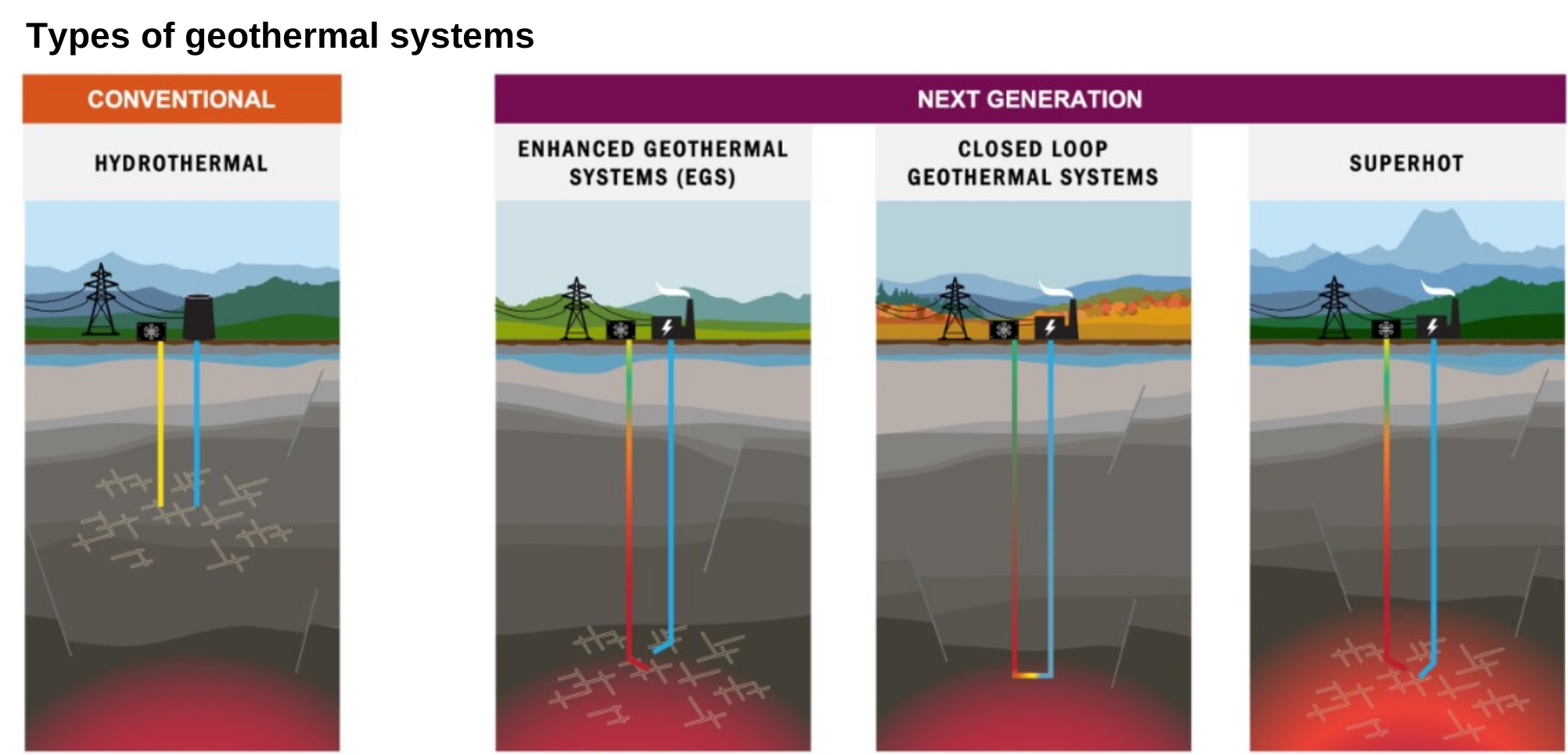
The first large-scale commercial enhanced geothermal system (EGS) power generator in the United States is under construction with the company reporting in our generator survey that it plans to bring the project online in June 2026. Below, we examine what enhanced geothermal systems are and how they differ from conventional geothermal systems.
What is geothermal power generation?
Geothermal power generation uses renewable hydrothermal (water and heat) resources to power the turbines that create electricity. These high-temperature hydrothermal resources come from either dry steam or hot water reservoirs measuring 300°F to 700°F deep within the earth.
Geothermal power provides carbon-free, renewable, continuous power throughout the day and season and is not dependent on the weather as other carbon-free energy sources such as wind and solar are.
How does enhanced geothermal differ from conventional geothermal?
Conventional geothermal systems generate electricity using hot water or steam pumped from naturally occurring hydrothermal reservoirs that are trapped in underground permeable and porous rock formations. These hydrothermal reservoirs are found in limited locations, typically near tectonic plate boundaries or volcanic hotspots.
EGS incorporate newer drilling technologies developed for upstream oil and natural gas production, such as horizontal drilling and fracking, to create hydrothermal reservoirs where they don’t currently exist. Successful pilot projects have demonstrated that man-made hydrothermal wells can help EGS technology further expand current geothermal power generation at existing sites and place geothermal generators throughout the United States instead of at very limited locations in western states.
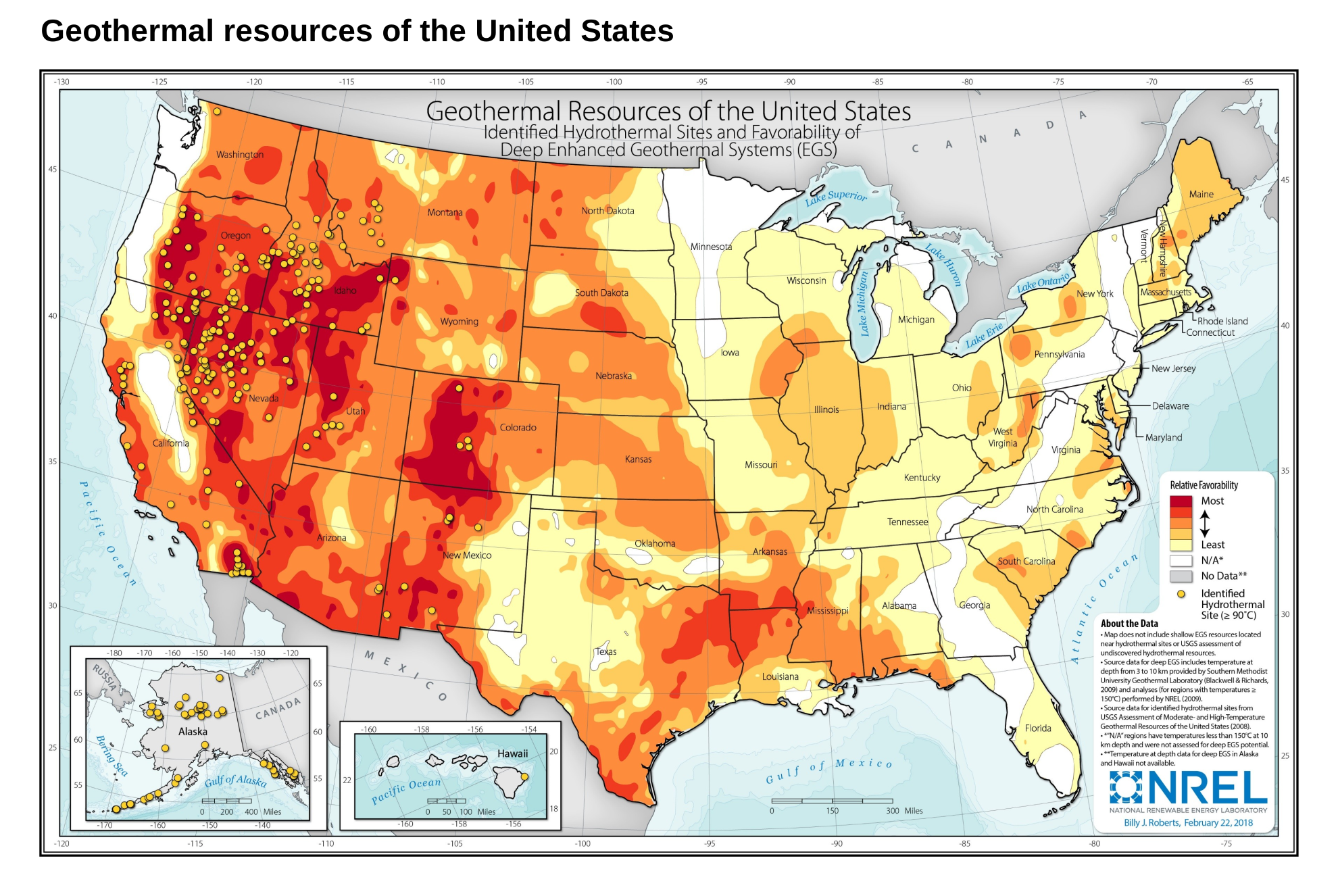
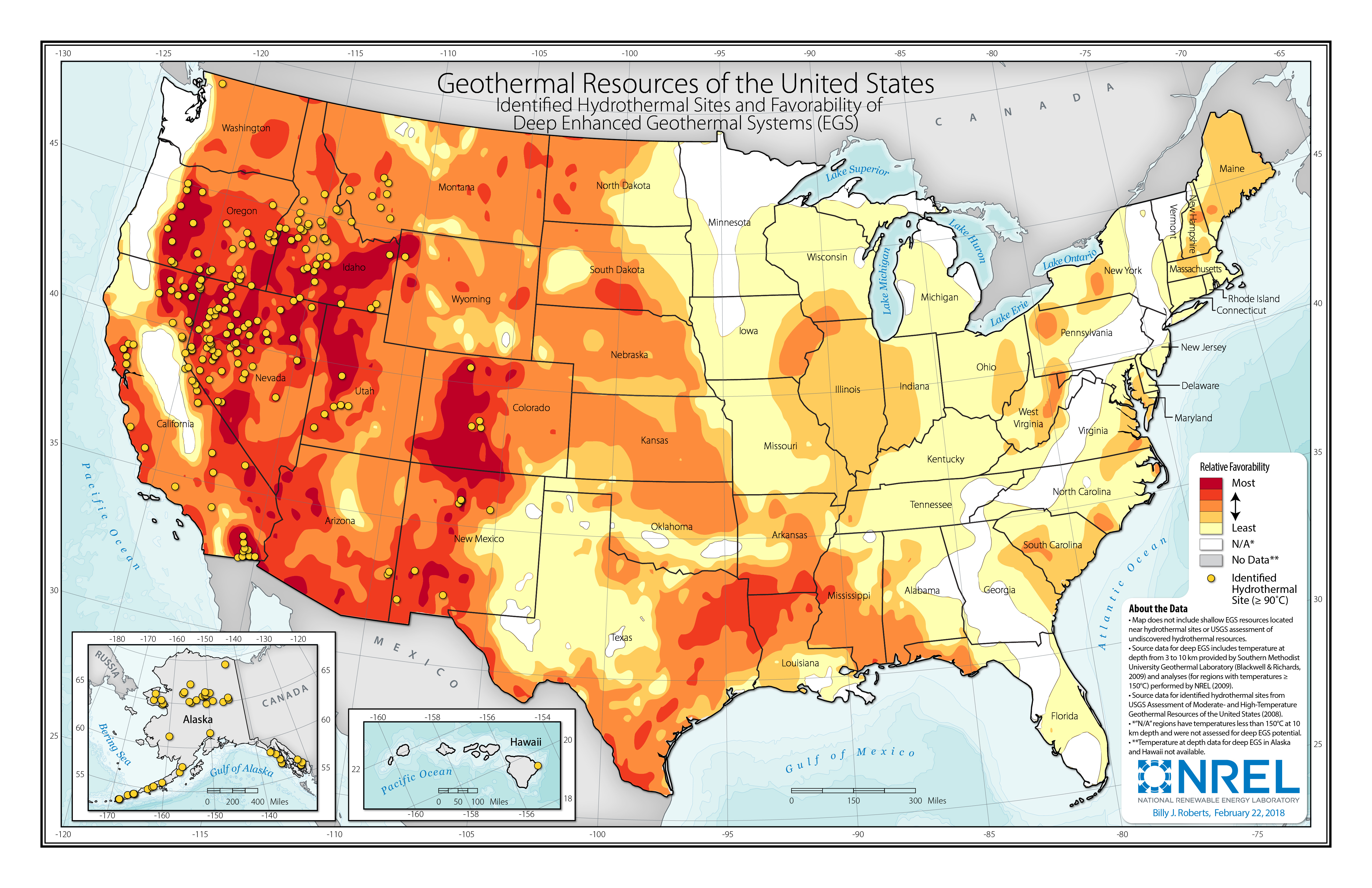
How much EGS capacity could be built in the United States?
The United States has a total summer capacity of 2.7 gigawatts (GW) of conventional geothermal power, representing 0.2% of U.S. summer generating capacity. Summer capacity is the maximum output that generating equipment can supply to system load at the time of summer peak demand. The U.S. Geological Survey (USGS) estimates that 135 GW of potential electric-power generation is available from EGS in the Great Basin of the U.S. Southwest alone. Other studies have projected that up to 150 GW of cost-effective geothermal power generation could be operating using EGS in the coming decades, depending on several factors such as overall electricity market dynamics and advances in EGS technology. In 2023, the National Laboratory of the Rockies estimated that 90 GW of EGS capacity could be economically built across the country by 2050.
What are some challenges for EGS?
One of the main challenges facing EGS and conventional geothermal power development is the elevated capital cost, particularly for well construction. Mitigating the risks of induced seismicity (man-made earthquakes) is another hurdle to developing this technology. Developing a commercially sound reservoir for circulation of hot water and steam and being able to properly model a site’s geophysical and mechanical properties, especially for deep well drilling, are other challenges.
How are these challenges being tackled?
Ongoing research to improve drilling and operational controls are decreasing the costs of EGS and mitigating the risks of induced seismicity. State and federal agencies as well as commercial partnerships help fund demonstration projects run by government and commercial operators. The Utah Frontier Observatory for Research in Geothermal Energy (FORGE), sponsored by the U.S. Department of Energy, is a field laboratory for testing EGS reservoir creation and management techniques. In addition, electricity customers with large data center needs are partnering with geothermal power developers.
Where are EGS plants located, and what commercial-scale EGS plants are currently under construction?
EGS plants in the United States, so far, have been small and experimental. Fervo Energy’s Cape Generating Station under construction in Utah will be the first large-scale commercial-scale EGS generator in the United States. The planned maximum capacity is 53 megawatts (MW), with 28 MW of net summer capacity (the maximum supply available to summer system load). It is scheduled to come online in June 2026, and another two EGS generators of the same size in the same location are expected to begin operation in January 2027. The company is planning further expansion in 2028 after signing two power purchase agreements totaling 320 MW with Southern California Edison. Rodatherm Energy Corp. is piloting a closed-loop geothermal energy system, optimized to work in hot sedimentary rock, common throughout the western United States and U.S. Gulf Coast, which the company expects will be operational by January 2028, according to generator survey responses. The Department of Defense has partnered with six geothermal developers to build EGS plants to power Air Force, Army, Navy, and Marine bases in California, Idaho, Nevada, New Mexico, and Texas. And Meta signed an agreement with geothermal developer SAGE to provide Meta’s data center operations with up to 150 MW of the first new geothermal power east of the Rocky Mountains.
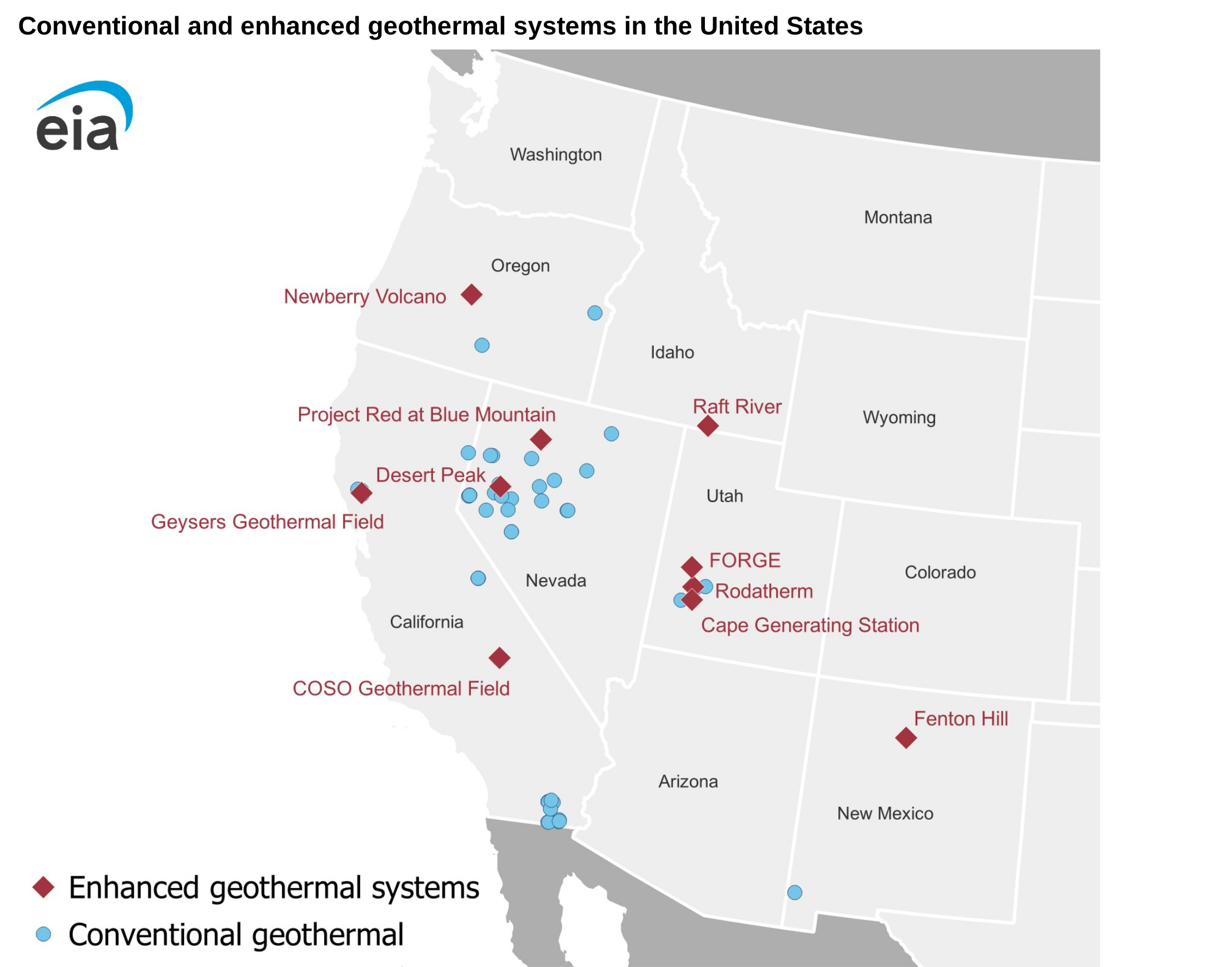
Note: These sites include past and present pilot and small commercial projects and the larger commercial Cape Generating Station and Rodatherm pilot project currently under construction.
Principal contributor: Lori Aniti
Tags: geothermal, electricity, generation, map