
Spot Henry Hub natural gas prices hit a historic low in 2024

In 2024, the U.S. benchmark Henry Hub natural gas spot price averaged $2.21 per million British thermal units (MMBtu), the lowest average annual price in inflation-adjusted dollars ever reported. The annual average Henry Hub natural gas spot price in 2024 decreased by 16% from its 2023 average and 68% from its 2022 average, the largest two-year decline on record. The monthly average Henry Hub spot natural gas price in 2024 ranged from $3.25/MMBtu in January to an all-time low of $1.51/MMBtu in March, reflecting a narrower $1.74/MMBtu range of monthly prices across the year than the average range of $2.32/MMBtu over the prior five years.
The Henry Hub natural gas price set numerous daily and monthly low-price records in 2024. On an inflation-adjusted basis, average monthly prices in February, March, April, and August were the four lowest ever recorded, and the four lowest daily prices ever recorded also occurred during 2024.
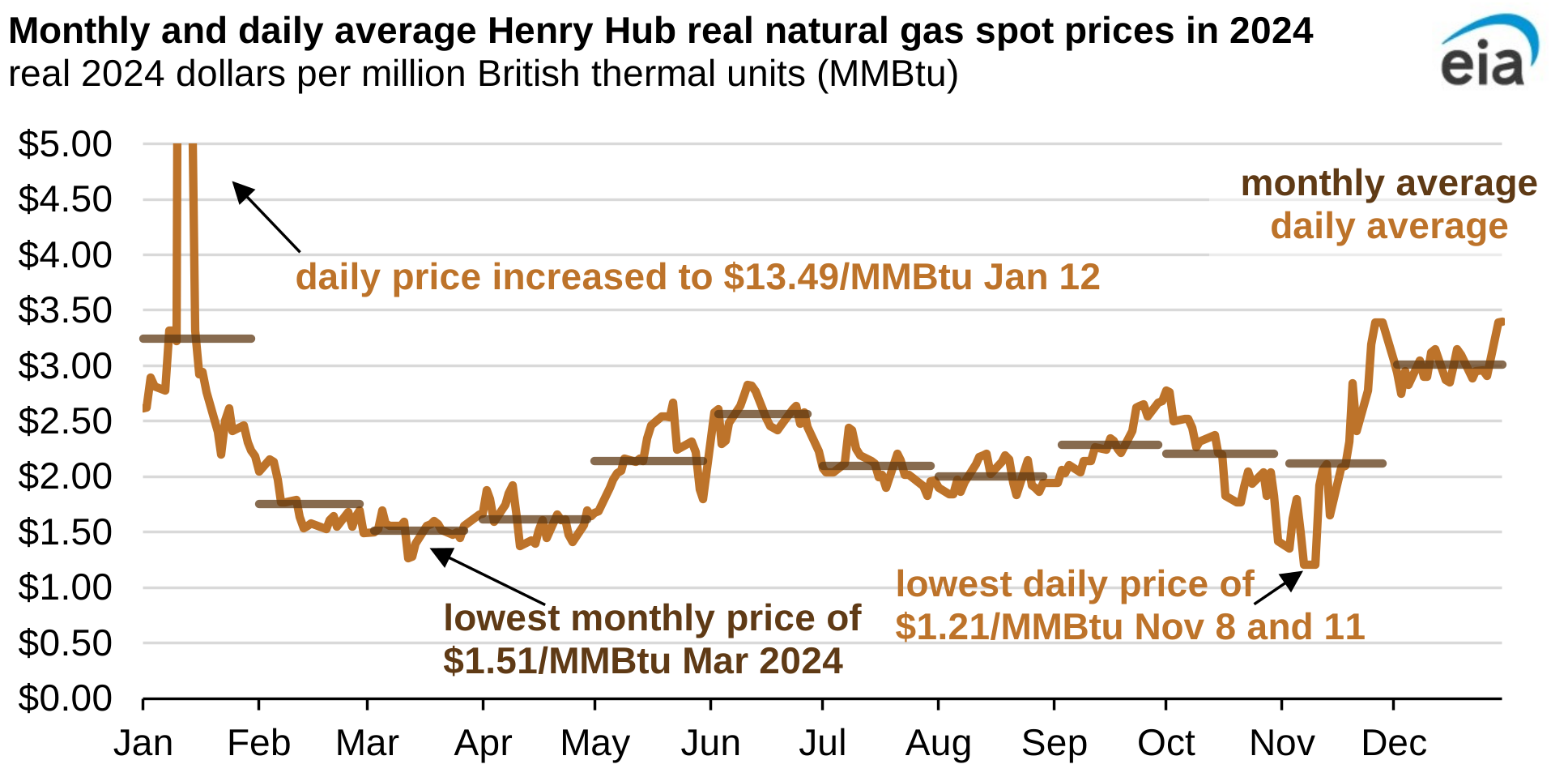
Robust U.S. natural gas supply and limited growth in natural gas consumption reduced prices for most of 2024. The most notable exception occurred in January, when the Henry Hub spot price reached its highest daily price for the year of $13.49/MMBtu due to a cold snap across most of the United States that increased natural gas consumption for space heating.
However, relatively strong U.S. natural gas production and more moderate weather in February and March reduced the natural gas price steadily. Relatively full storage also contributed to lower natural gas prices in the first quarter of 2024. During the 2023–24 winter heating season (November 1–March 31), more natural gas was stored in inventories in the Lower 48 states than typical following the warmest winter on record. At the end of withdrawal season on March 31, inventories totaled 2,306 billion cubic feet (Bcf), 25% more than at the same time in 2023 and 39% more than the five-year average.
Spot Henry Hub natural gas prices remained low through the second and third quarters of 2024. Prices typically decline in April and May as customers in the residential and commercial sectors reduce their natural gas consumption as their need for seasonal space heating lessens. Flat U.S. natural gas net exports and little change in U.S. liquefied natural gas capacity also limited demand growth. In 2024, inflation-adjusted average prices for April and May were both record lows for those months at $1.62/MMBtu and $2.14/MMBtu, respectively.
Consistent with historically low prices, U.S. natural gas consumption in the electric power sector during the summer to meet air-conditioning demand led to less-than-average injections, eroding much of the storage surplus. However, the U.S. natural gas market still entered the winter of 2024–25 with the most natural gas in storage since 2016.
The spot Henry Hub natural gas price began to increase in December due to closer-to-normal seasonal winter temperatures that increased demand for space heating. Our Winter Fuels Outlook 2024–25 contains more information on EIA’s expectations for U.S. residential energy consumption, prices, and consumer expenditures during the 2024–25 winter heating season.
Principal contributor: Andrew Iraola
Tags: Henry Hub, natural gas, spot prices