
Price of carbon allowances in California’s Cap-and-Trade Program fell in latest auction
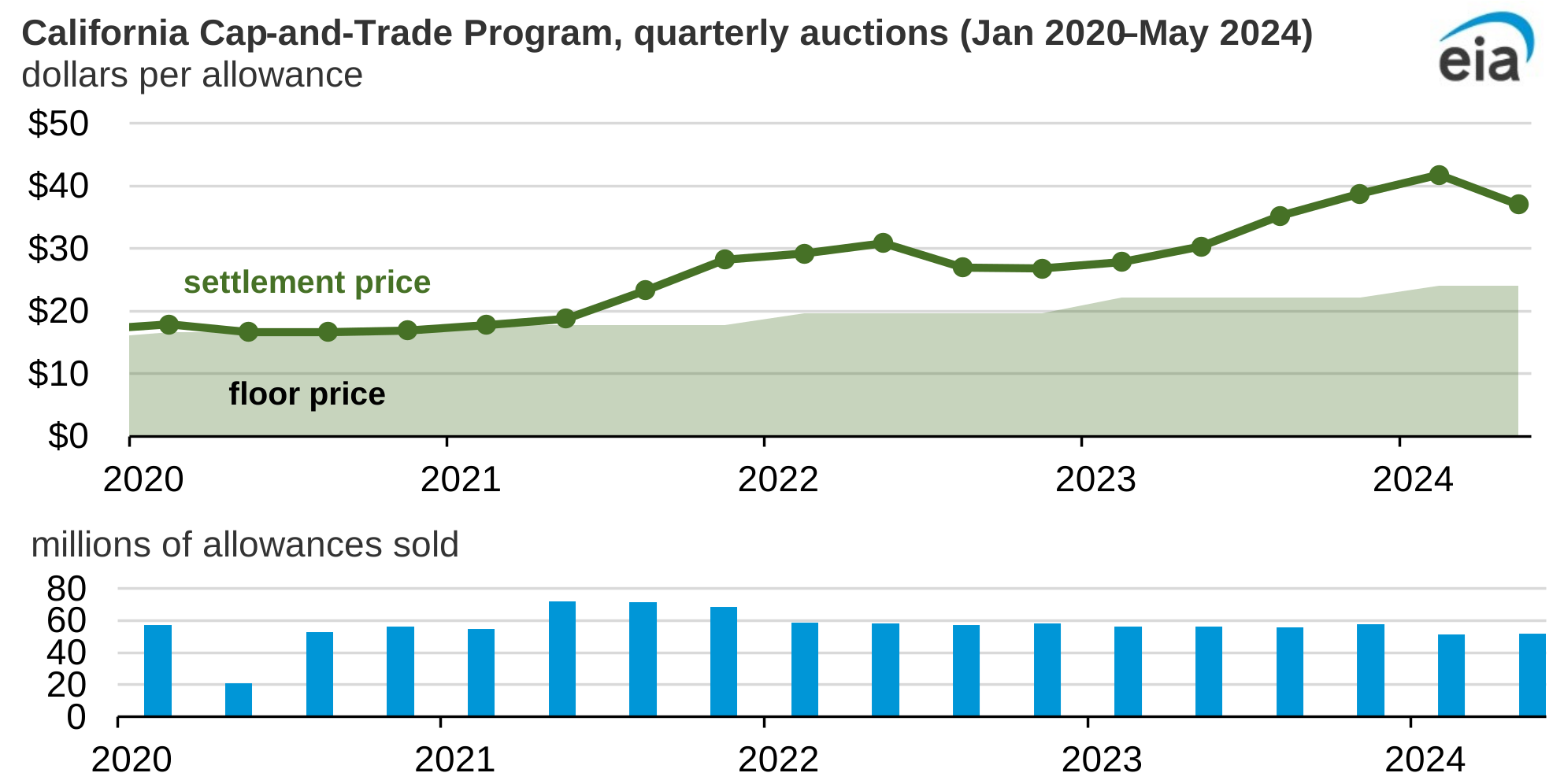
Allowance prices for greenhouse gas emissions decreased by 11% in California's quarterly joint carbon auction held in May 2024, breaking the recent upward trend amid uncertainty as to how the state regulator will amend rules governing the auctions.
The auctions are part of the state’s Cap-and-Trade Program, governed by the California Air Resources Board (CARB), the state regulator. CARB requires operators of natural gas-fired and coal-fired power plants, along with other companies, to buy allowances to offset emissions. Each year, fewer allowances are offered at auctions as the annual cap declines. During the latest auction, all the offered 51.6 million allowances sold.
The Cap-and-Trade Program was initially created by California’s Global Warming Solutions Act of 2006 (AB 32), with the aim of reducing greenhouse gas emissions to 1990 levels by 2020, a target that was met in 2016. Lawmakers have since set further reduction targets twice, most recently mandating a reduction in greenhouse gas emissions by 85% below 1990 levels and targeting carbon neutrality by 2045. The program sets a statewide emissions limit on sources responsible for most of California’s greenhouse gas emissions. In 2021, the electric power sector accounted for 10.9% of the state’s emissions.
For each auction, CARB creates allowances equal to the total amount of permissible emissions and sets the cap. CARB also sets a floor on the price for the allowances, which increases each year. Companies are required to hold allowances equal to their greenhouse gas emissions, which can be obtained through allocation, through quarterly auctions, or from other market participants. The increasing annual auction floor price for allowances, along with the reduction in annual allowances, is intended to incentivize investments in less carbon-intense fuels and technologies and more efficient use of energy.
The price of the allowances had been gradually increasing since February 2023. Post-pandemic economic recovery has increased industrial activity and demand for allowances. Market expectations of stricter future regulations and fewer offered allowances contributed to the upward pressure on prices with respect to carbon costs and to the increasing commitment to emission reductions among market participants.
CARB is in the process of developing amendments to the Cap-and-Trade regulations, which has created uncertainty about the future value of the allowances. California’s goal of reducing greenhouse gas emissions by 2045 requires CARB to issue fewer allowances, but updates have been delayed. Uncertainty also surrounds pending decisions on potential linkage with Washington State’s carbon market.
Principal contributor: Nilay Manzagol
Tags: emissions, California, greenhouse gases