
U.S. crude oil exports reached a record high in first half of 2023
From December 18 to January 1, Today in Energy will feature some of our favorite articles from 2023. Today’s article was originally published on October 10.
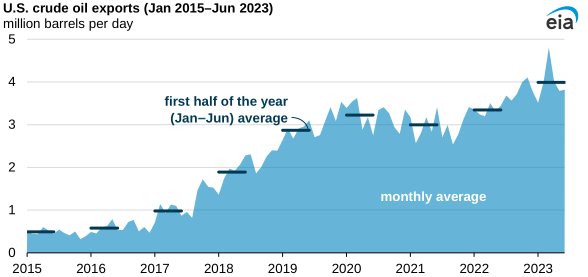
U.S. crude oil exports in the first half of 2023 averaged 3.99 million barrels per day (b/d), which is a record high for the first half of a year since 2015, when the U.S. ban on most crude oil exports from the United States was repealed. In the first half of 2023, crude oil exports were up 650,000 b/d (19%) compared with the first half of 2022.
Europe was the largest regional destination for U.S. crude oil exports by volume, at 1.75 million b/d, led by exports to the Netherlands and UK. Asia was the regional destination with the next-highest volume, at 1.68 million b/d, led by exports to China and South Korea. The United States also exported significantly smaller volumes of crude oil to Canada, Africa, and Central America and South America.
Although exports increased in the first half of 2023, the United States still imports more crude oil than it exports, meaning it remains a net crude oil importer. The United States continues to import crude oil despite rising domestic crude oil production in part because many U.S. refineries are configured to process heavy, sour crude oil (with a low API gravity and high sulfur content) rather than the light, sweet crude oil (with a high API gravity and low sulfur content) typically produced in the United States.
U.S. crude oil imports come primarily from historical trading partners such as Mexico and Canada. Heavy, sour grades of crude oil are often discounted compared with light, sweet grades of crude oil because they require more complex refinery units to produce profitable yields of refined products such as motor gasoline, diesel, and jet fuel. Most U.S. crude oil imports take place when it is more profitable for U.S. refiners to process discounted heavier grades because those refineries have already invested in the additional complexity required to refine them.
The rapid increase in U.S. domestic production in the early 2010s increased domestic light, sweet crude oil production. Light, sweet grades of crude oil traditionally benefit from a price premium in the global crude oil market because they yield high amounts of profitable petroleum products from less complex refining processes.
Some U.S. refiners on the Gulf Coast have invested in expanding their light, sweet crude oil processing capacity. However, for many refiners, particularly in the Midwest and along the Gulf Coast, refining discounted heavy, sour crude oil grades remains more profitable.
Principal contributor: Kevin Hack