
The United States imports more petroleum products than crude oil from Russia
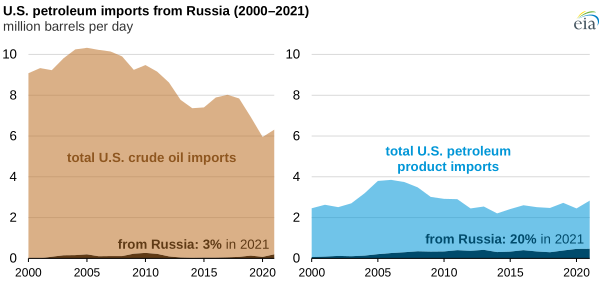
The United States has imported a relatively small share of crude oil from Russia, but U.S. imports of petroleum products from Russia—namely, unfinished oils and fuel oil—is a larger share. U.S. refineries use imported unfinished oils and fuel oil as a supplement to crude oil in the refining process. On March 8, President Biden announced a ban on U.S. imports of petroleum, coal, and natural gas from Russia in response to Russia’s further invasion into Ukraine. The ban includes crude oil and petroleum products.
Russia is one of the three largest crude oil producers in the world, after the United States and Saudi Arabia. European countries—which have not banned Russian energy imports—generally import more of Russia’s crude oil and petroleum products than the United States.
In 2021, imports from Russia accounted for 8% of all U.S. petroleum imports, which includes the 3% share of crude oil imports and the 20% share of petroleum product imports. More than half of U.S. total petroleum imports from Russia in 2021 were unfinished oils. A substantial share of the unfinished oils from Russia are classified as Mazut-100 fuel oil, or M-100. M-100 is largely consumed as a supplementary refinery input and has qualities similar to a heavier, relatively high-sulfur crude oil.
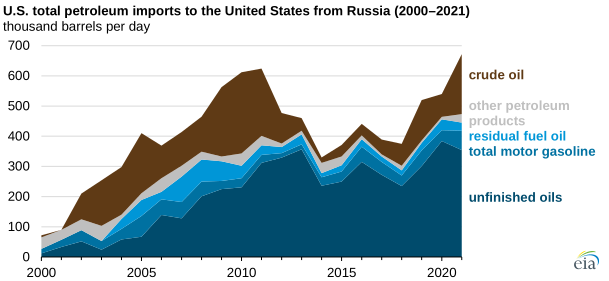
Crude oil imports made up 29% of the combined petroleum imports by volume from Russia in 2021 and accounted for the second-largest share after unfinished oils. The third-largest share of imports from Russia by volume was motor gasoline, including finished motor gasoline and blending components, at 9%.
The fourth-largest share of combined U.S. petroleum imports from Russia was residual fuel oil, making up 4% in 2021. More than half of the residual fuel oil imported from Russia in 2021 had a sulfur content greater than 1%. Residual fuel oil is often consumed in the United States as a marine bunker fuel, but residual fuel oils with relatively high sulfur content do not meet U.S. marine bunker fuel specifications. Instead, high-sulfur residual fuel oil may be used as a refinery feedstock, similar to the M-100 unfinished oils.
U.S. imports from Russia are included in preliminary crude oil import by country data published in our Weekly Petroleum Status Report. Some crude oil imports from Russia may still appear in the coming weeks as shipments are delivered from waterborne cargoes that were in transit before the import ban became effective.
We finalized our most recent Short-Term Energy Outlook forecast on March 3, before the import ban was announced. We did not include the effects of this ban as part of the March outlook, but we will include them in our next outlook, scheduled for release on April 12.
Principal contributor: Kevin Hack