
U.S. energy trade with Mexico involves importing crude oil, exporting petroleum products
Republished May 22, 2019, to correct the value of U.S. natural gas exports to Mexico.
Energy trade accounted for 12% of the value for all U.S. exports to Mexico and 5% of all U.S. imports from Mexico in 2018, based on the latest annual Standard International Trade Classification (SITC) data from the U.S. Census Bureau. Energy trade between Mexico and the United States has historically been driven by Mexico’s sales of crude oil to the United States and by U.S. net exports of refined petroleum products to Mexico.
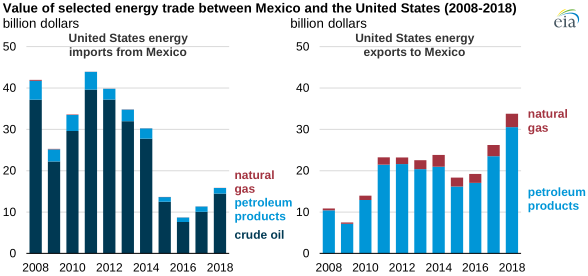
Through 2014, U.S. imports of crude oil from Mexico were the most valuable component of this bilateral energy trade. Starting in 2015, the value of U.S. energy exports to Mexico, including rapidly growing volumes of both petroleum products and natural gas, exceeded the value of U.S. energy imports from Mexico as volumes of Mexican crude oil sold to the United States declined.
The value of U.S. exports of petroleum products nearly tripled from $10.4 billion in 2008 to a record high of $30.5 billion in 2018, while the value of U.S. energy imports from Mexico remained at a near record low of $15.8 billion in 2018 for a second year in a row.
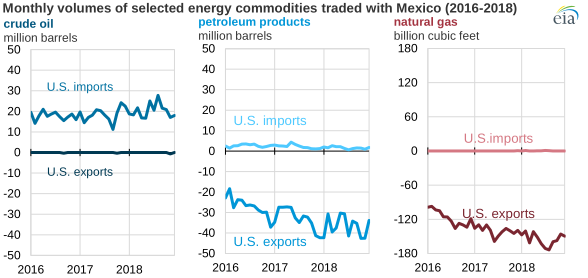
Crude oil accounts for most U.S. energy imports from Mexico, averaging 665,000 barrels per day (b/d) in 2018. In 2018, Mexico was the source of 9% of U.S. imported crude oil, behind only Canada and Saudi Arabia. The value of U.S. crude oil imports from Mexico totaled $10 billion in 2017 and $14 billion in 2018.
Petroleum products account for most of the value of energy exports from the United States to Mexico. In 2018, Mexico received over 1.2 million b/d of petroleum products, valued at more than $30 billion. U.S. exports of petroleum products to Mexico made up 22% of all petroleum products exported from the United States in 2018. Most of these exports were finished motor gasoline and distillate fuel oil.
In 2018, U.S. petroleum product exports to Mexico rose in both the volume and value of product traded. Changes in Mexico’s utilization of refineries have created a widening gap between their domestic supply and demand of gasoline, and U.S. gasoline exports now supply more than half of Mexico’s gasoline consumption.
Bilateral natural gas trade is dominated by pipeline shipments between the United States and Mexico. U.S. natural gas exports to Mexico totaled 2,090 billion cubic feet (Bcf) in 2018, 90% of which was sent through pipelines.
Since beginning to export liquefied natural gas (LNG) by vessel from the Lower 48 states in 2016, Mexico has become the second-largest destination for U.S. LNG exports in 2018, behind only South Korea. U.S. LNG exports to Mexico by vessel between August 2016 and December 2018 totaled 350 Bcf, or 18% of all U.S. LNG exports.
Principal contributor: Natalie Kempkey