
Why have gasoline prices risen since the start of the year?
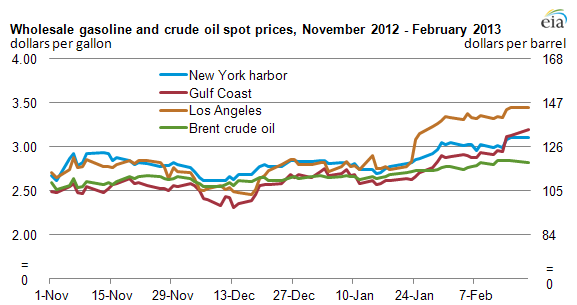
The average U.S. retail price for regular motor gasoline is up about 45 cents per gallon since the start of 2013, reaching $3.75 per gallon on February 18. The rise in gasoline prices is partly due to higher crude oil prices. However, most of the increase in the pump price of gasoline reflects an increase in the gasoline crack spread, the difference between the wholesale price of gasoline and the price of crude oil.
Between January 1 and February 19, the price of Brent crude oil—the waterborne light sweet crude grade that drives the wholesale price of gasoline sold in most U.S. regions—rose about $6 per barrel, or about 15 cents per gallon. A simple calculation, which modestly understates the role of higher crude prices to the extent that crude price increases during December 2012 were still not fully passed through in retail gasoline prices at the start of 2013, suggests that about two-thirds of the rise in gasoline prices since the start of the year reflects higher gasoline crack spreads.
Some of the factors contributing to rising crack spreads (or margins) for gasoline, and therefore to rising retail gasoline prices, include:
- Refinery outages. There have been multiple refinery outages, both planned and unplanned, that reduced U.S. capacity to manufacture gasoline.
- Global demand for petroleum products. Year-over-year global product demand is up, and further rises are expected. That rise in demand affects domestic refinery utilization rates, maintenance needs, and product balances.
- Prior low crack spreads. Throughout much of November and December 2012, gasoline crack spreads were very low, and in some cases negative (a barrel of gasoline was worth less than a barrel of Brent crude oil).
While these factors have played an important role, other factors, such as preparations for the seasonal switch to summer grade gasoline, may also have contributed to recent short-term movements in wholesale gasoline prices that are reflected in crack spreads.
Despite the recent increases in wholesale and retail gasoline prices, there are indications that gasoline crack spreads are beginning to ease. However, the short-term outlook for gasoline prices remains volatile. It is possible that a part of the rise in wholesale prices has not yet been fully reflected in pump prices.
A more in-depth analysis of this trend is discussed in the U.S. Energy Information Administration's February 21 edition of This Week in Petroleum.
Tags: crude oil, gasoline, oil/petroleum, prices, refining