
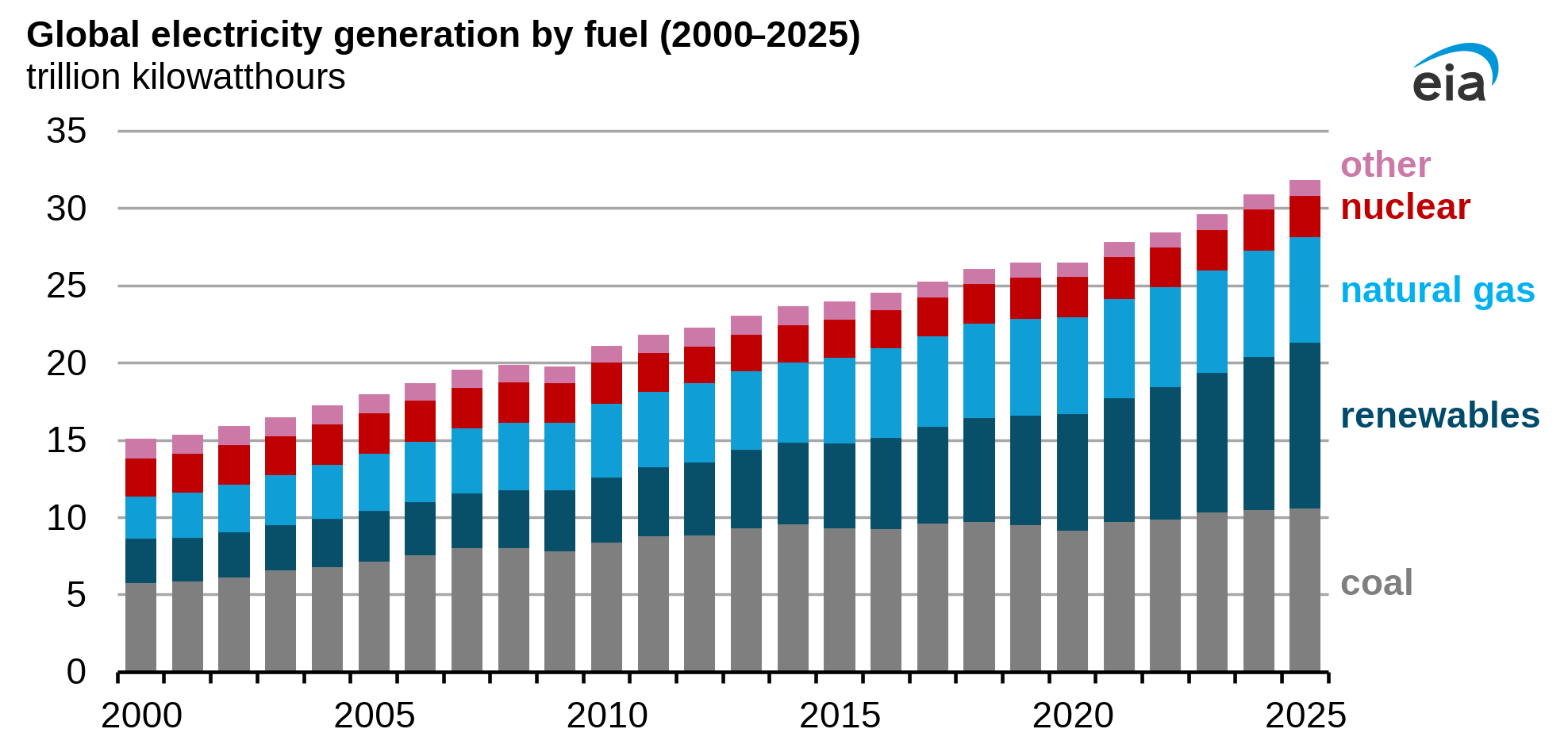
Global electricity generation more than doubled from 2000 to 2025
Note: Renewables includes electricity generation from hydroelectricity, geothermal, solar, wind, tide and wave, and biomass and waste. Solar generation includes solar photovoltaic and solar thermal generation, and distributed solar generation where available. U.S. biomass and waste generation includes wood and waste generation from the MER Table 7.2, and other generation from the Electric Power Annual table 3.1A. Other includes generation from oil, other gases, and hydroelectric pumped storage.
The world generated 31.8 trillion kilowatthours (kWh) of electricity in 2025, more than double the 15.1 trillion kWh generated in 2000, according to our recently updated International Energy Statistics data. This growth in global electricity generation is driven by increasing electricity demand from global population and economic growth, and an increase in global median household income.
Coal was the largest global source of electricity generation from 2000 to 2024, increasing 83% from 5.8 trillion kWh to 10.5 trillion kWh. However, the share of the world’s total generation from coal decreased from its peak of 41% in 2007 to 33% in 2025. Generation from renewable energy saw the largest growth between 2000 and 2025, increasing from 2.9 trillion kWh to 10.6 trillion kWh. Renewables made up 19% of the world’s generation mix in 2000 and increased to 34% in 2025, surpassing coal as the largest source of the world’s electricity generation in 2025.
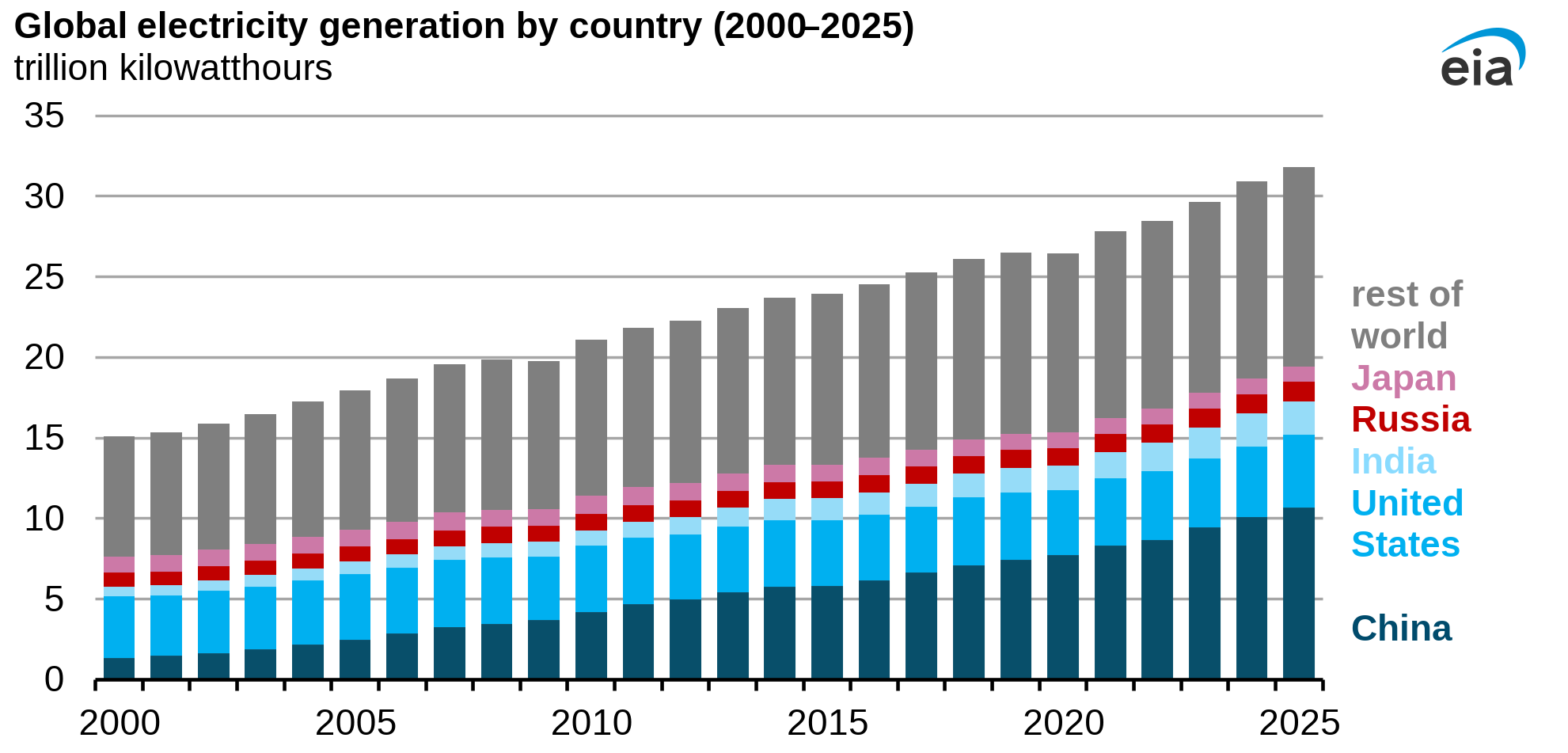
China, the United States, and India have been the three largest electricity generators in the world since 2013. Together these three countries generated 17.3 trillion kWh in 2025, more electricity than the rest of the world combined.
China has a large population and has experienced rapid economic growth since 2000, leading to increasing electricity generation. Between 2000 and 2025, China’s electricity generation grew at an average annual rate of 9%, increasing from 1.4 trillion kWh in 2000 to 10.7 trillion kWh in 2025. China’s generation in 2025 accounted for more than one-third of the world’s total electricity generation and more than any other country based on our preliminary estimates. More than half of China’s generation in 2025 came from coal and more than one-third from renewables.
The United States was the second-largest generator of electricity in 2025, producing 4.5 trillion kWh (including small-scale solar photovoltaic generation and other generation). In 2025, natural gas accounted for 40% of electricity in the United States, renewables for 26%, and nuclear energy for 17%. Electricity generation growth in the United States averaged less than 1% annually from 2000 to 2020. The relatively slow growth in electricity generation correlates with the United States' shift from a manufacturing economy to a service economy. Between 2020 and 2025, however, electricity generation growth averaged 2% annually; much of that growth is because of increasing demand in the commercial sector, including data centers.
India generated 2.1 trillion kWh of total electricity in 2025, with 70% of generation coming from coal. India’s electricity generation more than tripled from 2000 to 2025, with an average growth rate of 5% per year. According to the World Bank, between 2000 and 2025, India’s population grew from 1.1 billion to 1.5 billion, when it became the most populous nation in the world. Over that period, the manufacturing sector in India also grew quickly, increasing electricity demand.
Principal contributors: Hilary Hooper-DeLibero, Joel Lou
Tags: coal, electricity, electric generation, China, India