
Colder winter weather increases our home heating expenditure forecasts
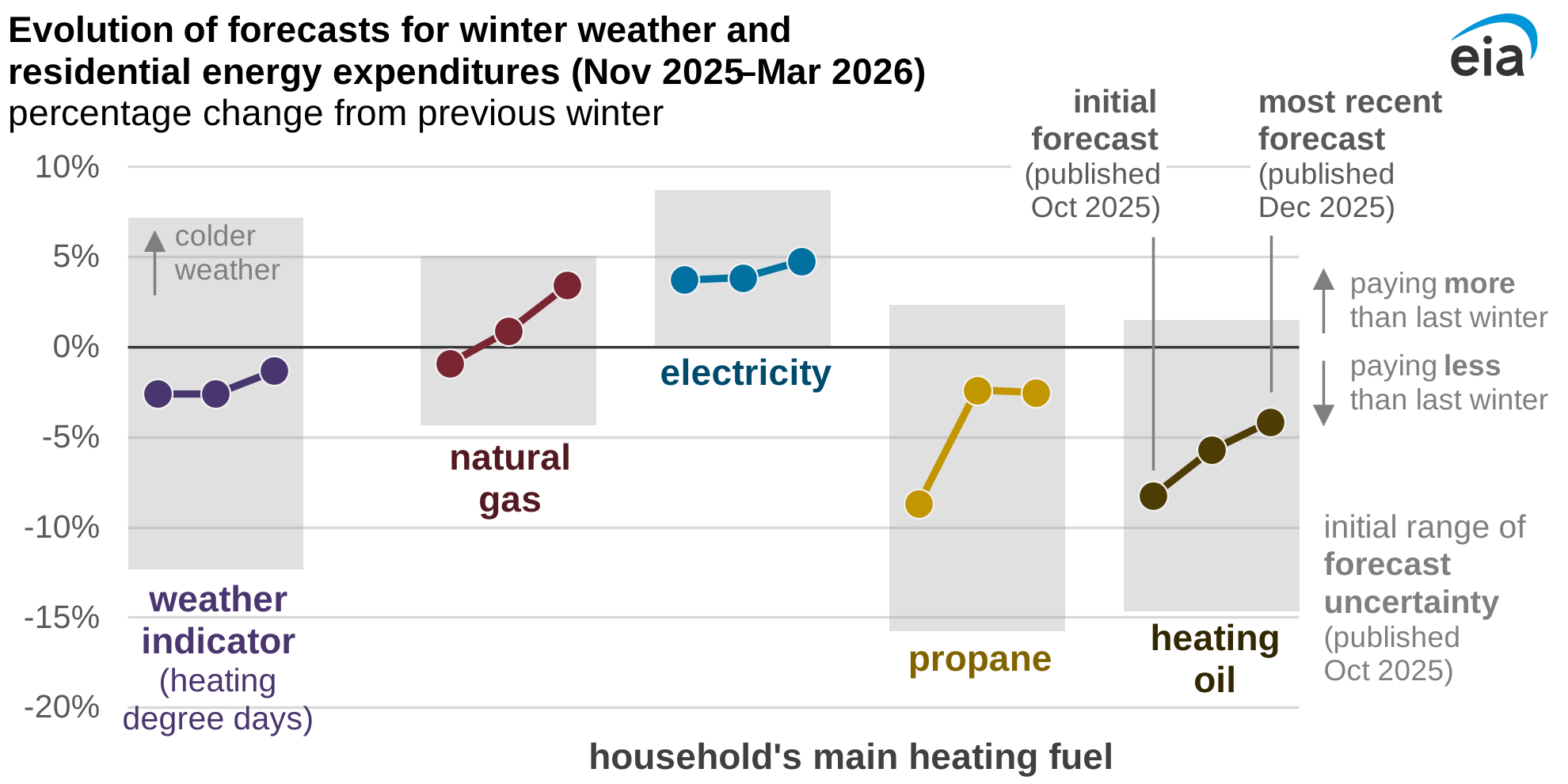
Our estimates for residential energy expenditures this winter (November 2025 through March 2026) have increased since the publication of our initial Winter Fuels Outlook forecasts in mid-October. We now expect a colder winter, and our retail energy price forecasts have risen, especially for natural gas and propane.
Each October, we publish a Winter Fuels Outlook with forecasts for energy consumption, prices, and expenditures for U.S. households. We categorize homes based on their main heating fuel: natural gas, electricity, propane, or heating oil. Almost all U.S. homes use one of these four fuels as their main heating source.
In each month from November through March, we update these forecasts based on actual weather and prices and the most recent Short-Term Energy Outlook (STEO) forecasts for future weather and prices. As the winter progresses, we update our Winter Fuels Outlook forecasts concurrently with each STEO release through April 2026.
Weather is a key source of uncertainty in our forecasts, so we provide three forecasts with different weather assumptions. Retail energy prices—especially for propane and heating oil—are sensitive to weather-related effects on energy demand, supply, and wholesale prices.
Our weather assumptions are partially based on the National Oceanic and Atmospheric Administration’s (NOAA) forecast for the current month. NOAA now expects that this December will be about 8% colder than the average of the previous 10 Decembers. In our October Winter Fuels Outlook forecast, we expected this winter would be slightly warmer than last winter; we now expect generally similar weather to last winter.
Retail natural gas and propane prices for the residential sector have also surpassed our initial forecasts. For natural gas, our retail price forecast has increased concurrently with a change in wholesale natural gas prices. When we formed our October STEO forecast, the spot price of natural gas at Henry Hub was near $3.00 per million British thermal units (MMBtu). By late November, that price had increased to more than $4.00/MMBtu.
Revised forecasts for retail propane prices are attributable to new information from our Heating Oil and Propane Update, which collects data on a weekly basis in October through March. Retail propane prices in October and November have largely followed the previous winter’s price patterns despite wholesale propane prices that have been at least 10% less than the previous winter’s values.
Principal contributor: Owen Comstock