U.S. Energy Information Administration logo
Skip to sub-navigation
In-brief analysis
January 16, 2024

Solar and wind to lead growth of U.S. power generation for the next two years
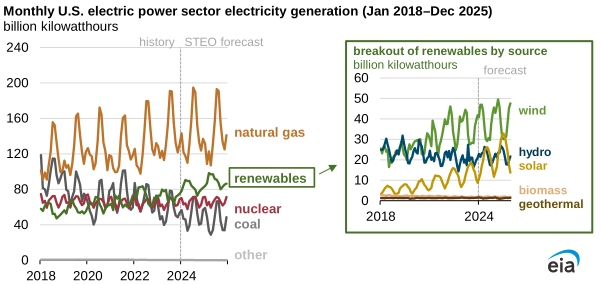
monthly U.S. electric power sector electricity generation
Data source: U.S. Energy Information Administration, Short-Term Energy Outlook (STEO), January 2024

In our latest Short-Term Energy Outlook, we forecast that wind and solar energy will lead growth in U.S. power generation for the next two years. As a result of new solar projects coming on line this year, we forecast that U.S. solar power generation will grow 75% from 163 billion kilowatthours (kWh) in 2023 to 286 billion kWh in 2025. We expect that wind power generation will grow 11% from 430 billion kWh in 2023 to 476 billion kWh in 2025.

In 2023, the U.S. electric power sector produced 4,017 billion kilowatthours (kWh) of electric power. Renewable sources—wind, solar, hydro, biomass, and geothermal—accounted for 22% of generation, or 874 billion kWh, last year. Annual renewable power generation surpassed nuclear generation for the first time in 2021 and coal generation for the first time in 2022.

In contrast to growing generation from renewables, we forecast that coal power generation will decline 18% from 665 billion kWh in 2023 to 548 billion kWh in 2025. We forecast natural gas will continue to be the largest source of U.S. electricity generation, with about 1,700 billion kWh of annual generation in 2024 and 2025, similar to last year. We expect nuclear power generation will stay relatively flat, rising from 776 billion kWh in 2023 to 797 billion kWh in 2025.
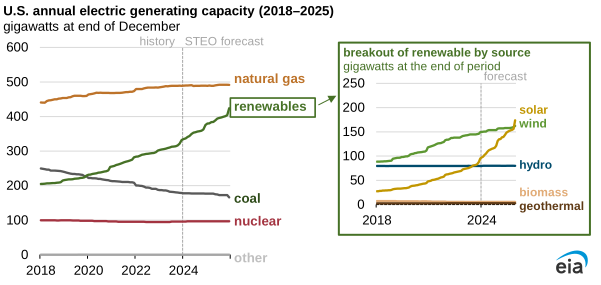
U.S. annual electric generating capacity
Data source: U.S. Energy Information Administration, Short-Term Energy Outlook (STEO), January 2024

New installations of generating capacity support the increase in our renewable generation forecast. Wind and solar developers often bring their projects on line at the end of the calendar year. So, the new capacity tends to affect generation growth trends for the following year. Solar is the fastest-growing renewable source because of the larger capacity additions and favorable tax credits policies. Planned solar projects increase solar capacity operated by the electric power sector 38% from 95 gigawatts (GW) at the end of 2023 to 131 GW by the end of 2024. We expect wind capacity to stay relatively flat at 156 GW by the end of 2024, compared with 149 GW in December 2023.

Principal contributor: Katherine Antonio

Statistics
Analysis
Tools
Education
News

Petroleum & Other Liquids

Crude oil, gasoline, heating oil, diesel, propane, and other liquids including biofuels and natural gas liquids.

Natural Gas

Exploration and reserves, storage, imports and exports, production, prices, sales.

Electricity

Sales, revenue and prices, power plants, fuel use, stocks, generation, trade, demand & emissions.

Coal

Reserves, production, prices, employment and productivity, distribution, stocks, imports and exports.

Nuclear & Uranium

Uranium fuel, nuclear reactors, generation, spent fuel.

Renewable & Alternative Fuels

Includes hydropower, solar, wind, geothermal, biomass and ethanol.

EIA Survey Forms

Forms EIA uses to collect energy data including descriptions, links to survey instructions, and additional information.

Total Energy

Comprehensive data summaries, comparisons, analysis, and projections integrated across all energy sources.

U.S. States

State energy information, including overviews, rankings, data, and analyses.

International

International energy information, including overviews, rankings, data, and analyses.

Environment

Greenhouse gas data, voluntary reporting, electric power plant emissions.

Data Tools, Apps, & Maps

Tools to customize searches, view specific data sets, study detailed documentation, and access time-series data.

Open Data

EIA's free and open data available as API, Excel add-in, bulk files, and widgets

EIA Beta

Come test out some of the products still in development and let us know what you think!

Open Source Code

EIA's open source code, available on GitHub.

RSS Feeds

Subscribe to feeds for updates on EIA products including Today in Energy and What's New.