
Record U.S. small-scale solar capacity was added in 2022
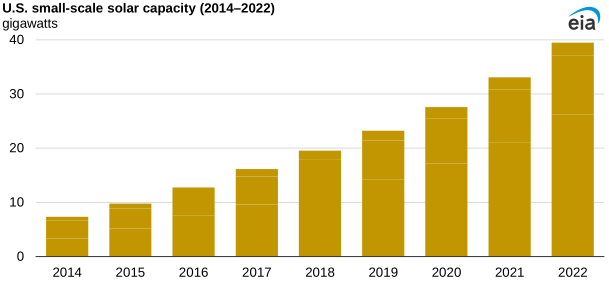
We estimate that the United States added 6.4 gigawatts (GW) of small-scale solar capacity in 2022, the most ever in a single year.
Small-scale solar—also called distributed solar or rooftop solar—refers to solar-power systems with 1 megawatt (MW) of capacity or less. Rooftop solar panels installed on homes make up the majority of small-scale solar capacity in the United States. Small-scale solar power systems are also used in the commercial and industrial sectors.
U.S. small-scale solar capacity grew from 7.3 GW in 2014, when we started publishing these estimates, to 39.5 GW in 2022. Small-scale solar makes up about one-third of the total solar capacity in the United States.
Tax credits and incentives, public policy, and higher retail electricity prices have encouraged the growth of small-scale solar capacity over the past decade. Falling solar panel costs have also played a significant role.
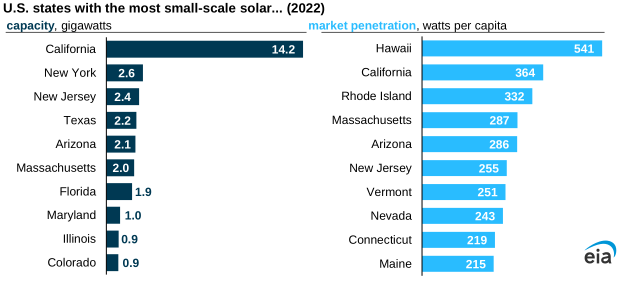
California has, by far, the largest share of the country’s small-scale solar capacity, at 36%. Ample sunshine, favorable incentives, and relatively high retail electricity prices have encouraged rooftop solar adoption in California. California’s Net Energy Metering Program allows rooftop solar panels to be connected to the power grid and provides credits for any surplus electricity produced by the panels and sent to the grid. Starting in 2020, California requires newly built single-family homes and multifamily buildings up to three stories high to have solar panels installed.
New York and New Jersey—mid-Atlantic states with less year-round sunshine—have the second- and third-most small-scale solar capacity, respectively, although in recent years, sunny Texas and Arizona have been closing the gap. Long-standing state policies in New York and New Jersey offer generous solar incentives and have encouraged small-scale solar growth.
Many of the states with the most small-scale solar capacity also have large populations. Accounting for population size provides insight into how prevalent small-scale solar capacity really is in a state. Although California has the most small-scale solar capacity, Hawaii has the highest small-scale solar penetration, at 541 watts per capita.
A large share of Hawaii’s electricity has historically come from oil-fired power plants. These plants rely on expensive fuel imports, resulting in high electricity bills. As solar panel costs have fallen, many homes and businesses in Hawaii have added solar panels, reducing their electricity bills and helping the state work toward its target to generate 100% of its electricity from renewable sources by 2045.
Principal contributors: Elesia Fasching, Katherine Antonio
Tags: generation, electricity, Hawaii, New York, solar, New Jersey, California, states, renewables