
More ethanol was blended into U.S. gasoline last summer than ever before
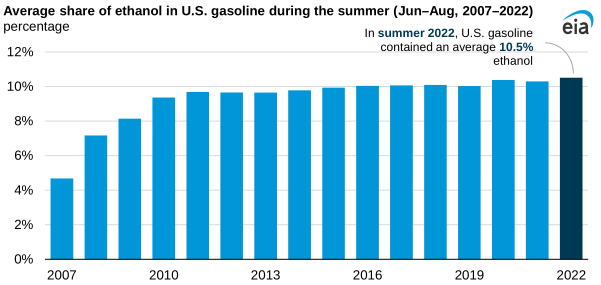
Last summer, when the price of fuel ethanol was lower than the petroleum component of gasoline, record amounts of ethanol were blended into the gasoline sold in the United States (blend rates). The summer 2022 fuel ethanol blend rate from June through August reached 10.5%, the highest blend rate calculated, based on our data going back to 2007.
Most of the gasoline now sold in the United States contains some ethanol. Ethanol blending in the United States helps meet the requirements for reformulated gasoline (RFG) in the 1990 Clean Air Act and the Renewable Fuel Standard set forth in the Energy Independence and Security Act of 2007.
Fuel ethanol’s price discount to gasoline was one factor that led to the higher summer blend rate in 2022. Although U.S. ethanol prices have increased during 2022, they have been smaller than the gasoline price increases; last summer's gasoline price increase was greater than any summer since 2014. Gasoline prices increased because of tight domestic inventories and constraints on refining capacity.
When factoring in the renewable identification number (RIN) credit for blending ethanol with gasoline in the United States, ethanol’s discount to gasoline has been especially large. RINs are the compliance mechanism used for the Renewable Fuel Standard (RFS) program administered by the U.S. Environmental Protection Agency (EPA), and RINs have sold at near-record prices for much of 2022. Ethanol's large discount to gasoline drove higher fuel ethanol blend rates, such as E15 (a gasoline blend of 15% ethanol) and E85 (a blend that contains between 51% and 83% fuel ethanol), which were more attractive to consumers who wanted to take advantage of lower prices.
Typically, E15 cannot be sold at retail stations during the summer in states that do not have an RFG program, a restriction that applies to about two-thirds of the country. This year, however, EPA issued an emergency fuel waiver to allow E15 gasoline to be sold during the summer in all regions of the United States. All gasoline engine vehicles can use E10, but only flex-fuel and light-duty vehicles with a model year of 2001 or newer are approved by the EPA to use E15.
In addition, E85 is becoming increasingly available in the United States. According to the U.S. Department of Energy’s Alternative Fuels Data Center, the United States had 4,331 E85 fueling stations as of January 2022, up 10% from the prior year.
In response to the high fuel ethanol blend rate into gasoline this past summer, we raised our forecast for the average 2022 fuel ethanol blend rate from 10.3% to a record 10.4% in our November Short-Term Energy Outlook.
Principal contributor: Jimmy Troderman
Tags: weather, gasoline, liquid fuels, ethanol, petroleum products