
EIA expects renewables to account for 22% of U.S. electricity generation in 2022
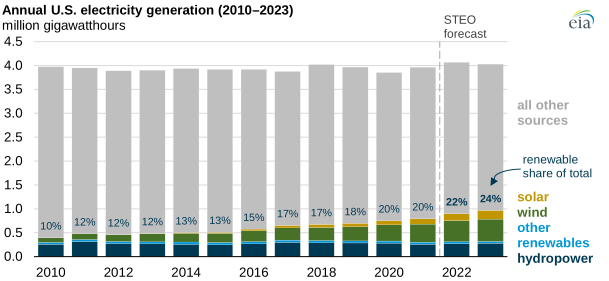
U.S. electricity generation from renewable sources, such as hydropower, wind, and solar, accounted for 20% of electricity generation both in 2020 and in 2021. We expect that share to increase to 22% in 2022 and to 24% in 2023 as more generating capacity from wind and solar come online and other generation sources, such as coal and nuclear, are retired.
We publish short-term forecasts for five renewable energy sources: conventional hydropower, wind, solar, biomass, and geothermal. We based our forecasts for 2022 annual values on our monthly historical survey data through May and forecasts for June through December.
Forecasts in our Short-Term Energy Outlook show how we expect 11 electricity markets in the United States will generate electricity. The two regions with the largest shares of renewable electricity generation during 2021 were the Northwest, where renewables accounted for half of the region’s electricity generation, and California, where renewables accounted for 44% of regional electricity generation. Both of these regions’ hydropower resources were constrained by droughts in 2021, but they still increased their renewable shares of electricity generation.
The Southwest Power Pool (SPP) region has had the most growth in the renewable share of electricity generation over the past decade, largely due to wind generation. In 2013, 13% of the region’s electricity generation came from renewables. That share increased to 40% in 2021, and we expect it to rise to 44% in 2022.
The Electric Reliability Council of Texas, or ERCOT, has also increased its renewable share, from 10% in 2013 to 32% in 2022. ERCOT is the only electricity market region where the renewable electricity share has transitioned from less than the U.S. average to more than the U.S. average from 2013 to present. Both SPP and ERCOT have added substantial generating capacity from wind turbines. Earlier this year, output from wind turbines in SPP and ERCOT contributed to wind becoming the second-highest source of electricity generation on a single day (March 29).
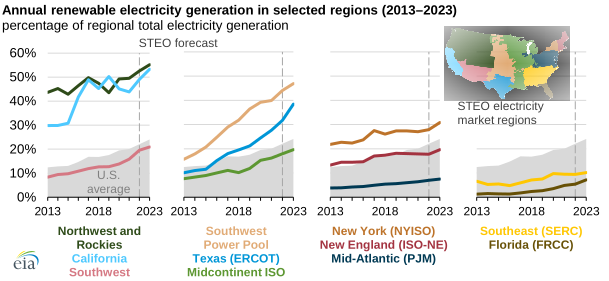
The share of electricity generation from renewable sources is lowest in three regions along the U.S. East Coast: the PJM Interconnection in the Mid-Atlantic, the Southeast (SERC Reliability Corporation), and the Florida Reliability Coordinating Council. In each of these regions, we expect the renewable share of electricity generation to remain below half of the national average through 2023. Natural gas and nuclear sources provide most of the electricity generation in the Southeast and Florida. In PJM, the prevalent generation sources have been natural gas and coal.
Principal contributor: Owen Comstock