
EIA analysis explores energy effects of early adoption of low-carbon steelmaking
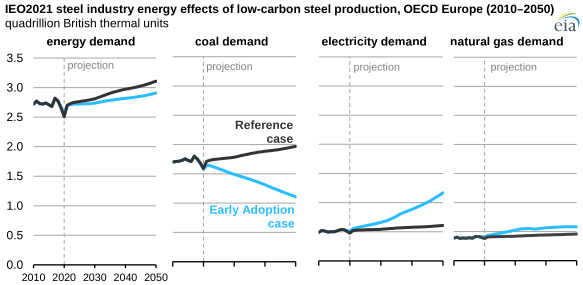
The Early Adoption Case (EAC) of our newly released Issues in Focus: Energy Implications of Potential Iron and Steel-Sector Decarbonization Pathways explores the effects on energy demand of the steel industry becoming an early adopter of renewable hydrogen and increasing the share of steel produced using electric arc furnaces in China, OECD Europe, Japan, and South Korea. The EAC assumes renewable-sourced hydrogen reaches cost parity with fossil fuel-based hydrogen in 2030. This report is part of our larger International Energy Outlook 2021 (IEO2021).
In this case, we see the largest decrease in carbon intensity in OECD Europe—where, by 2050, carbon intensity decreases by 31% compared with our IEO2021 Reference case by 2050, and renewable power generation increases by 9% (the smallest percentage increase among the studied regions). However, OECD Europe represents less than one-tenth of world steelmaking. China is the largest global producer of steel, and the carbon intensity of crude steel production also decreases in China, falling 14% by 2050 compared with the IEO2021 Reference case. South Korea's carbon intensity declines 22%, and Japan's carbon intensity declines 24%. South Korea requires the most additional renewable power generation by 2050 in the EAC—27% more than in the Reference case.
Steelmaking is one of the most energy- and carbon-intensive industries, accounting for around 7% of global carbon dioxide emissions in 2020. Producing a larger share of steel with electric arc furnaces (EAFs), using renewable hydrogen instead of coal, and increasing the share of recycled steel used in production are potential ways to decarbonize the industry.
About two-thirds of the world’s steel is produced by a coal-based and carbon-intensive process where iron ore is heated and reduced by a coke (made by heating coal) to produce iron in a blast furnace (BF). The iron is then converted into steel with a basic oxygen furnace (BOF). The remaining one-third of steel is produced in an alternative process: by recycling scrap steel in an EAF, which is much less energy and carbon intensive. Although most of the world’s virgin steel comes from the BF-BOF process, iron ore can also be converted to iron using syngas—a mixture of hydrogen and carbon monoxide—or just pure hydrogen to produce direct reduced iron (DRI). This DRI can supplement recycled scrap steel in EAFs to produce purer steel.
In our EAC, we project electric arc furnaces will produce a larger share of steel, leading to less coal consumption in the steel industry and more electricity demand in OECD Europe, China, South Korea, and Japan over the next 30 years. In addition, the EAC projects increased natural gas consumption in these regions, which meets increasing levels of DRI production in all four regions.
OECD Europe, the region in this analysis with the largest decline in the carbon intensity of crude steel production, has sufficient land resources for wind and solar projects, a high level of scrap steel availability, and existing natural gas pipelines that can be converted to move hydrogen to industrial users, facilitating its potential transition to a low-carbon steelmaking industry.
Principal contributors: Matt Skelton, Peter Gross