
Venezuelan crude oil production falls to lowest level since January 2003
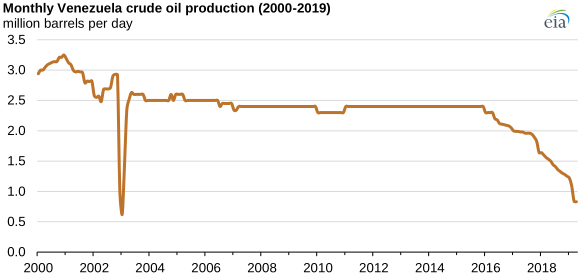
In April 2019, Venezuela's crude oil production averaged 830,000 barrels per day (b/d), down from 1.2 million b/d at the beginning of the year, according to EIA’s May 2019 Short-Term Energy Outlook. This average is the lowest level since January 2003, when a nationwide strike and civil unrest largely brought the operations of Venezuela's state oil company, Petróleos de Venezuela, S.A. (PdVSA), to a halt. Widespread power outages, mismanagement of the country's oil industry, and U.S. sanctions directed at Venezuela's energy sector and PdVSA have all contributed to the recent declines.
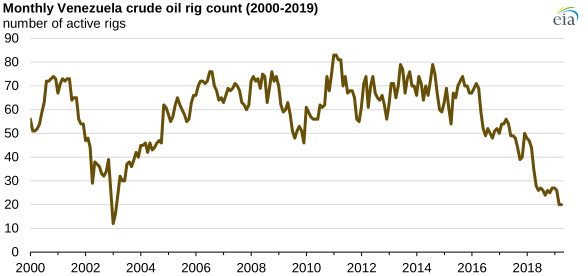
Venezuela’s oil production has decreased significantly over the last three years. Production declines accelerated in 2018, decreasing by an average of 33,000 b/d each month in 2018, and the rate of decline increased to an average of over 135,000 b/d per month in the first quarter of 2019. The number of active oil rigs—an indicator of future oil production—also fell from nearly 70 rigs in the first quarter of 2016 to 24 rigs in the first quarter of 2019. The declines in Venezuelan crude oil production will have limited effects on the United States, as U.S. imports of Venezuelan crude oil have decreased over the last several years. EIA estimates that U.S. crude oil imports from Venezuela in 2018 averaged 505,000 b/d and were the lowest since 1989.
EIA expects Venezuela's crude oil production to continue decreasing in 2019, and declines may accelerate as sanctions-related deadlines pass. These deadlines include provisions that third-party entities using the U.S. financial system stop transactions with PdVSA by April 28 and that U.S. companies, including oil service companies, involved in the oil sector must cease operations in Venezuela by July 27. Venezuela's chronic shortage of workers across the industry and the departure of U.S. oilfield service companies, among other factors, will contribute to a further decrease in production.
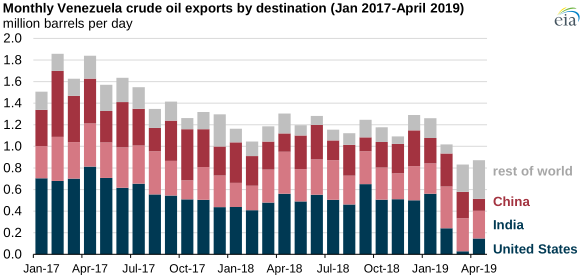
Additionally, U.S. sanctions, as outlined in the January 25, 2019 Executive Order 13857, immediately banned U.S. exports of petroleum products—including unfinished oils that are blended with Venezuela's heavy crude oil for processing—to Venezuela. The Executive Order also required payments for PdVSA-owned petroleum and petroleum products to be placed into an escrow account inaccessible by the company. Preliminary weekly estimates indicate a significant decline in U.S. crude oil imports from Venezuela in February and March, as without direct access to cash payments, PdVSA had little reason to export crude oil to the United States.
India, China, and some European countries continued to receive Venezuela's crude oil, according to data published by ClipperData Inc. Venezuela is likely keeping some crude oil cargoes intended for exports in floating storage until it finds buyers for the cargoes.
A series of ongoing nationwide power outages in Venezuela that began on March 7 cut electricity to the country's oil-producing areas, likely damaging the reservoirs and associated infrastructure. In the Orinoco Oil Belt area, Venezuela produces extra-heavy crude oil that requires dilution with condensate or other light oils before the oil is sent by pipeline to domestic refineries or export terminals. Venezuela’s upgraders, complex processing units that upgrade the extra-heavy crude oil to help facilitate transport, were shut down in March during the power outages.
If Venezuelan crude or upgraded oil cannot flow as a result of a lack of power to the pumping infrastructure, heavier molecules sink and form a tar-like layer in the pipelines that can hinder the flow from resuming even after the power outages are resolved. However, according to tanker tracking data, Venezuela's main export terminal at Puerto José was apparently able to load crude oil onto vessels between power outages, possibly indicating that the loaded crude oil was taken from onshore storage. For this reason, EIA estimates that Venezuela's production fell at a faster rate than its exports.
EIA forecasts that Venezuela's crude oil production will continue to fall through at least the end of 2020, reflecting further declines in crude oil production capacity. Although EIA does not publish forecasts for individual OPEC countries, it does publish total OPEC crude oil and other liquids production. Further disruptions to Venezuela's production beyond what EIA currently assumes would change this forecast.
Principal contributor: Emily Sandys
Tags: Venezuela, liquid fuels, crude oil, oil/petroleum