
U.S. small-scale solar generation has quadrupled in the last decade
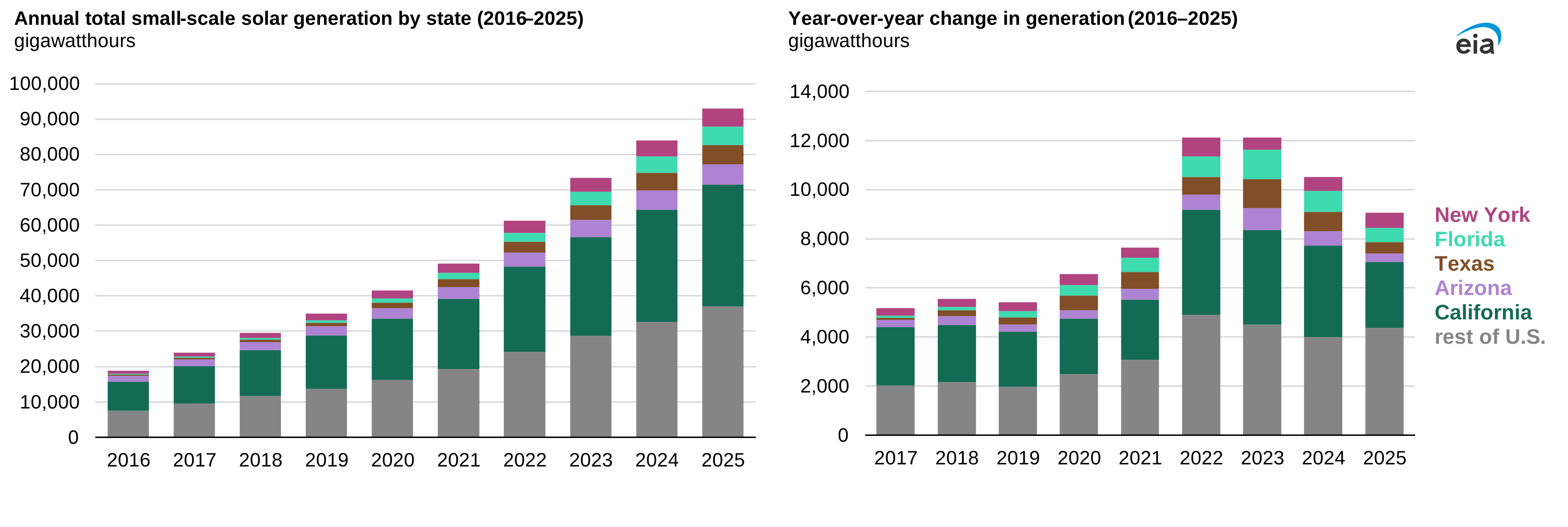
We estimate that U.S. generation from small-scale or rooftop solar photovoltaic systems (smaller than 1 megawatt of capacity) has increased from 18,812 gigawatthours (GWh) to 92,979 GWh over the last decade. The four states with the highest generation of small-scale solar in the country—California, Arizona, Texas, and Florida—are in regions with more abundant solar resources. Even though it is in a region with lower solar resources, New York ranks as the fifth-largest rooftop solar generation producer as a result of capacity growth supported by technology improvements and state incentives.
The year-over-year change in generation was particularly high in 2022, when total generation grew by 25% compared with the previous year amid record capacity growth. Changes in different programs supporting rooftop solar partly explain this increase in generation. For example, California’s Net Energy Metering (NEM) 2.0 program was available through April 2023. This net metering program offered higher export compensation than the subsequent Net Billing Tariff, or NEM 3.0. All the capacity built under the NEM 2.0 program was grandfathered in, incentivizing higher capacity installation before the current NEM 3.0 took effect.
California accounted for 37% (34,411 GWh) of total U.S. small-scale solar generation in 2025. Between 2024 and 2025, rooftop solar generation in the state grew by 8%, largely due to an increase in capacity. Small-scale solar capacity in California increased from 18 gigawatts in 2024 to 20 gigawatts in 2025.
The state with the next largest amount of small-scale solar power generation is Arizona, accounting for over 6% of total U.S. generation, or 5,795 GWh. Year-over-year generation in Arizona grew only 6% in 2025. The largest increase happened between 2022 and 2023 when generation from small-scale solar grew by 22% in the state. Arizona customers can access a 25% state income-tax credit and other incentives for adding rooftop solar to their properties.
States such as Florida and Texas have seen rapid growth in small-scale solar generation in the last decade as more capacity has been added. Generation in Texas grew from 391 GWh in 2016 to 5,408 GWh last year. Over the same period, Florida’s generation grew from 205 GWh in 2016 to 5,198 GWh in 2025. These two states provide incentives through property tax exemptions and other programs specific to each state and, in some cases, utility.
Programs in states with lower irradiance levels are also supporting growth in rooftop solar generation. New York offers incentives, which have encouraged small-scale solar growth in the state. Other states with similar programs include New Jersey, Massachusetts, and Illinois.
Although generation from small-scale solar continues to grow year over year, the rate of growth has declined since 2022.
EIA uses its surveys of electric utilities to collect information on the number of customers with small-scale solar systems and the aggregated capacity. Electric utilities do not necessarily know how much electricity is generated by rooftop solar on their distribution systems, so generation must be estimated. To develop estimates of generation, we rely on tools such as the National Renewable Energy Laboratory's System Advisor Model and PVWatts. Data on commonly used tilt angles and orientations for small-scale solar systems in California were used as inputs to be representative of tilt angles and orientations in other states.
Principal contributors: Lindsay Aramayo, Marc Harnish
Tags: solar, electricity, capacity