
New York imports more electricity from Canada after high-voltage transmission line opens
Note: NYISO=New York Independent System Operator
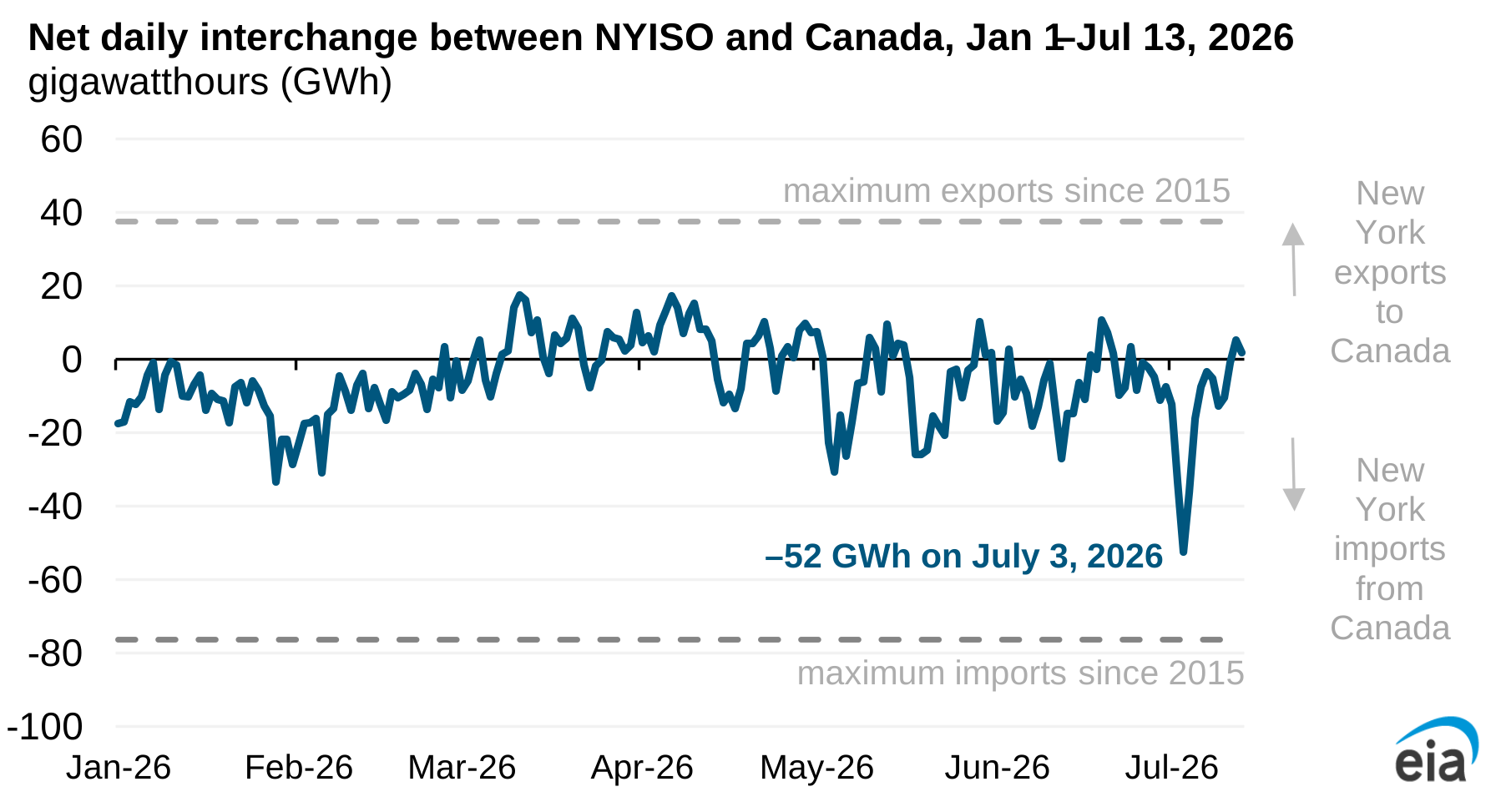
On July 3, 2026, the New York Independent System Operator (NYISO) imported 52 gigawatthours (GWh) of electricity from Canada, the most traded between the two areas since January 2025. Some of the imported electricity flowed along the new Champlain Hudson Power Express (CHPE) transmission line between Québec, Canada, and New York City, which officially reached commercial operations in May after three years of construction.
A strong heat wave drove electricity demand in NYISO up during the first week of July with a maximum hourly load (peak load) of 31,097 megawatts (MW) on July 2 at 7:00 PM. The hourly peak load last summer (June through August) was 31,857 MW on June 24, 2025, at 7:00 PM (the all-time record load of 33,956 MW occurred in July 2013). Canadian imports fulfilled 9% of electricity demand in NYISO on July 3, with a daily average of 1,400 megawatts (MW) per hour coming from Hydro-Québec and 800 MW per hour from the Independent Electric System Operator in Ontario. The new CHPE transmission line connecting Hydro-Québec’s grid and the NYISO grid has a capacity of 1,250 MW, which was fully utilized on July 3.
According to the New York State Energy Research and Development Authority, CHPE is expected to meet up to 20% of New York City’s power demand. Although the transmission line supplied power to New York during the heat wave in July, an outage occurred in June, and the transmission line was taken offline again on July 4 for further repairs.
In recent years, both ISO-New England and NYISO have relied less on electricity imports from Canada as drought conditions have limited hydroelectric generation. However, both regional grids have built high voltage transmission lines connecting hydropower from Québec to their respective regions, which could reverse the trend if hydroelectric generation increases.
Principal contributors: Tyler Hodge, Kimberly Peterson
Tags: New York, Canada, electricity, transmission