
Wind generation declined in 2023 for the first time since the 1990s
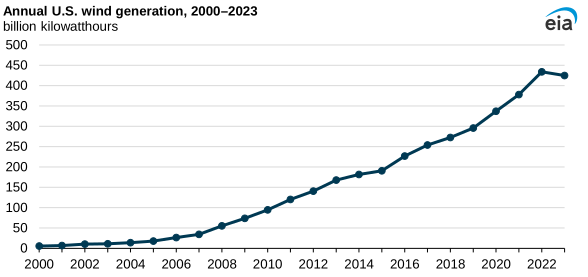
U.S. electricity generation from wind turbines decreased for the first time since the mid-1990s in 2023 despite the addition of 6.2 gigawatts (GW) of new wind capacity last year. Data from our Power Plant Operations Report show that U.S. wind generation in 2023 totaled 425,235 gigawatthours (GWh), 2.1% less than the 434,297 GWh generated in 2022.
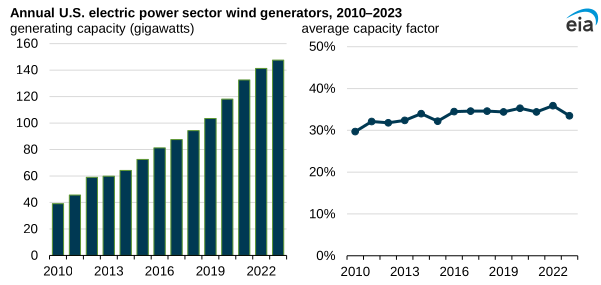
U.S. wind capacity increased steadily over the last several years, more than tripling from 47.0 GW in 2010 to 147.5 GW at the end of 2023. Electricity generation from wind turbines also grew steadily, at a similar rate to capacity, until 2023. Last year, the average utilization rate, or capacity factor, of the wind turbine fleet fell to an eight-year low of 33.5% (compared with 35.9% in 2022, the all-time high).
The 2023 decline in wind generation indicates that wind as a generation source is maturing after decades of rapid growth. Slower wind speeds than normal affected wind generation in 2023, especially during the first half of the year when wind generation dropped by 14% compared with the same period in 2022. Wind speeds increased later in 2023, and wind generation from August through December was 2.4% higher than during the same period in 2022. Wind speeds had been stronger than normal during 2022.
The decline in wind generation in 2023 was not uniform across the United States. Wind generation decreased the most in the upper Midwest, which includes the East North Central Census Division and West North Central Census Division. Wind generation in the East North Central Census Division declined by 6% compared with 2022, and it declined in the West North Central Census Division by 8%. The Mountain Census Division reported a smaller reduction of 2%. These three census divisions account for half of the installed wind capacity in the United States.
Wind generation in 2023 in other regions of the United States was slightly higher than in 2022. The West South Central Census Division had 3% more wind generation in 2023, and the Pacific Coast Census Division had 1% more. Wind generation in Texas, which has the largest wind generation fleet in the United States, increased by 4.4% in 2023. Texas had an installed wind capacity of 40.7 GW in 2023, accounting for 28% of the national total.
Principal contributors: Mark Morey, Scott Jell
Tags: generation, electricity, wind