
OPEC+ production cuts drive up sour crude oil price around the world
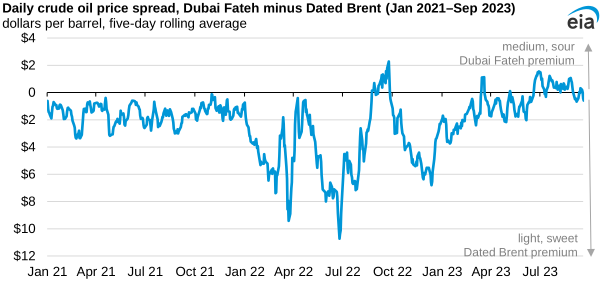
Note: The figure is based on the five-day moving average of the price spread between Dated Brent and Dubai Fateh.
Crude oil production cuts among OPEC+ members are limiting the global supply of medium, sour and heavy, sour grades of crude oil. These cuts are increasing prices for these grades compared with sweet crude oils, reversing typical price relationships.
Crude oil is classified into categories based on the oil’s density (light, medium, or heavy) and sulfur content (sweet or sour). Light, sweet crude oils typically trade at a premium compared with any sour crude oil because sweet crude oils cost less to refine and produce higher yields of more valuable products.
Medium, sour Dubai Fateh (an Asia-Middle East benchmark), however, recently traded at a premium to light, sweet Dated Brent (a global benchmark). Dated Brent traded at an average premium of $2.56 per barrel (b) compared with Dubai Fateh between January 4, 2021, and June 20, 2023. However, between June 21 and September 19, the roles reversed, and Dubai Fateh traded at an average premium of $0.48/b compared with Dated Brent. Trade press reports similar movement in the price of Norway’s Johan Sverdrup—a medium, sour crude oil—as refiners offer increased prices to attract constrained supply.
In North America, the spread between the price of medium, sour Mars crude oil and the light, sweet Magellan East Houston (MEH) has declined since late 2022, and Mars sold at a small premium briefly in July 2023. The price of MEH reflects the price of light, sweet crude oil at the Enterprise ECHO terminal in Houston, Texas. The spread between Mars and MEH has increased over the past few weeks, although it is still lower than earlier this year.
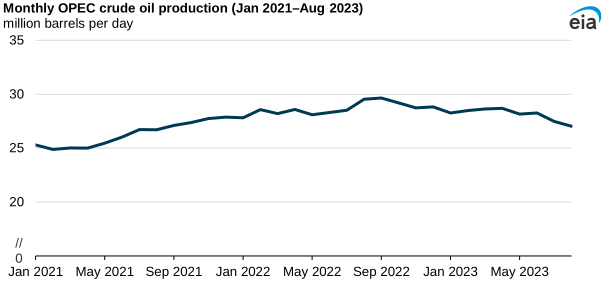
In June 2023, OPEC+ members announced they would extend crude oil production cuts through 2024, limiting global crude oil supplies, particularly sour crude oils. On top of the OPEC+ production cuts, Saudi Arabia announced it would reduce crude oil production by an additional 1 million barrels per day (b/d) for July. These additional voluntary production cuts were extended several times, and Saudi Arabia announced on September 5 that it would extend them through the end of 2023. In our September Short-Term Energy Outlook, we estimate that OPEC crude oil production averaged 27.0 million b/d in August, the lowest since August 2021, and crude oil production in Saudi Arabia averaged 8.7 million b/d, the lowest since May 2021.
Most of Saudi Arabia’s crude oil contains more than 1% sulfur, our threshold for classifying crude oil as sour, and production cuts have put more upward price pressure on sour barrels than sweet. Saudi Arabia also increased the official selling price (OSP) of Arab Light (a medium, sour crude oil) to Asia and Europe, further pushing up sour crude oil prices. As a result, sweet and sour crude oil price spreads have narrowed in most major trading hubs, including those in North America, Europe, and the Middle East.
The extent and duration of the current market dynamics, with sour crude oil prices trading unusually high, remain uncertain against a backdrop of production cuts, higher OSPs, and heightened demand for sour crude oil as several new Middle East refineries come online.
Principal contributor: Matthew French