
Florida’s electricity generation mix is changing
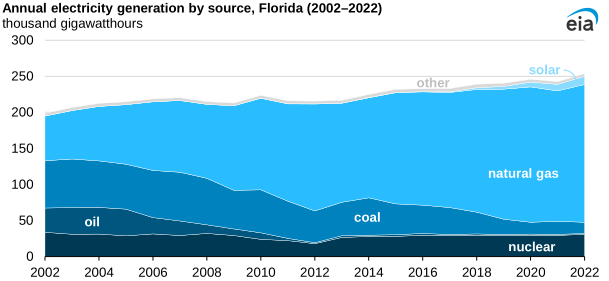
Florida's generation mix has become less diverse over the past 20 years as natural gas-fired generation has increasingly accounted for most of the electricity generation in the state and as coal-fired generation and oil-fired generation have declined.
In 2002, natural gas accounted for 31% of Florida’s electricity generation. By 2022, that share had grown to 75%. From 2002 to 2022, the installation of 26.8 gigawatts (GW) of new and advanced natural gas-fired capacity supported this growth. In addition, increased natural gas production throughout the country and expansion of the Southeast U.S. pipeline network have supplied these new power plants with access to low-priced fuel.
Increases in Florida’s natural gas-fired capacity have come about as older, less efficient coal-fired generators have retired. Since 2002, 4.2 GW of coal-fired capacity has been taken offline—a 48% decrease in coal-fired capacity. As coal-fired power plants have retired, Florida’s share of coal-fired generation has fallen from 33% in 2002 to 6% in 2022.
Oil-fired generation made up 17% of Florida’s electricity generation in 2002 before falling to 1% in 2022 as 6.5 GW of oil-fired capacity retired, or 80% of the operating fleet.
Florida’s increased solar capacity has shifted the generation mix some. Solar’s share of total generation in 2022 was 4%. The first utility-scale solar power projects in the state started operating in 2009, and total capacity grew to 5.9 GW by the end of 2022.
Nuclear units have continued to generate about 13% of total generation in Florida.
Going forward, planned plant additions and retirements from 2023 through 2026 will continue to change the generation mix in Florida. Announced natural gas capacity additions during this period total 1.8 GW. Solar capacity plans to double during this period to 11.6 GW, or 5.5 GW of new units. Announced coal retirements total 1 GW through 2026, which will decrease current operating coal-fired capacity to 3.5 GW.
Principal contributors: Scott Jell, Mark Morey
Tags: coal, natural gas, generation, electricity, solar, states, Florida