
Small-scale solar is changing hourly utility electricity demand in New England
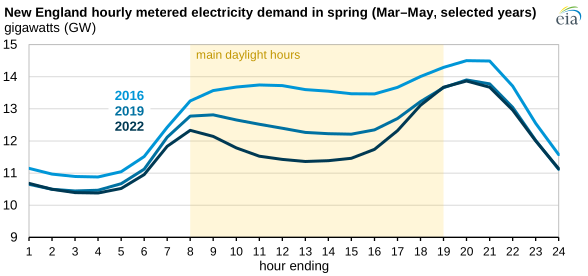
An increase in electricity generation from small-scale, customer-sited photovoltaic (PV) solar in New England is changing the hourly pattern of metered electricity demand during the spring (March–May), which you can see in our Hourly Electric Grid Monitor. Small-scale solar PV are systems with less than 1 megawatt (MW) of generating capacity and are typically not metered by a utility (referred to as behind the meter). As a result of the increase in this type of solar generating capacity in New England, electricity demand on utilities was rapidly decreasing during the morning and rapidly increasing during the evening through the spring.
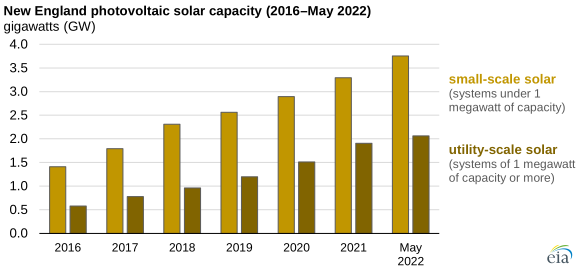
Despite New England’s less favorable solar resources, solar capacity in New England has increased by 3.8 gigawatts (GW) since 2016. Small-scale solar generation rapidly increases in the morning, resulting in falling electricity demand, and rapidly decreases in the evening, resulting in rising electricity demand. Because utility grid operators generally dispatch solar generators first, they must power up (ramp up) or down other generation types to meet and balance electricity demand.
More than half of New England’s 3.8 GW of PV capacity additions since 2016, or 2.3 GW, have been small-scale solar. Because generation from small-scale solar is not metered by utilities, it is not distinguishable as a source of electricity generation on our Hourly Electric Grid Monitor; however, it is assumed to contribute to reduced electricity demand. The solar generation series in our Hourly Electric Grid Monitor tracks almost all utility-scale systems of at least 1 MW of capacity.
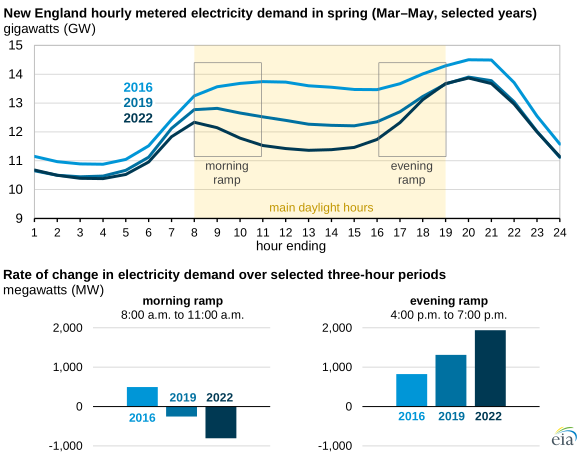
The addition of small-scale solar has altered the average hourly rate of change in electricity demand in New England. From March through May of 2016, hourly electricity demand in New England typically increased by 500 MW during the three-hour period between 8:00 a.m. and 11:00 a.m. By 2022, electricity demand during that period usually decreased by 800 MW.
Similarly, in spring 2016, evening electricity demand typically increased by 800 MW between 4:00 p.m. and 7:00 p.m. By 2022, electricity demand increased by 1,900 MW during those three hours.
Principal contributors: Nina Vincent, Ed Thomas
Tags: generation, consumption/demand, electricity, New England, solar