
U.S. energy-related CO2 emissions rose 6% in 2021
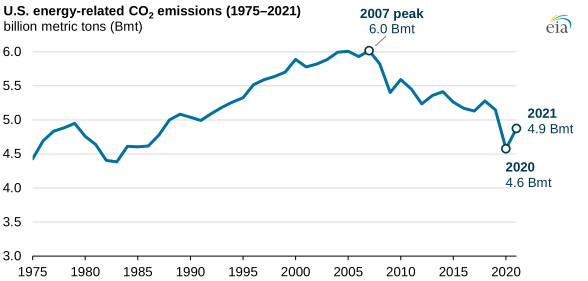
In 2021, U.S. energy-related carbon dioxide (CO2) emissions increased by 296 million metric tons (MMmt), or 6%, compared with 2020 levels. This increase followed a rise in economic activity and energy consumption once the initial economic impacts of the COVID-19 pandemic began to subside. Despite this increase in total emissions, in 2021, they were 274 MMmt (5%) lower than their pre-pandemic level in 2019 and 1,143 MMmt (19%) lower than their 2007 historical peak.
In 2021, the transportation and electric power sectors contributed most to rising energy-related CO2 emissions, which increased by 171 MMmt (11%) and 103 MMmt (7%), respectively, compared with 2020 levels. Transportation emissions rose because of increased U.S. petroleum consumption for travel as COVID-19-related restrictions eased. Electric power sector emissions rose because of increased electricity generation and the higher carbon intensity of electricity generation. In 2021, U.S. electric power sector emissions from coal increased for the first time since 2014.
U.S. industrial and commercial sector energy-related CO2 emissions grew slightly, rising by 14 MMmt (1%) and 8 MMmt (4%), respectively, as industrial and business activity increased relative to 2020. Residential sector CO2 emissions were flat between 2020 and 2021.
At the fuel level, petroleum and coal accounted for most of U.S. CO2 emissions increases from 2020 to 2021, rising by 181 MMmt (9%) and 126 MMmt (14%), respectively. The increase in petroleum emissions was largely a result of more travel demand. U.S. jet fuel emissions increased 27%, motor gasoline emissions increased 9%, and emissions from distillate fuel oil (which is primarily consumed as diesel) increased 6%.
Our U.S. CO2 Emissions from Energy Consumption by Source and Sector chart provides a comprehensive view of 2021 energy-related CO2 emissions. Additional historical U.S. monthly and annual energy-related CO2 emissions data are available in our Monthly Energy Review.
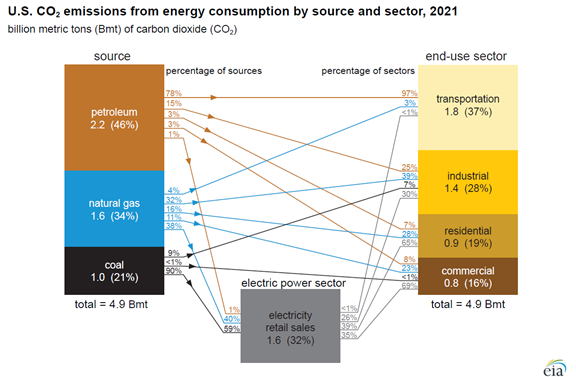
Note: Click for full U.S. CO2 emissions chart.
Principal contributors: Kevin Nakolan, Michael Francis