
Crude oil prices rise above $100 per barrel after Russia’s further invasion into Ukraine
Reposted at 11:15 a.m. on March 4, 2022 to clarify text.
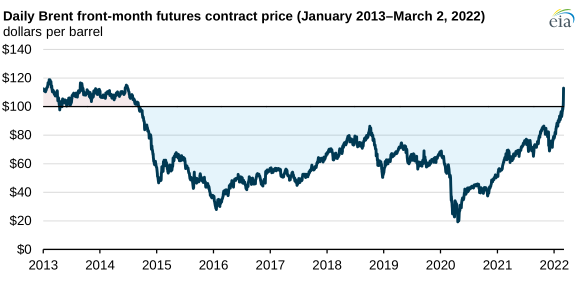
Following reports that Russian forces further invaded Ukraine on Thursday, February 24, the front-month futures price of both Brent and West Texas Intermediate (WTI) crude oil have increased to more than $100 per barrel (b). The front-month Brent contract price closed just below $115/b on Wednesday, March 2, after rising and settling above $100/b on February 28. The Brent crude oil price last rose above $100/b in late 2014. The front-month WTI contract price closed above $110/b on March 2, after first settling above $100/b on March 1.
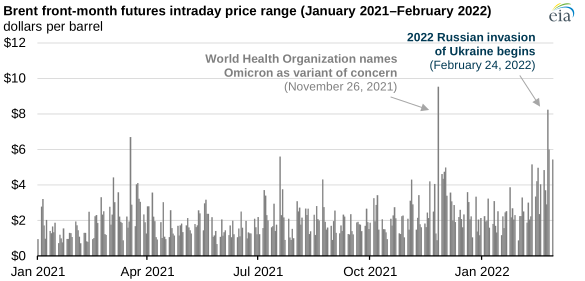
Brent crude oil is a type of crude oil from the North Sea in Northwest Europe that is commonly used as a global benchmark. West Texas Intermediate crude oil is used as a U.S. benchmark. Recent trading of these benchmarks has been more volatile lately than in the past. For example, on February 24, the price of Brent crude oil ranged from a high of $105.79/b to a low of $97.56/b, an intraday price range of $8.23/b that is nearly four times the average range during 2021. The only other time since January 2021 that the range exceeded $8/b was on November 26, in response to the World Health Organization’s identification of the coronavirus Omicron variant.
The Brent crude oil price decreased on February 25, but developments in the Ukraine-Russia conflict and new sanctions placed on Russia over the weekend contributed to an increase in the Brent price on February 28. Subsequent news about Russia's further invasion has had significant effects on crude oil trading throughout the past week.
Russia is the third-largest petroleum and liquid fuels producer in the world, after the United States and Saudi Arabia. It is also a major exporter of crude oil. Since mid-January 2022, the geopolitical risk related to Russia’s further invasion of Ukraine has contributed to higher and more volatile crude oil prices. Stronger petroleum demand as the COVID-19 pandemic has begun to ease and slower crude oil production growth have also put upward pressure on global crude oil prices.
Principal contributors: Kevin Hack, Jimmy Troderman
Tags: prices, international, Brent, liquid fuels, crude oil, Russia, oil/petroleum