U.S. Energy Information Administration logo
Skip to sub-navigation
December 13, 2021

Less production and more demand have reduced U.S. jet fuel inventories
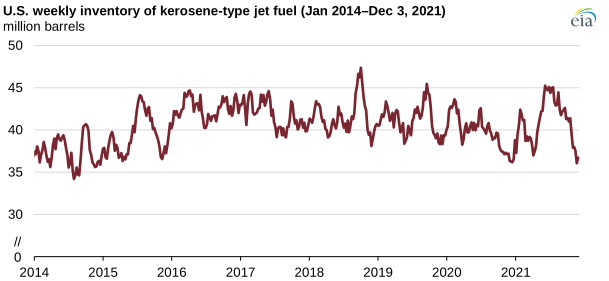
U.S. weekly inventory of kerosene-type jet fuel
Source: U.S. Energy Information Administration, Weekly Petroleum Status Report

On November 26, U.S. jet fuel inventories were at their lowest level since late 2014, according to data in our Weekly Petroleum Status Report. Refineries produced less jet fuel in October compared with this summer, and since August, jet fuel demand has increased to near pre-pandemic levels. This increased demand, along with reduced production, has caused inventories to decline.

High jet fuel inventories in summer 2021 were the result of increased refinery production during a period of high market demand for gasoline and distillate. This high demand encouraged refiners to process more crude oil, and jet fuel is a byproduct of crude oil refining. Hurricanes along the Gulf Coast in August contributed to temporary refinery outages and reduced production, which brought jet fuel inventories to more normal seasonal levels. For the week ending September 3, total jet fuel inventory fell below its previous five-year average.

Jet fuel demand (measured as product supplied) has been well below its 2019 average of 1.74 million barrels per day (b/d) since the onset of the COVID-19 pandemic. In most weeks since mid-August, jet fuel consumption has been within 20% of 2019 levels, according to WPSR. By comparison, in November 2020, U.S. jet fuel demand averaged 1.13 million b/d, or about two-thirds of its 2019 average value.
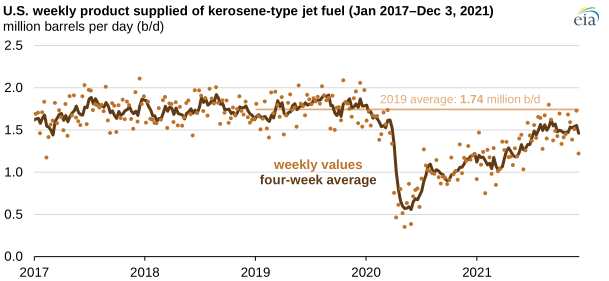
U.S. weekly product supplied of kerosene-type jet fuel
Source: U.S. Energy Information Administration, Weekly Petroleum Status Report and Petroleum Supply Monthly

Principal contributor: Kevin Hack

Statistics
Analysis
Tools
Education
News

Petroleum & Other Liquids

Crude oil, gasoline, heating oil, diesel, propane, and other liquids including biofuels and natural gas liquids.

Natural Gas

Exploration and reserves, storage, imports and exports, production, prices, sales.

Electricity

Sales, revenue and prices, power plants, fuel use, stocks, generation, trade, demand & emissions.

Coal

Reserves, production, prices, employment and productivity, distribution, stocks, imports and exports.

Nuclear & Uranium

Uranium fuel, nuclear reactors, generation, spent fuel.

Renewable & Alternative Fuels

Includes hydropower, solar, wind, geothermal, biomass and ethanol.

EIA Survey Forms

Forms EIA uses to collect energy data including descriptions, links to survey instructions, and additional information.

Total Energy

Comprehensive data summaries, comparisons, analysis, and projections integrated across all energy sources.

U.S. States

State energy information, including overviews, rankings, data, and analyses.

International

International energy information, including overviews, rankings, data, and analyses.

Environment

Greenhouse gas data, voluntary reporting, electric power plant emissions.

Data Tools, Apps, & Maps

Tools to customize searches, view specific data sets, study detailed documentation, and access time-series data.

Open Data

EIA's free and open data available as API, Excel add-in, bulk files, and widgets

EIA Beta

Come test out some of the products still in development and let us know what you think!

Open Source Code

EIA's open source code, available on GitHub.

RSS Feeds

Subscribe to feeds for updates on EIA products including Today in Energy and What's New.