
California’s hydroelectric generation affected by historic drought
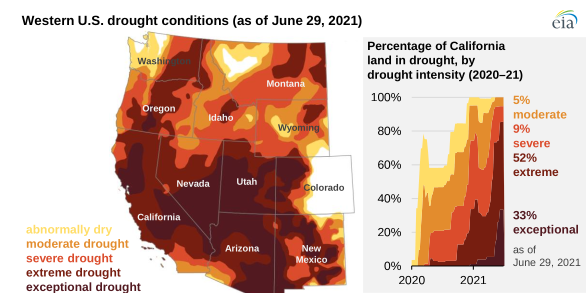
Most of the western United States is experiencing intense and historic drought conditions. California is one of the most severely affected states. As of June 22, 2021, 100% of the state is experiencing some degree of drought. About 33% of the state has been categorized under exceptional drought, the most intense drought classification. The drought conditions have affected California’s water supply levels and hydropower plants.
Drought conditions include below-normal precipitation and snowpack accumulation, very dry soil, and higher-than-normal temperatures. These factors lower the water supply available in the summer months.
Mountain snowpack serves as a natural reservoir, providing water throughout the spring and summer as it melts. However, the California snowpack was well below normal this year, and most of it melted quickly because of higher spring temperatures. Measurable snow was present at only 3 of 131 monitoring stations on June 1.
Meltwater from the snowpack often didn’t reach reservoirs in California this year because it was absorbed by drought-parched soil and streams, leaving reservoirs across the state at low levels. Shasta Lake, the largest reservoir in California, is at 48% of its average capacity. Lake Oroville, the second-largest reservoir in the state, is at 40% of its average capacity. Lake Oroville’s water level is expected to fall even lower, which will likely force the Edward Hyatt Power Plant to shut down for the first time since it opened in 1967.
Low water supply can affect hydroelectric generation. California’s previous drought, which lasted from 2012 to 2016, led to significant declines in hydroelectric generation and the state’s first-ever mandatory water restrictions in 2015. As drought conditions eased, hydropower conditions improved.
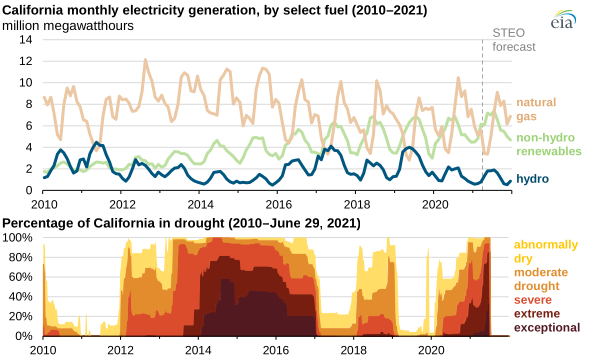
However, as a result of this year’s harsh drought conditions, we expect hydroelectric generation in California to be lower in 2021 than it has been in recent years. In the first four months of 2021, hydroelectric generation in California was 37% less than in the same four months in 2020 and 71% less than during those months in 2019. According to our Short-Term Energy Outlook, hydroelectric generation in California this year will be 19% less than last year, decreasing from 16.8 million megawatthours (MWh) in 2020 to 13.6 million MWh in 2021.
Principal contributor: Lindsay Aramayo
Tags: generation, weather, hydroelectric, California, states, map