
U.S. electric power industry produces less and recycles more combustion by-product
Note: Data are for thermoelectric power plants with 100 megawatts or more of steam electric capacity.
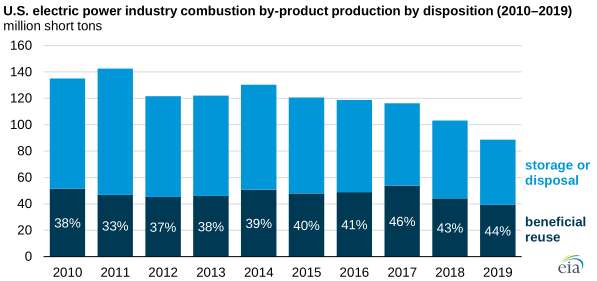
Combustion by-product (CBP) production in the U.S. electric power industry decreased from 135.1 million short tons in 2010 to 88.7 million short tons in 2019, a 34% decline. CBPs are residues left over after the combustion of coal, petroleum coke, residual fuel oil, and wood or wood waste. CBPs can be disposed of in onsite or offsite landfills or ponds, reused in products such as concrete wallboard or as structural fill to support roadways (referred to as beneficial reuse), or stored for subsequent disposal or reuse. The beneficial reuse rate of CBPs from operating power plants increased from 38% in 2010 to 44% in 2019.
One cause for the decline in CBP production is reduced coal-fired capacity as coal-fired power plants are retired. Recycling a larger portion of CBPs has helped ensure that enough CBPs are available for beneficial reuse despite lower CBP production overall. Higher CBP recycling rates have also reduced CBP disposal at onsite ponds, landfills, or offsite disposal locations.
In the electric power industry, most CBPs are produced as a result of burning coal for electricity generation. The CBPs from burning coal in coal-fired power plants include fly ash, bottom ash, and gypsum from flue gas desulfurization (FGD) systems. Thermoelectric power plants with 100 megawatts (MW) or more of steam electric capacity report the total amount of CBPs produced and the disposition of those CBPs to the U.S. Energy Information Administration (EIA) each year. Fly ash (40.8 million tons) and FGD by-products (32.4 million tons) accounted for about 80% of CBP production in 2019.
Beneficial use of CBPs, which can include onsite use, offsite use, or sales to a third party, is currently regulated by state-level environmental agencies. The U.S. Environmental Protection Agency (EPA) excluded beneficial use of CBPs from federal regulation in May 2000. Disposal of CBPs, whether onsite in landfills or ponds or offsite, falls under EPA’s Coal Combustion Residuals (CCR) regulations. National CCR disposal regulations for electric utilities were finalized in April 2015, and they address issues of ground water contamination, air pollution from dust, and ash impoundment failure. They also define beneficial reuse.
Principal contributor: Rosalyn Berry