
U.S. coal production employment has fallen 42% since 2011
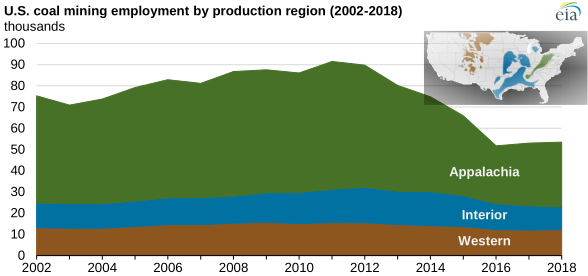
The U.S. Energy Information Administration’s (EIA) Annual Coal Report shows that coal mining employment has declined in the past decade as coal demand has decreased. Most U.S. coal is consumed in the electric power sector and has faced increased competition from electricity generation from natural gas and renewable technologies. U.S. coal mining employment fell from a high of 92,000 employees in 2011 to 54,000 employees in 2018, with the most dramatic decrease in the Appalachian region.
Annual U.S. coal production peaked in 2008, three years before coal mining employment reached its record high. In 2008, the United States produced 1.2 billion tons of coal from 1,458 mines. Since then, coal production has fallen and many mines have closed: in 2018, U.S. coal production was 756 million tons from 679 mines. As was the case with employment, much of coal’s production decline was concentrated in the Appalachian region. More than half of the region’s mines have closed since 2008, and production has fallen from 390 million tons in 2008 to 200 million tons in 2018.
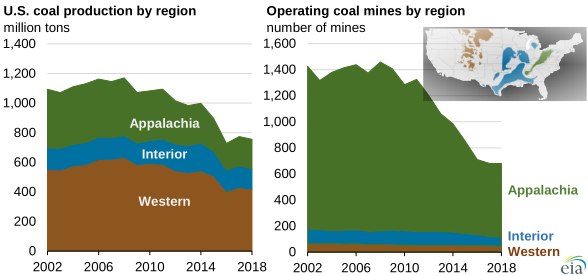
Appalachian mines tend to be smaller than mines in the Interior and Western regions and to use labor-intensive underground mining techniques, as opposed to machinery-intensive longwall mining and surface mining operations. A slight increase in coal mining employment in the Appalachia region from 2016 to 2018 corresponded to an increase in coal exports because this region is the dominant source of coal shipped overseas.
The decline in operating mines has been steeper than the changes in employment and production. EIA’s review of operating mines showed that smaller mines have had greater difficulty competing in the current market and have been the first to close.
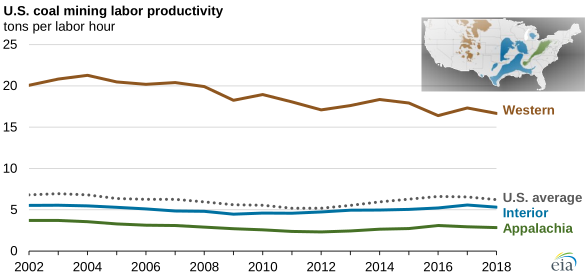
As smaller, less productive mines were idled or closed, overall coal labor productivity, measured in tons per labor hour, gradually increased from 5.2 tons per labor hour in 2011 to 6.2 tons per labor hour in 2018. The large surface mines in the Powder River Basin (PRB) in Wyoming and Montana have much higher productivity, but even PRB productivity has declined as the region’s producing coal seams become deeper and the amount of overburden, or top soil and rock above the coal seam, increases.
In contrast, the Appalachia and Interior regions both have shown improvements in labor productivity between 2011 and 2018, largely because they are increasingly relying on less labor-intensive longwall and highwall mining systems and closing or idling the least productive mines.
Data from EIA’s Annual Coal Report are available in EIA’s Coal Data Browser. In addition to data from the U.S. Mine Safety and Health Administration, EIA’s Annual Coal Report also includes mine-level data from EIA’s Survey of Coal Production and Preparation and coal exports data from the U.S. Department of Commerce.
Principal contributor: David Fritsch
Tags: production/supply, coal