
Hydropower supplies more than three-quarters of Brazil’s electric power
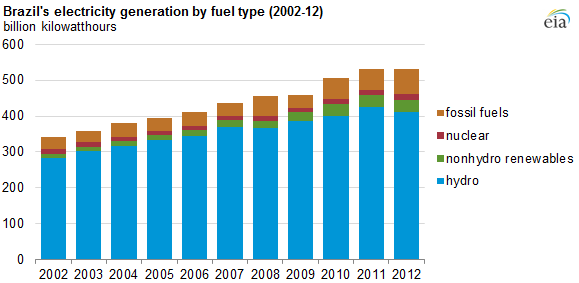
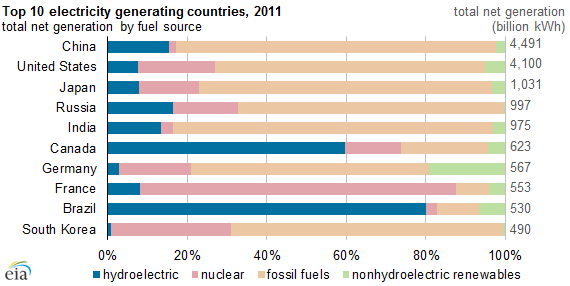
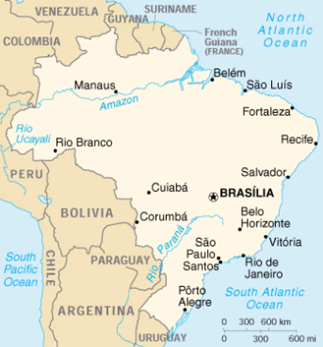
Brazil is the second-largest producer of hydroelectric power in the world, trailing only China, and the country depends on hydroelectricity for more than 75% of its electric power supply. Much of Brazil's hydroelectric potential lies in the country's Amazon River basin in the north, while Brazil's population centers (and demand for electricity) are largely along the eastern coast, particularly in the southern portion. This reliance on one resource for most of the country's electricity generation, combined with the distant and disparate locations of its population centers, has presented electricity reliability challenges.
Brazil is currently experiencing its worst drought in 40 years, which has contributed to electricity blackouts in many Brazilian regions. As Brazil hosts the 2014 World Cup soccer tournament over the next month, concerns have been raised as to whether electricity supply will be adequate to meet the increase in demand associated with the tournament. While the drought has persisted in northern Brazil, the south has been inundated with rainfall that has affected some World Cup matches, including those held in Natal, the site of team USA's victory over Ghana last night.
Brazil has spent more than $5 billion to subsidize electric utilities replacing lost hydroelectric generation with fossil fuel-fired generation, including large amounts of liquefied natural gas, and has taken steps to provide backup generation for stadiums.
Brazil's large geographic size has required substantial investments in electricity transmission lines and support facilities. To support future economic growth, Brazil has invested in additional hydroelectric facilities. For instance, the 14,000-megawatt Belo Monte dam along the Xingu River, expected to be completed in 2016, will become the second-largest dam in Brazil—and the third-largest dam in the world—at a projected cost of $13 billion.
To read more about Brazil's energy markets and infrastructure, see EIA's Country Analysis Brief on Brazil.
Principal contributor: Kevin Lillis
Tags: Brazil, electricity, generation, hydroelectric, international, map