
Generators in Texas meet electric demand, avoid widespread outages during recent cold snap
A cold snap brought cold weather and icy conditions to Texas earlier this month, increasing heating demand for electricity across the state. Power plants and electric generators in the Electric Reliability Council of Texas (ERCOT)—the grid operator for most of the state—increased output to meet elevated demand during the storm. Unlike February 2021, when extreme cold disrupted the supply of electricity in Texas and left millions without power, generators maintained fuel supplies and avoided widespread power outages.
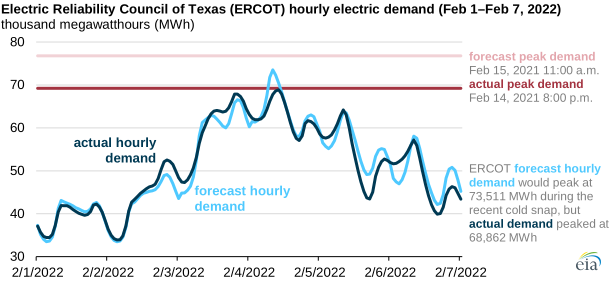
ERCOT forecasts electricity demand to help ensure it has sufficient generation resources to meet expected demand. Actual demand refers to the amount of electricity that customers actually consume. When power outages occur, customers may want to consume more electricity but are unable to, resulting in lower actual demand.
During the recent cold snap, actual demand for electricity in ERCOT peaked at 68,862 megawatthours (MWh), slightly below the peak actual demand of 69,215 MWh during the February 2021 winter storm. However, this winter’s peak was still below the demand ERCOT forecast for February 2021 before widespread outages began, which resulted in lower actual demand than forecast. This winter, actual demand on the peak day (February 4) was much lower than ERCOT’s day-ahead forecast, largely because temperatures were warmer than predicted.
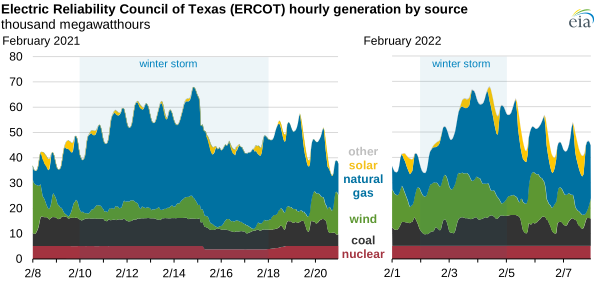
Unlike in February 2021, this winter's storm didn’t cause major declines of natural gas production in Texas, and natural gas-fired power plants in Texas maintained their fuel supply during the cold weather. In February 2021, weather-related production issues reduced peak natural gas production by 16 billion cubic feet (Bcf), according to data from IHS Markit, compared with a 3 Bcf decline in peak dry natural gas production this winter.
In addition, renewable generators, largely wind, maintained a high level of output during the coldest periods this winter, when demand for space heating was the highest. In addition, coal-fired and nuclear units did not experience outages, which occurred in February 2021. In response to the ample supply, the ERCOT prices for wholesale electricity in the real-time market were below $100 per MWh during the recent storm; prices were as high as $9,000 per MWh (the price cap for wholesale electricity in ERCOT at the time) during the February 2021 storm.
After widespread outages in Texas during the winter storm last February, ERCOT took several actions to ensure grid reliability in the event of colder-than-normal weather, including:
- Inspections of generating and transmission assets for weatherization
- Proof of weather readiness from generation and transmission equipment owners
- Increasing operational reserves
- Requirements for some on-site fuel supply
- Unannounced testing of generation resources
Principal contributor: M. Tyson Brown
Tags: generation, consumption/demand, electricity, weather, outages, Texas, states